
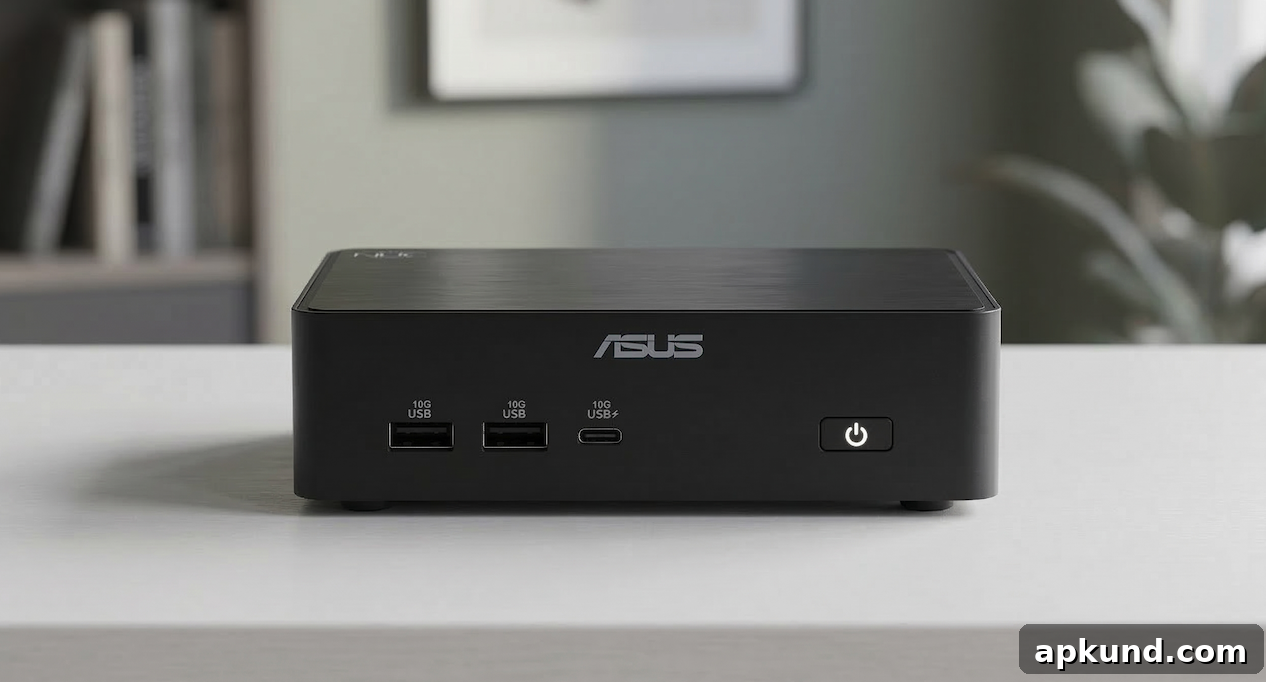
As mini PCs continue to carve out their own niche in the desktop computing landscape, manufacturers are steadily introducing increasingly capable systems. One recent example is the ASUS NUC 16 Pro, a compact 0.7-liter unit positioned to handle demanding AI and enterprise workloads while maintaining a small physical footprint suitable for offices, factory floors, and edge deployments.
Designed specifically for corporate and industrial IoT environments, the NUC 16 Pro is built around the Intel Core Ultra X9 Series 3 processor. This platform integrates a high-performance Intel Arc B390 GPU alongside a dedicated Neural Processing Unit (NPU) capable of delivering up to 50 TOPS. On paper, that combination gives the system the compute headroom needed for real-time edge AI, local large language model (LLM) inference, and advanced on-premises analytics without relying on constant cloud connectivity.
ASUS states the NUC 16 Pro delivers tangible improvements over previous generations: up to 1.5× faster 3D graphics performance and roughly a 20% uplift in overall system performance, while also reducing power consumption by as much as 50% compared to its predecessors. Those efficiency gains make the system attractive for always-on deployments where thermal and power budgets are constrained.
Memory and storage options are flexible to match diverse workload requirements. The unit supports up to 96GB of LPDDR5x memory running at 8533 MT/s, which benefits memory-intensive AI workloads and multitasking. Storage is user-friendly: two M.2 SSD slots are accessible and designed to be upgraded without specialized tools, simplifying field maintenance or capacity expansion.
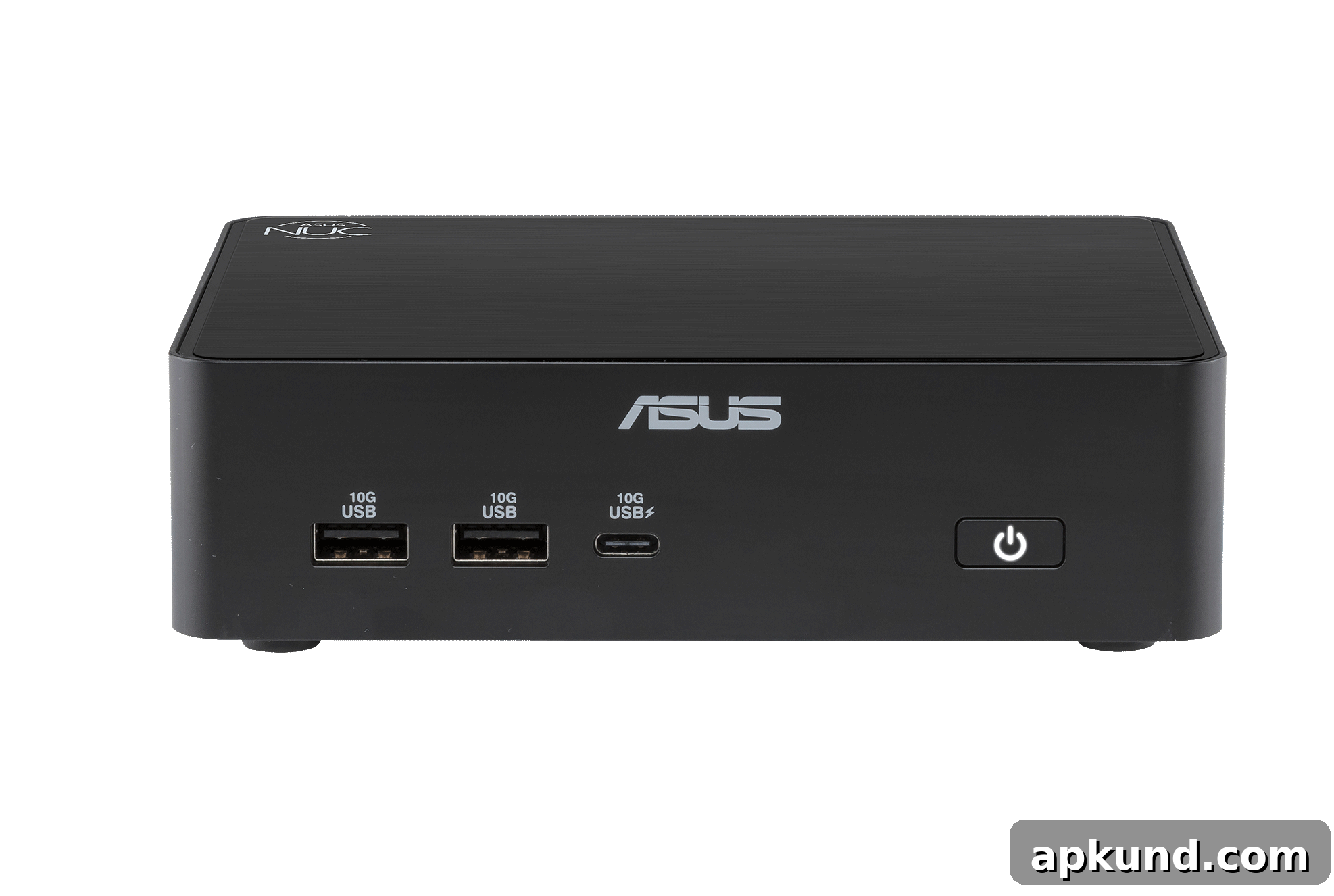
Connectivity is comprehensive for a machine of this size. The NUC 16 Pro includes WiFi 7 and Bluetooth 6.0 for wireless networking and peripheral support. On the wired side, the rear panel offers dual 2.5G LAN ports, enabling robust and redundant network connections for enterprise use. The system also features two Thunderbolt 4 ports and two HDMI 2.1 ports, supporting multi-display configurations and high-bandwidth peripherals. The front panel adds three USB 3.2 Gen 2 ports for easy access to external drives, input devices, and other accessories.
Beyond raw specifications, the NUC 16 Pro’s compact chassis and modular upgradeability make it a sensible choice for deployments where space is at a premium but compute demands remain high. The combination of GPU acceleration, an NPU for neural workloads, and high-speed memory positions the machine as a versatile edge workstation, able to run local inference, handle video analytics, or accelerate data preprocessing for larger systems.
From an IT operations perspective, the tool-free access to M.2 storage and the presence of multiple high-speed I/O ports reduce service time and increase flexibility. Organizations can scale storage independently from the base configuration, add fast NVMe drives for local data caches, or attach PCIe-capable expansion devices via Thunderbolt when needed. Dual 2.5G Ethernet further supports scenarios that require separate management and data networks, or higher throughput for aggregated traffic.
In summary, the ASUS NUC 16 Pro aims to bridge the gap between small form factor design and enterprise-class performance. Its blend of efficient processing, dedicated neural acceleration, expanded memory capacity, and modern connectivity addresses a range of edge and corporate use cases—from industrial IoT gateways and small server nodes to compact workstations for on-premises AI development and inference. For teams prioritizing a compact footprint without sacrificing performance, this type of mini PC presents a compelling balance of capability and practicality.