
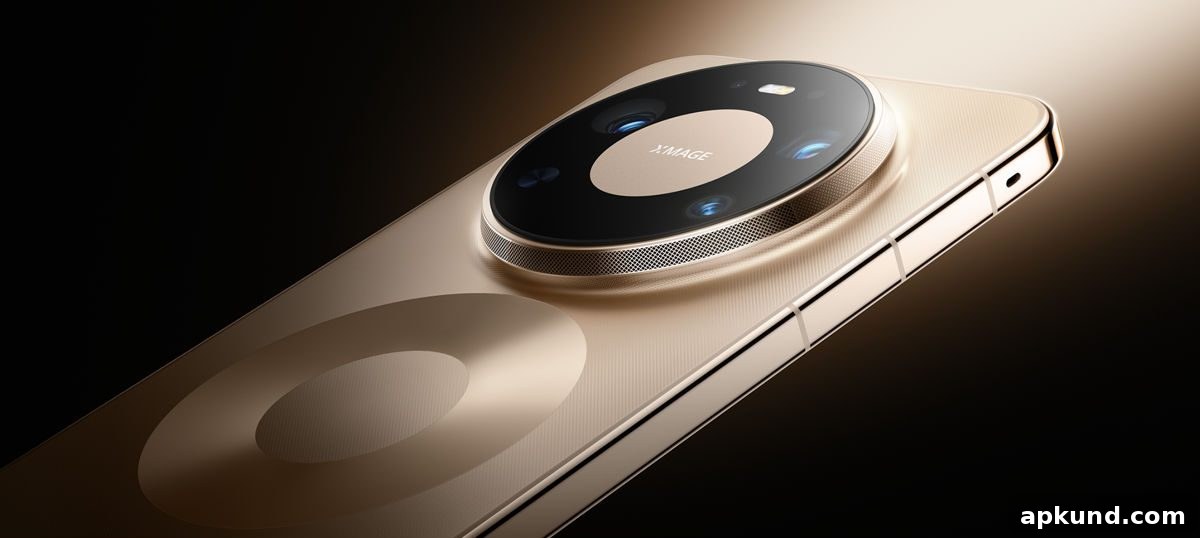
Smartphone makers have tried many approaches to manage heat under heavy load: vapor chambers, graphite sheets, and large heat pipes are common solutions. Huawei has taken a more literal route with a new variant of its flagship. The company has introduced the Mate 80 Pro Max Wind Edition, also called the Fengchi Edition, and pre-orders are reported to be open.
The Wind Edition is based on the existing Mate 80 Pro Max. That model debuted in November with a 6.9-inch OLED display, a 6,000mAh battery, and Huawei’s Kirin 9030 Pro chip. Superficially the two phones look nearly identical, but a closer inspection of the camera module reveals a distinctive new wide rim punctuated by a ring of small vents. Inside that camera bump is an active cooling fan located where the super telephoto lens normally sits. Huawei has not yet published a full specification sheet; a formal reveal is scheduled for March 23.
What we know about the cooling setup
Leaks and social posts indicate the fan may spin at speeds up to 12,000 RPM and that it operates together with a micro-pump and an integrated liquid cooling loop. Those same sources claim the design preserves the phone’s waterproofing despite the inclusion of moving parts—an engineering challenge if true. Huawei has not confirmed the details, so the reported figures and mechanisms should be treated as unverified until the official event.
Active cooling is not entirely new in the smartphone market. Several gaming-focused devices from other manufacturers have used active cooling systems, but these have typically been implemented as clip-on accessories or integrated into thicker, purpose-built chassis. The Wind Edition, by contrast, appears to place a spinning fan inside a phone body that retains a conventional, slim exterior. If Huawei has succeeded in integrating active cooling while maintaining a standard look and IP protection, that would represent a notable technical accomplishment and could influence how manufacturers design thermal solutions for high-performance phones going forward.
Huawei originally planned the Wind Edition to launch with the rest of the Mate 80 lineup in November, but the company postponed it. The extra development time was presumably used to refine the cooling system and address any sealing or durability issues arising from moving parts in a sealed smartphone body. The result is a model that promises enhanced thermal management while aiming to keep the styling and endurance users expect from flagship devices.
Beyond the cooling hardware, the Wind Edition is expected to share the key characteristics of the Mate 80 Pro Max: a large OLED display, a substantial battery capacity, and the same chipset platform. Those platform elements position the phone for extended gaming sessions, intense multitasking, and demanding applications where heat can limit sustained performance. An effective active cooling solution could allow the device to maintain higher performance for longer periods without throttling.
Until Huawei releases the full spec sheet and official marketing materials on March 23, several practical questions remain. Important details include the exact acoustic profile of the fan (how audible it is under load), the impact on battery life, any changes to camera hardware caused by relocating the telephoto lens, and whether the cooling system requires special maintenance or affects long-term reliability. Reviewers will also test claims about preserved waterproofing and evaluate whether the active system offers meaningful benefits for everyday users versus heavy users such as mobile gamers and video editors.
Full details, official pricing, and regional availability are expected to be announced at the March event. For now, the Mate 80 Pro Max Wind Edition stands out as an interesting attempt to combine conventional flagship design with an uncommon active cooling approach, potentially opening a new chapter in smartphone thermal design if the execution proves successful.