
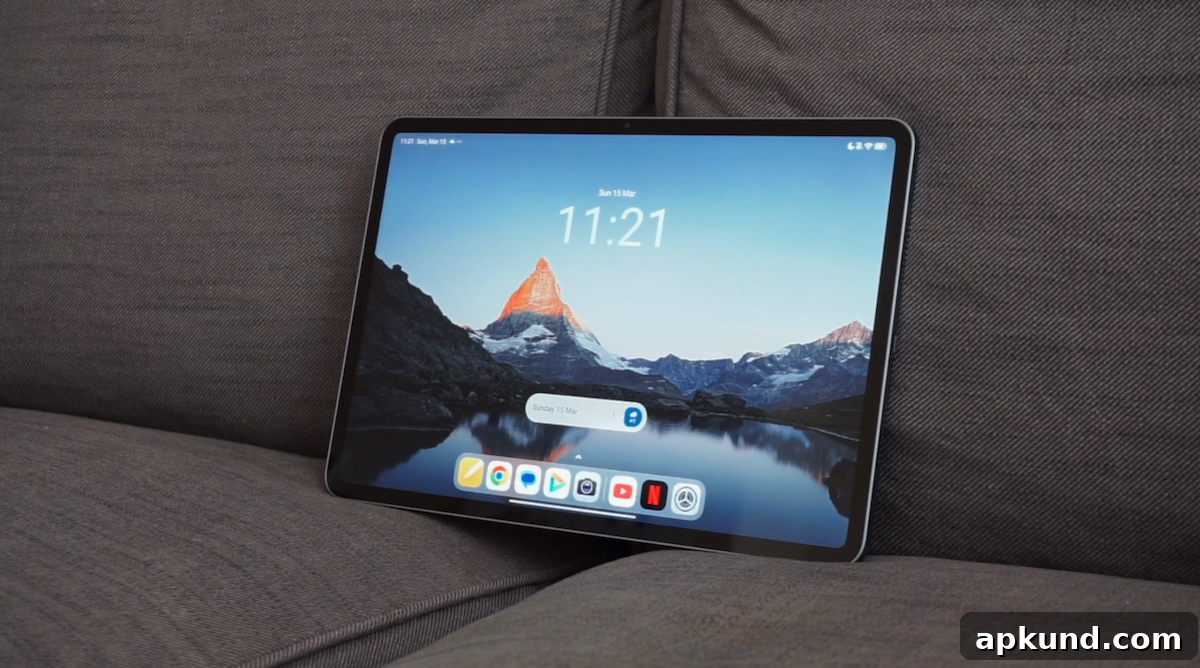
The Xiaomi Pad 8 features an 11.2-inch IPS LCD display with a high-resolution panel of 2,136 x 3,200 pixels, delivering sharp text and detailed visuals for streaming, productivity, and gaming. Inside, it is powered by the Qualcomm Snapdragon 8s Gen 4 chipset paired with an Adreno 825 GPU, offering strong performance for multitasking and demanding apps. Storage and memory options include 8GB RAM with 128GB or 256GB storage, and a 12GB RAM with 256GB storage variant, giving users flexibility based on their needs for apps, media, and files.
Battery life is a key highlight of the Xiaomi Pad 8: the tablet is equipped with a 9,200mAh battery that provides long runtime for extended use away from outlets. The device supports 45W wired fast charging, enabling significantly faster top-ups compared with standard chargers when you have access to a compatible power adapter and cable. Fast charging helps reduce downtime, but there are many situations—travel, long commutes, outdoor use, or extended meetings—when you won’t have access to a wall charger. In those cases, a reliable portable charger (power bank) becomes essential to maintain productivity and entertainment on the go.
Choosing the right power bank for the Xiaomi Pad 8 requires attention to a few practical factors. First, capacity matters: with a 9,200mAh tablet battery, a power bank with higher capacity (for example, 20,000mAh and above) will provide multiple recharges or a full charge plus additional top-ups for phones or accessories. Keep in mind that capacity ratings are nominal and actual usable capacity is lower due to energy loss during voltage conversion and cable resistance.
Second, charging speed is important. The Pad 8 supports 45W wired fast charging, so a power bank that supports USB Power Delivery (USB-PD) and can supply at least 45W via its USB-C port will provide the fastest portable charging experience. Look for power banks that advertise PD output at 45W or higher and confirm the maximum output per port, since some multi-port banks distribute power across ports and may not deliver the maximum to a single device unless configured or used alone.
Third, port selection and cable type should match your usage. A USB-C port that supports both input (recharging the power bank) and output (charging the tablet) offers the most convenience: you can use the same USB-C cable to charge the power bank and the tablet. Multiple ports (USB-C and USB-A) are useful if you need to charge several devices simultaneously, but verify the power delivery limits per port. If you plan to travel internationally, keeping a single USB-C cable and one compact power bank reduces clutter and adapter needs.
Fourth, consider size, weight, and build quality. Higher capacity and higher-output power banks tend to be larger and heavier, which can make them less convenient to carry every day. If you prioritize portability, look for a balance between capacity and weight that matches how you travel. Rugged or well-built units with solid housing and safety certifications provide better protection against drops and electrical issues.
Fifth, safety features and certifications are essential. Choose power banks with overcurrent, overvoltage, short-circuit protection, and temperature control. Reputable units will list safety certifications or testing standards that help ensure reliable operation when charging a high-capacity tablet battery. These protections are particularly important when using high-wattage charging to avoid stressing the battery or charger.
Practical features to consider include passthrough charging (the ability to charge the power bank while it charges your device), a clear battery level indicator, and support for common fast-charge protocols in addition to USB-PD, if you use a mix of phones and tablets. Passthrough can be helpful in situations where you want to maintain device charge while the power bank is plugged into a wall outlet, though not all banks support this feature safely at full speed.
When shopping, prioritize compatibility with USB-C PD at sufficient wattage, a capacity that fits your travel and usage patterns, and strong safety protections. A well-chosen power bank will let you take full advantage of the Xiaomi Pad 8’s large battery and 45W fast-charge capability so you can stay productive and entertained without constantly hunting for a wall outlet.
If you’re unsure where to start, look for power banks from established manufacturers that clearly list USB-PD output (45W or higher), USB-C input/output capability, and a capacity of 20,000mAh or greater for multiple recharges. Read product specifications and user reviews to confirm real-world performance and reliability before making a purchase.
Note: This article may contain affiliate links that help support our authors and keep the Phandroid servers running.