
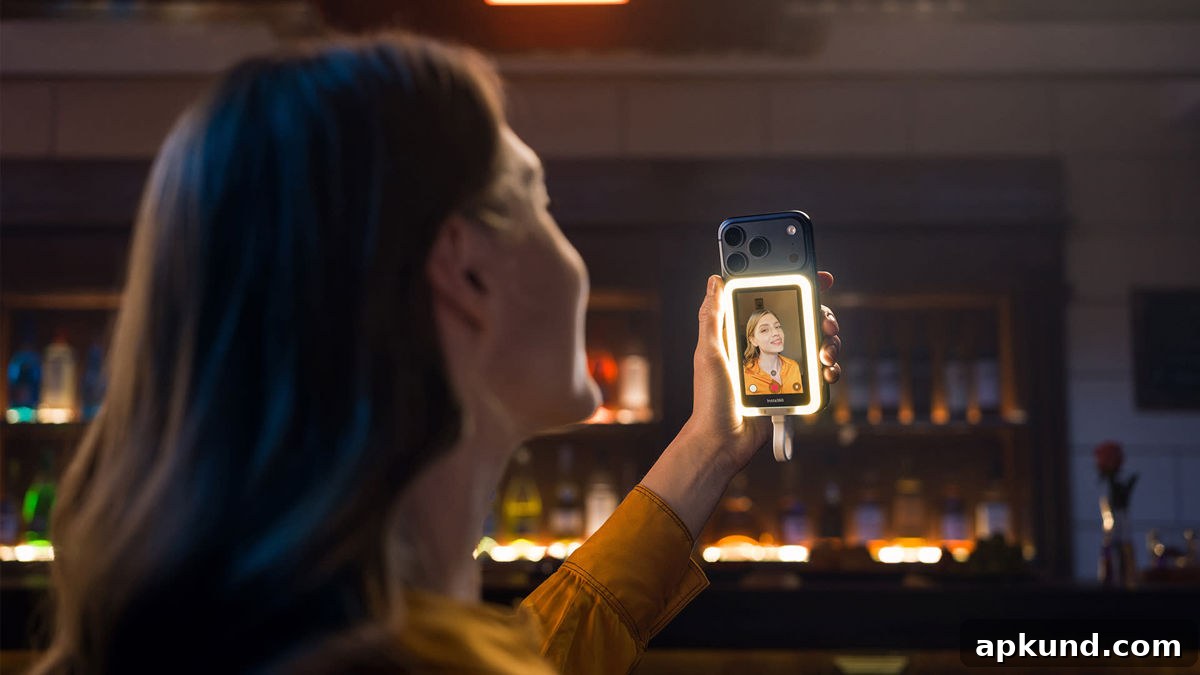
There’s a long-standing frustration in smartphone photography that many users simply accept: the best cameras are on the back of the phone, but you can’t easily see yourself when using them. Front-facing cameras are convenient, but they often offer far lower resolution and fewer features than the rear camera system. Insta360 recognized this disparity and set out to address it. The Insta360 Snap selfie screen is a compact secondary display that attaches to the back of a smartphone, letting you frame and monitor shots with the superior rear cameras while seeing yourself in real time.
The Snap attaches via USB-C and draws power directly from your phone, so there’s no separate battery to charge. It uses a 3.5-inch touchscreen with an 800×480 resolution that mirrors the phone’s full display. From that screen you can control the camera: zoom, focus, switch shooting modes, and even access third-party camera and social apps. This makes the rear-facing camera setup far more practical for vlogging, livestreaming, and capturing self-portraits with higher image quality.
Physically, the display is slim—about 6.8mm thick—and it connects magnetically to MagSafe-compatible iPhones. For phones without MagSafe, Insta360 includes a magnetic ring to allow attachment to other models. On Android devices, the Snap requires a USB-C implementation that supports DisplayPort Alt Mode; most recent flagship phones offer this. Insta360 offers two versions: a base model priced at $79.99, and a collaboration model developed with beauty-tech brand AMIRO that adds an integrated ring light. The AMIRO version includes adjustable brightness and three color temperatures for $89.99, improving lighting for close-up shots and video calls.
Why this exists, and why it makes sense now
The technological gap between rear and front cameras has widened considerably, making the need for solutions like the Snap more obvious. High-end phones today often include rear sensors with dramatically higher resolutions and larger sensors compared with selfie cameras. According to Insta360, some flagship models have rear sensors that deliver roughly sixteen times the resolution of their front-facing counterparts. For creators and vloggers who prioritize image quality, relying on the front camera can produce noticeably inferior results.
Until now, people who wanted to use the rear cameras for self-recording either accepted shooting blind, used bulky mirror rigs, or invested in wireless monitors that add weight and complexity. Those options are functional but inconvenient. The Snap aims to be an unobtrusive, practical accessory that folds into everyday phone use. Its wired USB-C connection reduces latency and improves reliability compared with wireless alternatives, making the live preview smoother and less prone to dropouts. That stability matters when you’re recording a single-take vlog or streaming live to an audience.
In addition to the display itself, Insta360 includes a protective leather-style cover that folds over the screen when it’s not in use. This cover prevents accidental touches on the rear display and offers a modest measure of protection during transport. For people who shoot frequently with their phones—whether for professional content creation, social media, or regular video calls—this accessory represents a useful and practical enhancement. It brings the processing and imaging power of rear cameras into everyday self-use without the complexity of external rigs.
Wired monitors already exist in the accessory market, but Insta360’s approach emphasizes simplicity and integration. By designing a compact screen that mirrors the phone and powers itself from the device, the company reduces the number of cables, batteries, and extra steps required to get high-quality self-video. The optional ring light option further extends the product’s appeal to beauty creators and anyone who wants consistent lighting without carrying separate gear.
Overall, the Insta360 Snap selfie screen addresses a clear gap in mobile photography by combining the image quality of rear cameras with the user-friendly visibility of a front-facing monitor. For content creators who depend on their phones for high-quality video and photo work, this accessory promises to make shooting yourself with the best camera on your phone significantly easier and more reliable.