
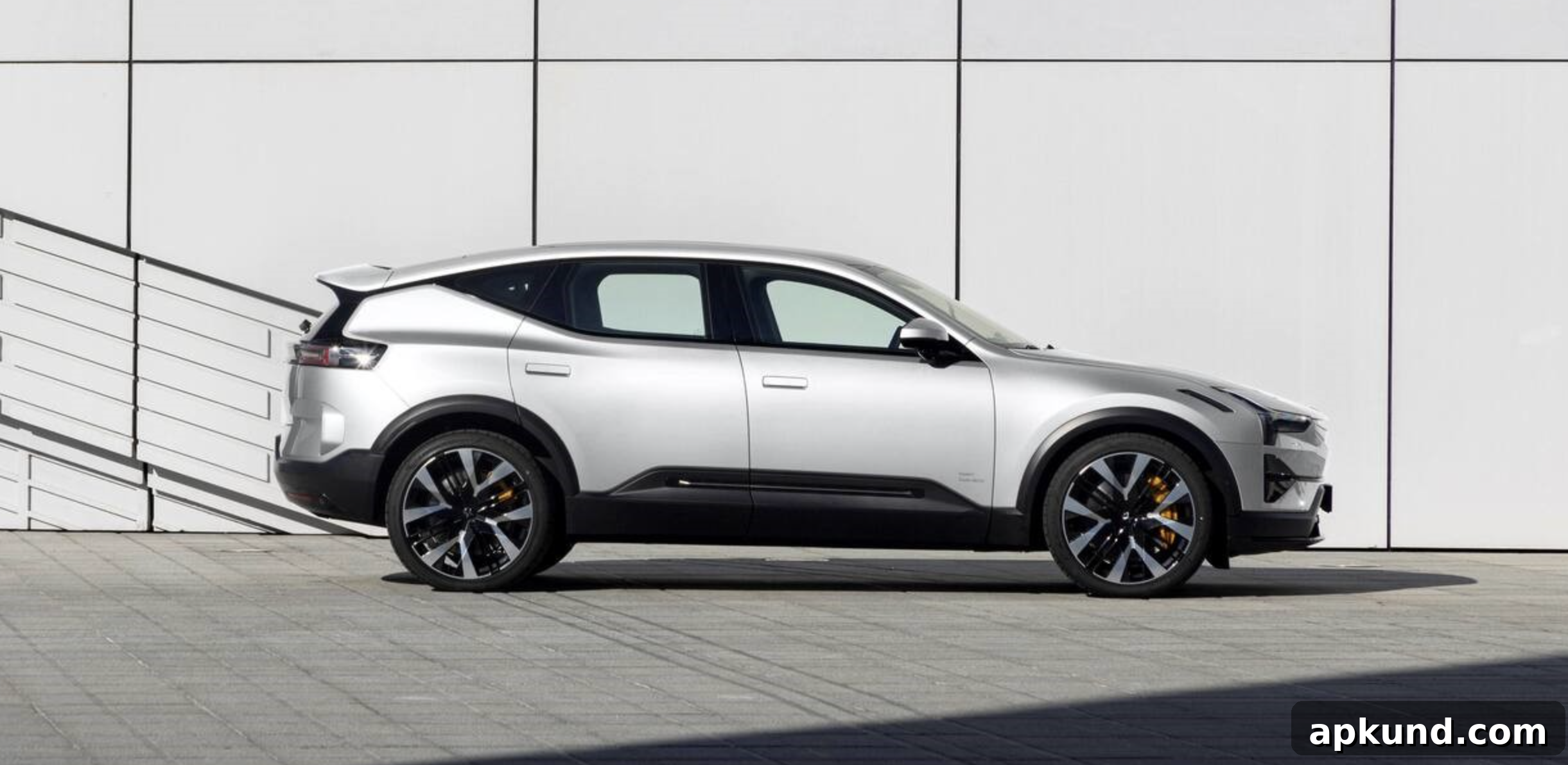
Following Google’s launch of the Gemini assistant for Google-equipped vehicles, Polestar has confirmed that Gemini is rolling out to its cars. The update has begun seeding to Polestar models in the United States for drivers whose Google accounts are set to US English. Hans Bleckert, Connected Car Manager at Polestar, emphasizes the significance of the change:
Google Gemini represents a fundamental shift for Polestar drivers and how they interact with their vehicles. Together with Google, we replace outdated command structures with an advanced AI model that enables free-flowing conversation between Polestar vehicles and drivers. And this is only the beginning. With Gemini, we enter a new period of possibilities with the focus on creating better user experiences.
The Gemini upgrade is designed to provide a more natural, hands-free assistant experience inside the car. Instead of relying on rigid, phrase-based commands, drivers and passengers can interact conversationally with the assistant to perform everyday tasks. Typical use cases include hands-free route planning and navigation assistance, answers to general knowledge questions, and contextual help that considers the vehicle state and current driving context. Polestar intends for the integration to feel intuitive, reducing friction and enabling safer interaction while driving.
Eligible drivers will see an option on their vehicle display offering the choice to update to Gemini or to decline the update. Polestar clarifies that the rollout covers all current Polestar models except the limited-production Polestar 1. The staged rollout means availability may vary by vehicle, region, and account settings; drivers in the US with their Google account language set to US English are among the first to receive the update.
Polestar’s implementation builds on Google’s broader push to bring conversational AI into the automotive environment. For Polestar owners, Gemini aims to move beyond the simple command-and-response model toward an assistant that can handle follow-up questions, multi-step tasks, and more natural language variations. That user-centered approach is intended to improve accessibility and reduce the cognitive load of interacting with in-car systems.
From a practical perspective, drivers who choose to install Gemini should experience improvements in several areas: quicker, more flexible voice queries; more conversational route planning that can accommodate preferences and changes mid-trip; and richer, context-aware answers to informational queries. The assistant may also streamline access to vehicle features that integrate with the car’s infotainment and telematics systems, though specific feature availability will depend on the model and the installed software package.
While Polestar and Google emphasize user experience benefits, standard considerations apply. Users should ensure their vehicle software and Google account settings meet the requirements for the update, and that they review any prompts presented during installation. Because Gemini interaction is voice-driven, drivers should continue to prioritize safe operation of the vehicle and rely on voice controls when appropriate, avoiding interface interactions that distract from driving.
In related industry moves, General Motors recently announced its own rollout of Gemini to select vehicle models, expanding the presence of Google’s conversational assistant across more cars in the United States. That initiative highlights a broader trend among automakers to integrate advanced AI assistants into vehicles as part of the next-generation infotainment and connected services ecosystem.
Polestar’s rollout marks another step in that trend, delivering an updated voice interface intended to make in-car interaction simpler and more natural. As the update reaches more vehicles, Polestar says it will continue to refine the experience in collaboration with Google, focusing on incremental improvements and user feedback to expand functionality and reliability over time. Owners curious about availability should check their vehicle display for the update prompt and verify that their Google account language is set to US English if they are in the initial rollout region.