
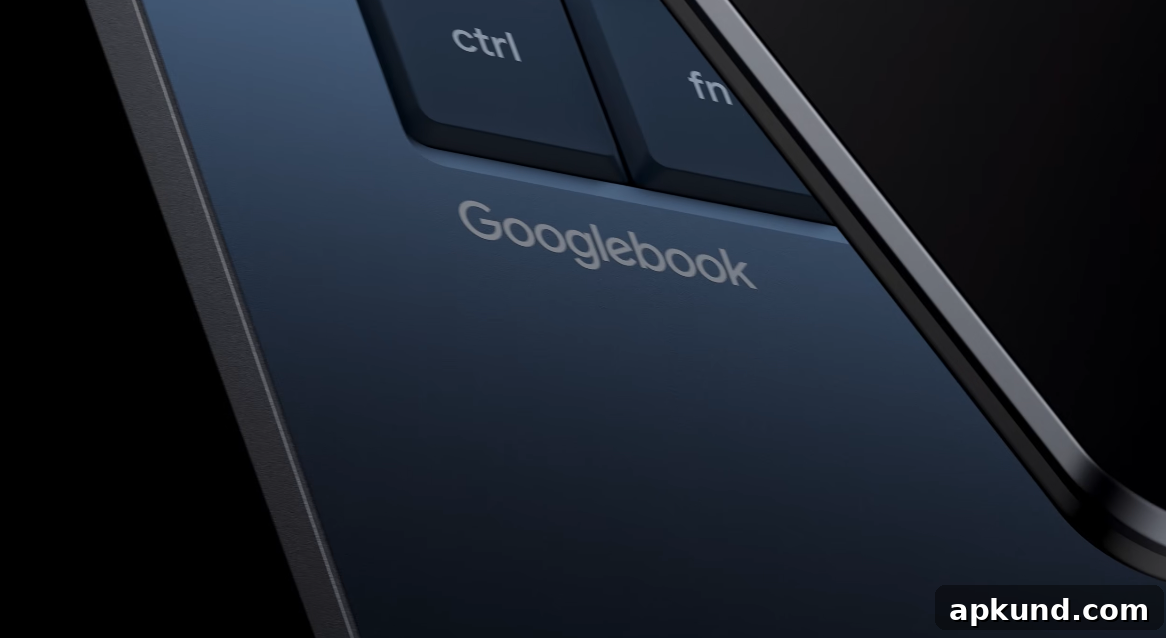
After months of speculation and rumors about its much-anticipated ChromeOS overhaul, Google has officially introduced the Googlebook platform: a new family of laptops that blends the best aspects of Android and ChromeOS with integrated Gemini AI capabilities. According to Google’s announcement, this next stage represents a shift from a traditional operating system toward an intelligence-driven computing experience, aiming to rethink what a laptop can be for a cloud-first world.
Over 15 years ago, we introduced the Chromebook, a laptop built for a cloud-first world. Now, as we are moving from an operating system to an intelligence system, we see an opportunity to rethink laptops again.
Googlebook devices will run a refined hybrid of Android and ChromeOS, delivering compatibility with apps from Google Play while offering deeper system-level AI features powered by Gemini. The company emphasized that these machines are designed not only for performance and reliability but also to make everyday tasks more intuitive through contextual intelligence. For example, the new Magic Pointer reimagines the traditional cursor: instead of merely pointing or clicking, it can provide context-aware suggestions relevant to what’s on screen. That might include proposing meeting times based on an open email, extracting key details from a document, or suggesting ways to visualize an image collection.
Because Googlebook runs with Android compatibility at its core, the platform promises tighter integration with Android phones. Users should expect more seamless file access between mobile and laptop through Quick Access, smoother notifications and continuity features, and the ability to run Android apps on the laptop without switching devices. This kind of cross-device workflow aims to reduce friction for users who frequently move between phone and laptop for work and personal tasks.
Google has not released specific model names or detailed hardware specifications yet, but the company confirmed that major OEMs—including ASUS, Acer, HP, Dell, and Lenovo—are collaborating on Googlebook devices. The line will target a range of users, from mobile professionals who need a premium portable device to students and everyday users seeking long battery life and reliable cloud-first performance. Google also highlighted a distinctive hardware accent across the lineup: a “glowbar” LED that will be a defining visual element on these laptops. While details about glowbar functionality are sparse, it appears intended to provide both aesthetic identity and useful status cues for the user experience.
Beyond cosmetics and AI features, Googlebook’s introduction suggests broader platform ambitions. By marrying Android’s rich app ecosystem with ChromeOS’s cloud-centric design and Gemini’s generative and contextual intelligence, Google aims to offer an environment where productivity, creativity, and device continuity are enhanced rather than fragmented. Enterprise and education users who have relied on Chromebooks for secure, centrally managed devices will likely see new opportunities for productivity tools that leverage on-device and cloud intelligence while preserving familiar management controls.
Consumers can expect Googlebook models to roll out later in the year, with more information about specific hardware configurations, pricing, and release dates to follow from the participating manufacturers. For now, Google’s announcement makes clear that the company envisions laptops that are smarter, more connected to smartphones, and designed around AI-assisted workflows rather than just raw specs or isolated app compatibility.
As the Googlebook platform evolves, attention will be on how well Gemini’s capabilities are integrated into everyday tasks, how seamless Android app experiences become on laptop form factors, and whether the glowbar and other hardware cues add tangible value. For users and IT administrators alike, Googlebook represents a notable rethinking of the laptop—one that centers intelligence and cross-device continuity as first-class features.