
Apple has long been vocal about its reluctance to offer a free tier for Apple Music. As recently as last month, Apple Music VP Oliver Schusser told Billboard that free options were a “terrible idea” and said Apple was “proud” to be the only major streaming service without one. Still, new strings discovered in a recent beta build are notable and worth examining.
MacRumors analyst Aaron Perris spotted two text strings in the latest Apple Music beta: “Can’t skip any more tracks” and “Premium access required.” These messages appeared in both the Android and iOS versions of the beta, suggesting a consistent, cross-platform implementation. That kind of language points toward a tiered access model in which certain playback features are restricted unless the user pays for a premium subscription.
How a free tier could be structured
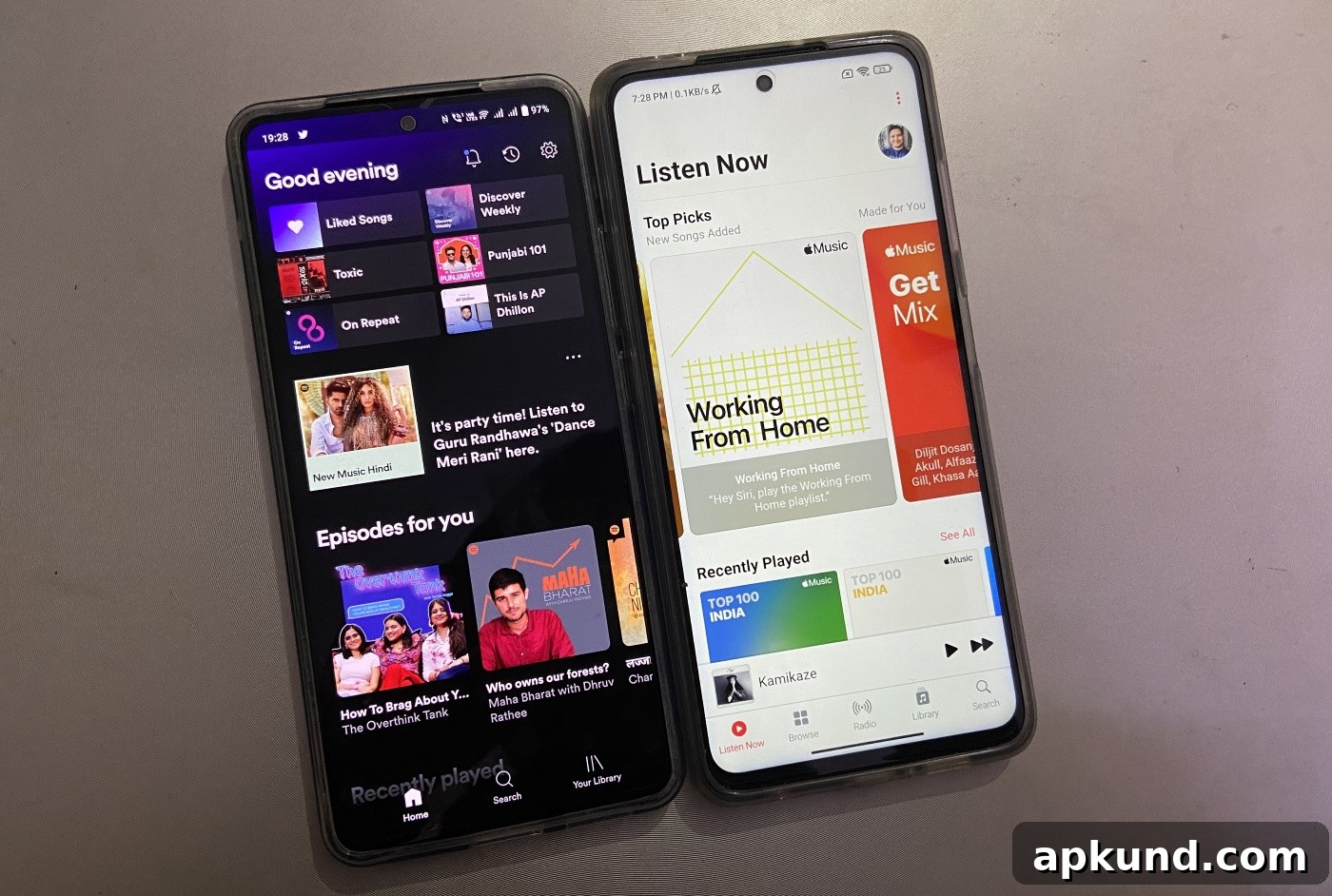
The skip limit referenced in the code is the clearest hint about how Apple might limit a free tier. Spotify’s free plan already uses a skip cap, allowing a limited number of track skips each hour for non-paying users. A similar approach for Apple Music would permit users to explore the service’s catalog while curbing on-demand playback control. In practice, that means free users would still get access to Apple Music’s library but with reduced control over which tracks they can play and how often they can skip songs.
Another important issue is advertising. Schusser’s comments singled out advertising as inconsistent with Apple’s philosophy for music. He contrasted music services with other subscription entertainment platforms like Netflix and Disney+, which scaled by focusing on paid subscribers rather than ad-supported free plans. Given that stance, Apple could pursue an ad-free, reduced-function free tier rather than adopting the standard ad-supported model used by many rivals.
There are practical reasons Apple might choose a restricted, ad-free free tier. It preserves a premium user experience while still enabling Apple to onboard new listeners who might later convert to paid subscriptions. By restricting key playback features — for example, limiting skips, preventing offline downloads, or restricting high-quality audio — Apple can maintain strong incentives to subscribe while avoiding the brand implications of serving ads inside the music listening experience.
Timing and significance
The timing of these discoveries is significant. WWDC 2026 is scheduled to begin on June 8, only days away, and rumors have circulated that Apple could use the developer conference to outline changes to its services. While the presence of strings in a beta does not guarantee a launch or announcement, finding the same messages in both Android and iOS builds points to coordinated development rather than simple placeholder text. That increases the likelihood the company is actively testing a tiered access model.
It’s also worth noting that other streaming platforms have recently reconsidered what features should remain free and which should be reserved for paying users. Those industry shifts make Apple’s apparent experimentation with tiered restrictions less surprising: many services continually adjust their balance between discovery, monetization, and subscriber incentives.
What to watch for next
At this stage, Apple has not confirmed the existence of an Apple Music free tier, and the specifics remain speculative. Key details to watch for include whether the free tier would be ad-free, the exact nature and frequency of any skip limits, whether offline downloads would be permitted, and how catalog or feature access might differ between free and premium accounts. Any official announcement at WWDC would likely include clarification on those points and explain Apple’s rationale for the chosen approach.
For users and industry observers, the questions extend beyond product design to strategy: how will an Apple free tier affect subscriber conversion, artist payouts, and the competitive dynamics among streaming services? Answers to those questions will depend on implementation details, which could emerge soon if Apple decides to disclose its plans at the upcoming developer event.
Until Apple provides confirmation or additional details, the beta strings remain an intriguing signal rather than definitive proof. With WWDC 2026 approaching, more concrete information may become available in the near term, so listeners and competitors alike will be watching closely for any official updates from Apple.