
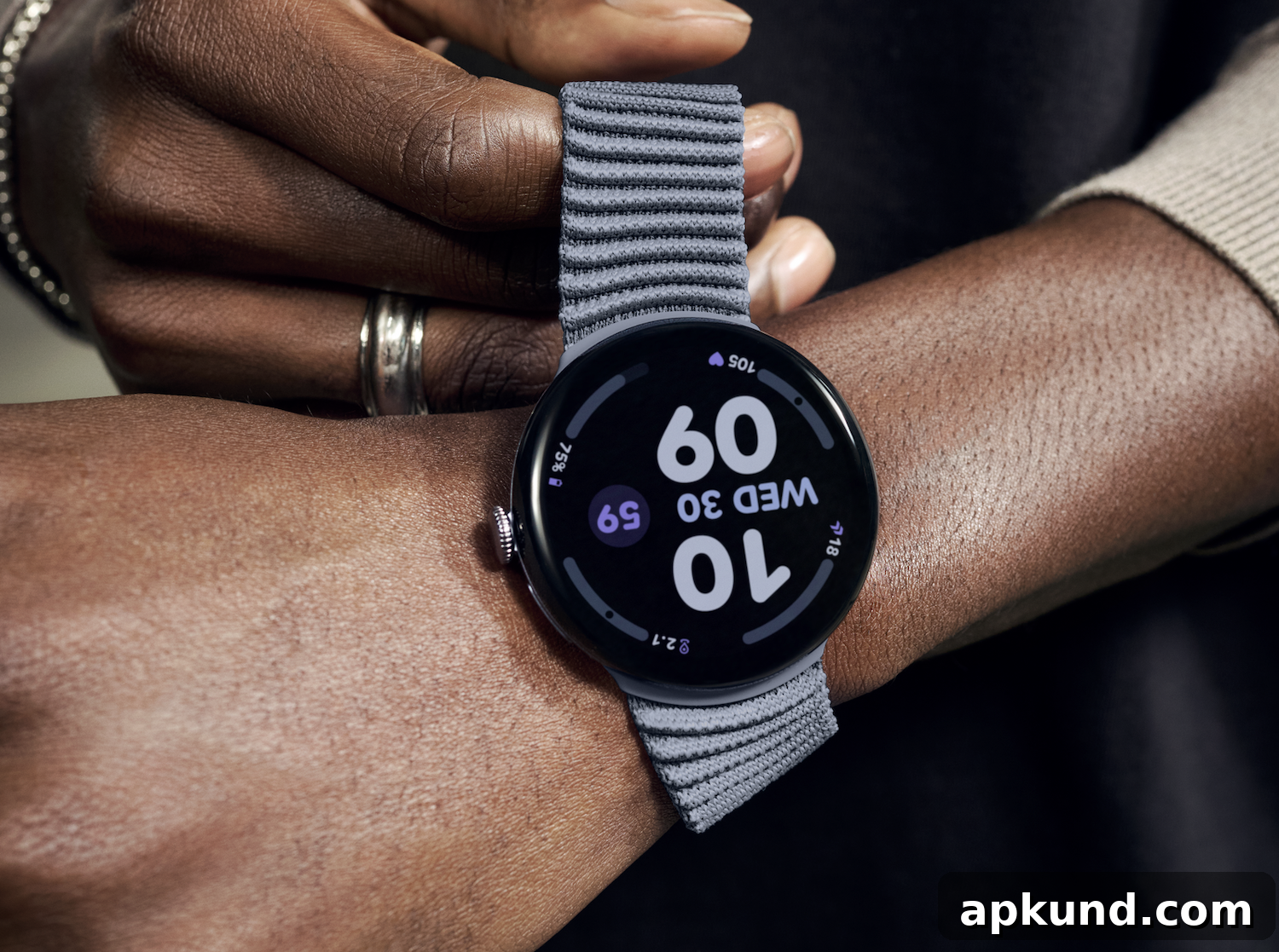
Google has a long history of unreleased hardware surfacing ahead of official launches. Past Pixel phones have turned up in taxis and rideshares, and more recently a very unusual discovery was reported near the Caribbean island of St. Martin: a scuba diver reportedly recovered an unreleased Google Pixel Watch 5 prototype from the ocean floor.
The incident first drew attention after Randy Pitchford, co‑founder of Gearbox Software, shared details about the find on X (formerly Twitter). Pitchford said a friend discovered the watch while scuba diving at roughly 40 feet (about 12 meters) underwater. The rear of the device was clearly marked “Google Pixel Watch 5” and “45mm,” indicating it was the larger size. Pitchford posted photos that quickly spread through tech communities and social feeds.
A friend of mine found this watch a few days ago when he was scuba diving near the island of St. Martin. He noted that the reverse of the watch indicates that it is a Google Pixel Watch 5, which has not yet been announced, let alone released. It seems to be fine. The face… — Randy Pitchford
What the recovery revealed
According to the shared images and reports, the watch was still showing the correct time when retrieved, and the exterior looked surprisingly clean for a device that had reportedly rested on the seafloor. That led some observers to question whether the watch had spent much time submerged, but Google’s recent wearable designs have strong water‑resistance ratings. The Pixel Watch series is expected to meet IP68 or similar standards, which cover extended submersion and make a functioning device after recovery plausible.
The case back of the found unit lists an array of sensors and capabilities: SpO2 (blood oxygen), EDA (electrodermal activity), skin temperature, heart rate, and UWB (ultra wideband). Visually, the design appears very close to the Pixel Watch 4, with a circular face and the same general layout. Most of the anticipated changes for Pixel Watch 5 are expected below the surface—performance upgrades, battery improvements, and possibly a new wearable‑focused processor.
Previous leaks have suggested Google may move to a custom Tensor chip designed specifically for wearables, replacing Qualcomm silicon used in earlier models. If true, a Tensor wearable chip could deliver meaningful gains: better power efficiency, longer battery life, and more on‑device processing for health and assistant features. The recovered prototype’s exterior similarity to the previous generation suggests Google may be refining internal hardware and software rather than radically altering the external look.
How the watch was returned
The story concluded quickly after the initial discovery. Pitchford later reported that someone online helped identify the owner and arrangements were made to return the device. Reports indicate the watch belonged to a Google employee involved in testing and that it had been lost during a dive. Pitchford credited the rapid resolution to “the magic of the internet,” noting how social networks and dedicated communities can help reunite lost prototypes with their teams.
Google declined to comment publicly on the recovery, and the company typically does not discuss leaks or unreleased hardware in detail. The Pixel Watch 5 is not expected to be announced until the official launch window for the Pixel 11 family, projected for August 2026. Regardless, this find highlights two persistent realities of modern device development: prototypes can escape testers, and leaks—sometimes in surprising ways—continue to reach the public well before formal unveiling events.
Why this matters for Pixel Watch leaks and wearables
Recoveries like this reinforce why companies maintain strict testing protocols and device tracking for pre‑release hardware. For enthusiasts and industry watchers, real‑world recoveries provide early confirmation of features and design decisions that rumors and render leaks only hint at. This instance also emphasizes that advances in wearable durability and waterproofing are not merely marketing claims—well‑sealed hardware can survive environments that would disable older smartwatches.
For users following Pixel Watch 5 news, the key takeaways are: the recovered prototype appears to confirm the larger 45mm model, the design remains familiar and circular, and the sensor list aligns with Google’s ongoing focus on health and location capabilities. Bigger changes are more likely to be internal—new chips, improved battery life, and software refinements—rather than dramatic aesthetic redesigns.
Ultimately, someone found an unreleased Pixel Watch 5 prototype two months ahead of its expected announcement, forty feet down near St. Martin. The device was recovered, identified, and reportedly returned to its owner, closing a curious chapter in the ongoing saga of early hardware leaks and the ways the tech community responds when prototypes wash up in the most unexpected places.