
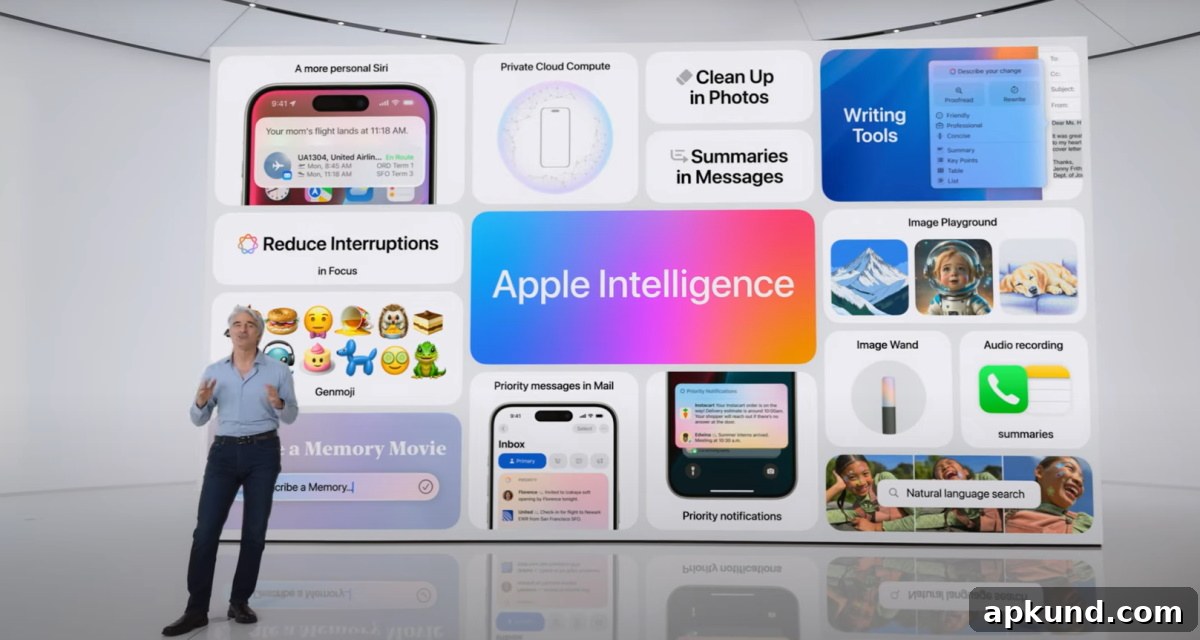
Apple put on quite a show at WWDC this week with a redesigned Siri, expanded Apple Intelligence capabilities, and photorealistic image generation. One detail that didn’t make the slides, however, was quietly tucked into Apple’s press release: “Some Apple Intelligence features, including image generation, have daily usage limits because they rely on powerful server models. Increased access is available with most iCloud+ subscription plans.”
That short sentence changes the practical expectations for many users. If you assumed Apple’s new intelligence features would be unrestricted and freely available at all times, the revelation that certain functions are subject to daily caps is important. It means some of the most advanced experiences will be mediated by Apple’s servers and, to manage load and costs, Apple will limit how much you can use them each day unless you opt for expanded access through iCloud+.
What the Fine Print Actually Says
The limits apply to features that depend on Apple’s server infrastructure rather than running entirely on your device’s chipset. Image generation is the clearest example Apple has mentioned, but the company has not provided a full list of affected features or disclosed how many uses are allowed per day. The only confirmed points are that a cap exists and that iCloud+ subscribers will receive higher usage allowances.
iCloud+ plans currently range from $0.99 per month for 50GB to $59.99 per month for 12TB. Apple’s wording—specifically the phrase “most iCloud+ subscription plans”—suggests the very cheapest tier may not qualify for the increased daily limits. That implies the 200GB plan at $2.99 per month could be the minimum tier that unlocks noticeably higher daily access, though Apple hasn’t clarified the exact thresholds or how much extra capacity each tier will receive.
For users on the free tier, Apple Intelligence won’t suddenly stop working: you’ll still have access to server-powered features, but your daily allowance will be smaller and you may reach the limit sooner. How much of an impact that has will depend on individual usage patterns. Daily caps could be barely noticeable for casual users but could frustrate creators, professionals, or power users who rely on frequent image generation or other heavy server-side features.
It’s worth comparing Apple’s approach to other companies’ models. Google, for example, offers a dedicated AI subscription (Google AI Pro) that explicitly includes usage allowances for its Gemini models. Apple, by contrast, appears to be tying expanded AI access to its existing iCloud+ storage plans rather than introducing a separate AI tier. That is a subtler way to monetize higher levels of AI usage while keeping the new features available in some form to all users.
Industry observers previously speculated that Apple would eventually monetize Apple Intelligence. Analysts and reporters noted that charging for sustained access to server-based AI capabilities was a likely revenue path, and this tiered iCloud+ approach fits that prediction. Whether Apple will further refine these access levels, introduce a distinct AI subscription later, or adjust limits based on real-world usage and feedback remains to be seen.
For now, Apple’s decision to implement daily usage limits highlights the trade-offs companies face when offering powerful, server-driven AI: balancing user experience, infrastructure cost, and fairness across subscribers. If you plan to rely heavily on Apple Intelligence—especially for image generation or other server-reliant features—keep an eye on the specific iCloud+ benefits and any future updates from Apple that clarify exact limits. Casual users are unlikely to be affected immediately, but creators and professionals should consider whether an upgraded iCloud+ plan will be necessary to meet their needs.
Ultimately, the headline announcements from WWDC remain impressive, but this fine-print detail is a reminder that practical access to advanced AI features can come with restrictions. As Apple rolls these features out and users begin to put them through real-world tests, we’ll learn how limiting the daily caps actually are and whether Apple adjusts its policy to better match demand.