
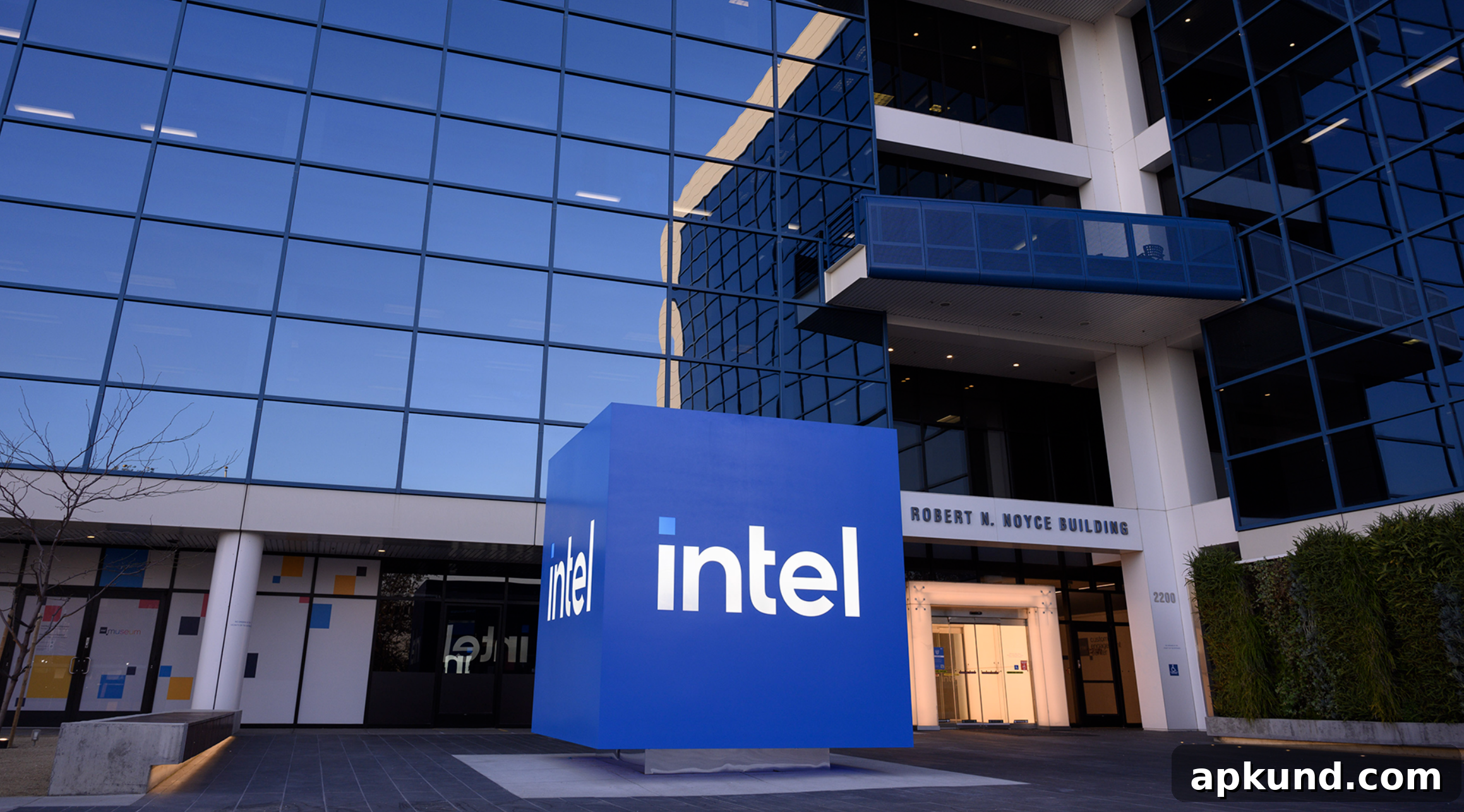
Earlier reports suggested Apple was quietly exploring Intel as a manufacturing partner for some of its chips, with the thinking that Intel would handle older, less demanding process nodes for products like iPads and lower-end Macs, while TSMC would continue to produce Apple’s most advanced silicon. A newer report from Bloomberg’s Mark Gurman updates that picture: Apple is now reportedly considering Intel as a manufacturer for the Apple A22 Pro chip. The A22 Pro is expected to be Apple’s first 1.4nm-class processor, aimed at powering high-end iPhones in 2028. While TSMC would still be the primary supplier, Intel could take on a portion of production.
Why This Matters for Intel
Intel’s 14A node — its internal name for the 1.4nm-class process — is currently slated for risk production in 2028 with volume production anticipated in 2029. Intel leadership has framed 14A as a major technical milestone and has signaled that its timeline would put the company in close competition with TSMC at the 1.4nm level. For Intel, securing even a portion of an Apple flagship chip like the A22 Pro would be a significant vote of confidence. It would demonstrate to other potential customers that Intel’s 14A process can handle demanding, high-performance consumer silicon workloads.
That kind of endorsement would be important for Intel as it seeks to rebuild and expand its foundry business. Moving from internal CPU production to serving external customers at the bleeding edge of mobile silicon requires not just technical capability but also industry trust. Manufacturing chips for Apple — especially chips that will appear in Apple’s high-volume, highly scrutinized flagship products — would help validate Intel’s process readiness in a way that few other customers could match.
From Apple’s perspective, the timing and reasoning also make sense. Demand for AI-optimized chips and other high-performance silicon has pushed TSMC’s manufacturing capacity to its limits. Apple executives have previously acknowledged supply constraints, noting shortages of certain A-series chips affected iPhone availability. Meanwhile, other major customers, including companies with large GPU or AI compute needs, are consuming increasing shares of TSMC’s capacity. That competition adds pressure on Apple to diversify its supply chain and secure additional manufacturing partners to reduce risk and improve resilience.
It’s important to emphasize that this remains a reported consideration rather than a finalized deal. Intel’s timeline puts full-scale volume production of 14A in 2029, so any A22 Pro chips fabricated on Intel’s process would likely represent early production runs rather than the bulk of Apple’s output in the initial rollout. Apple has historically relied on multiple suppliers to manage demand and mitigate risk, so a split production strategy between TSMC and Intel would fit that pattern if it proceeds.
The broader story also carries a narrative twist. Apple famously transitioned away from Intel processors in 2020 as it moved to its own Apple Silicon, a shift that was widely interpreted at the time as a major strategic win for Apple and a setback for Intel. The possibility that Intel might now manufacture one of Apple’s most advanced chips underscores how relationships in the semiconductor industry can evolve. Even after a competitive split, the two companies may find new reasons to collaborate when it benefits Apple’s product plans and Intel’s foundry ambitions.
In short, Intel’s potential role in producing A22 Pro chips would be meaningful for both companies: for Apple, it would provide additional manufacturing capacity and supply-chain flexibility; for Intel, it would be a headline-grabbing validation of its 14A process and an important step toward rebuilding its foundry business. For the industry, it highlights how demand pressures and strategic priorities are reshaping partnerships and capacity allocation among the largest semiconductor manufacturers.