
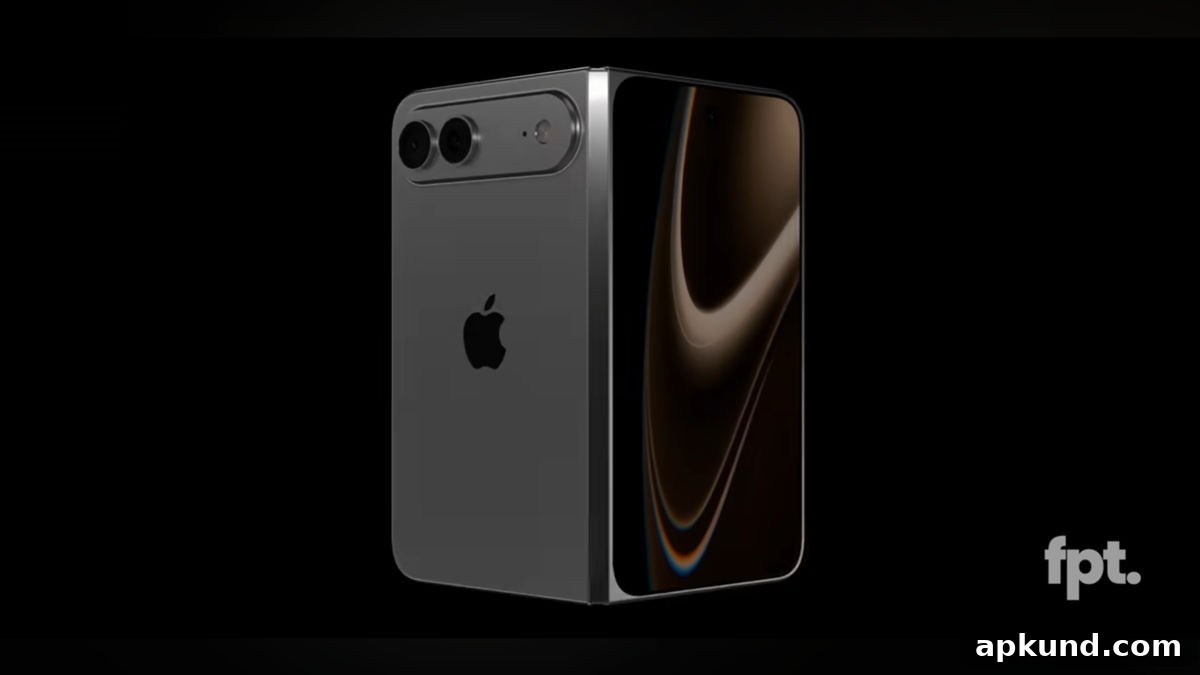
Waiting for a new iPhone used to be straightforward: order it, wait a few days and it arrived. This year’s foldable model, the iPhone Ultra, appears set to complicate that routine. Analyst Ming-Chi Kuo reports that supply for the iPhone Ultra could remain constrained for weeks after Apple’s announcement, meaning many buyers may face delays or backorders rather than immediate fulfillment.
Kuo’s most recent supply-chain estimate suggests Apple will produce roughly 7 to 8 million foldable iPhones by the end of the year. The timing is the issue: only about 0.5 to 1 million of those units are expected to be ready in the third quarter, which coincides with Apple’s usual September announcement and early sales window. By contrast, Apple expects to have roughly 20 to 22 million units of the iPhone 18 Pro available in the same period. That contrast highlights how limited the initial supply for the Ultra could be compared with a standard flagship iPhone.
Because of those constrained early numbers, Kuo anticipates the supply situation will gradually improve, but not immediately. He projects that the iPhone Ultra’s availability should ease by the first quarter of 2027. Until then, customers who want the foldable model should expect to wait, possibly for several weeks or months depending on demand and regional allocation.
Why the iPhone Ultra Supply Is So Tight
There are a few clear reasons the iPhone Ultra may be in short supply at launch. First, foldable displays and the related hinge mechanisms are more complex to engineer and manufacture than traditional flat screens. Reports indicate the iPhone Ultra will use a near-creasing screen with liquid metal hinges. Those sophisticated components require precise assembly and quality control, and early production runs typically have lower yields—meaning a greater proportion of units don’t meet standards and cannot be shipped. That reduces the number of finished phones available for initial sales.
This type of rollout is not unprecedented for Apple. The company has faced staggered availability with prior flagship launches; for example, the iPhone X was announced alongside other models but had a delayed preorder and limited early supply. Kuo’s comparison to previous Apple rollouts underscores a familiar pattern: new and more complex designs often begin with tight supply that loosens only as manufacturing scales and yields improve.
Apple also appears to be ramping production across multiple sites, a sign that the company expects demand to quickly outstrip what will be available in September. Manufacturing increases in other facilities suggest Apple is trying to accelerate supply growth, but such scaling takes time. Even with intensified production efforts, limited early yields and the inherent complexity of foldable display assembly mean many buyers may not be able to purchase an iPhone Ultra right away, even if they are among the first to place an order.
For shoppers considering the Ultra, the practical takeaway is to temper expectations for immediate availability. If you must have the foldable model at launch, prepare for the possibility of waiting or consider alternate purchase strategies such as signing up for notifications, checking multiple regional stores, or being ready to accept later shipping dates. For those who can wait, later production runs are likely to offer more units and fewer fulfillment delays as Apple stabilizes manufacturing and addresses early yield challenges.
In short, the iPhone Ultra represents a notable step for Apple into foldable hardware, but that progress comes with early supply constraints. The combination of advanced display technology, precise hinge engineering, and typical early-production yield issues will probably make the first weeks and months after launch a test of patience for prospective buyers. According to Kuo’s timeline, broader availability should improve by early 2027, but in the near term, expect limited stock and potential delays if you plan to buy one as soon as it’s announced.