
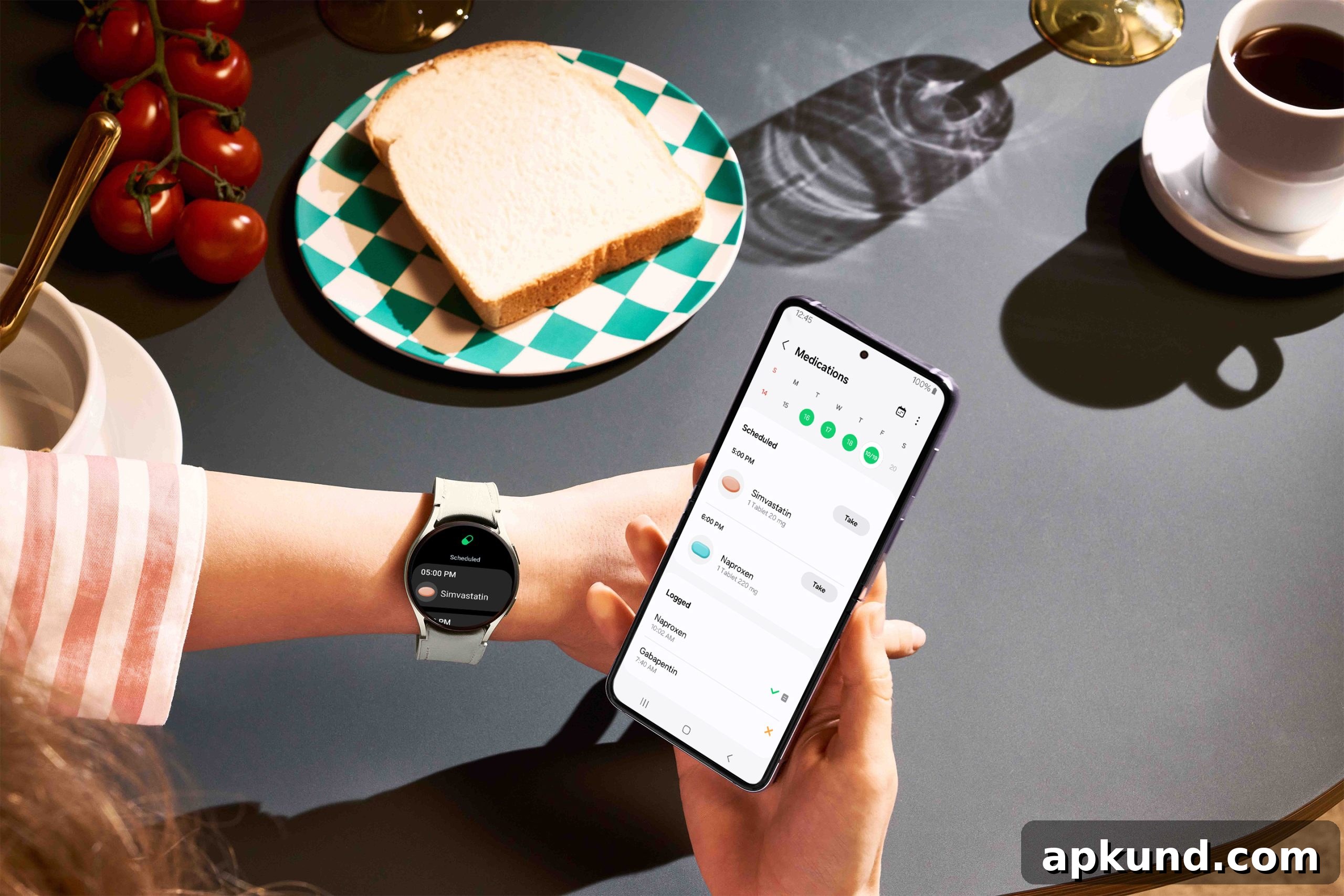
Samsung Health recently expanded its artificial intelligence capabilities, adding features such as Vitals monitoring and a new Heart Health Score. Along with those features, the app now includes an in-app toggle that asks users to consent to the use of their health data for AI training and modelling. According to reporting from How-to-Geek, this consent prompt has significant consequences: declining it does more than opt you out of AI training — it also affects how your health data is synced and stored.
The consent notice is titled plainly: “Consent to the Use of Health Data for AI Training and Modelling.” If you turn the toggle off, Samsung will stop syncing health information to your account. In addition, the company will delete data already stored in your cloud account unless local laws require that some information be kept for a longer period. In short, choosing not to allow AI training can result in losing synced health history across devices, not simply disabling AI features.
The range of data Samsung says may be used for AI training is broad. Examples listed include sleep tracking logs, medication records, medical documents, and menstrual cycle data. The company also notes that human reviewers — potentially including outside contractors — may examine portions of that data as part of the training or review process. That raises questions about privacy and oversight for people who expect health app data to remain private or within a tightly controlled environment.
Why this feels different
Most AI consent prompts are narrowly scoped: they apply to specific AI features or tools and let people choose whether to use those features. Samsung’s approach, by contrast, ties continued syncing and retention of health data to agreement with AI training. That means someone who never uses Samsung’s generative AI features might still be required to permit their health data to be included in training simply to retain the ability to sync their information across devices and back it up to their account.
This structure changes the balance of choice. Instead of being asked whether you want to use an optional AI feature, users are effectively presented with a trade-off: either allow AI training of health data, or lose cloud sync and stored history. For users who rely on cross-device syncing of health metrics or long-term records, that can be a costly decision.
Comparisons with other health apps highlight the difference. For example, some competing services allow opt-ins for individual features without risking the loss of previously stored personal data. Those approaches let users enable AI-enhanced tools while preserving control over whether their personal health records remain part of training datasets. Samsung’s notice does not clearly state whether the data used for training is anonymized or de-identified before inclusion in models — an important detail, because medical records and other health signals can sometimes be re-identifiable even when direct identifiers are removed.
The company’s recent AI enhancements to Samsung Health only began rolling out in the weeks prior to this consent change, and the new consent requirement appears directly tied to enabling ongoing AI training and modelling across the user base. Right now, the options appear binary: consent to the use of health data for AI training, or accept that cloud sync and stored health history may be removed. That framing leaves many users facing a difficult choice between privacy preferences and practical access to their own health data across devices.
For people who prioritize retaining complete health histories, the change amplifies the importance of checking app settings sooner rather than later and understanding the terms presented during updates. For privacy-conscious users, the decision may prompt a review of which health metrics they store in the app at all, or whether to maintain local-only records where possible. Clearer information from the provider about data handling practices — including whether data is anonymized, how it is stored, and who may access it for review — would help users make better-informed decisions about whether to consent.
In the meantime, users should be aware that declining AI training consent in Samsung Health can have immediate, practical consequences beyond simply disabling new AI features. It can disrupt syncing and lead to the deletion of data that had been stored in the cloud, making it essential to export or back up any important records before changing consent settings if keeping that history is a priority.