
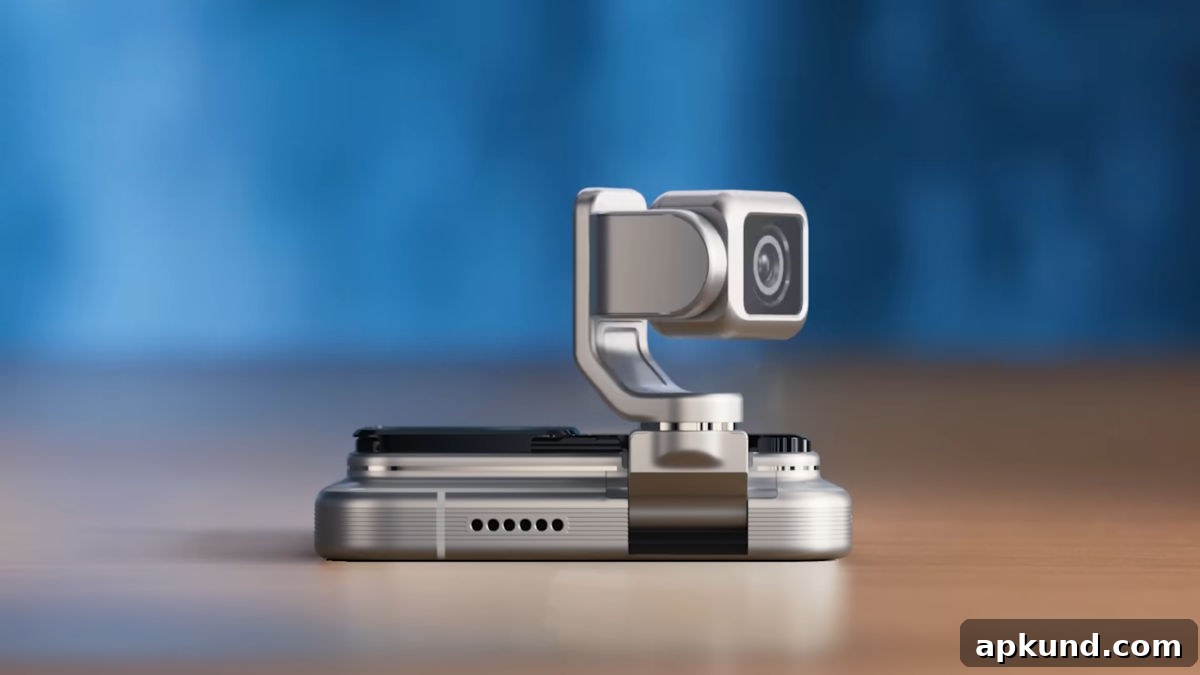
Most smartphone makers save every detail for one major launch. Honor is taking a different path with its upcoming flagship. On July 28, the company will stage a dedicated imaging event in Beijing focused solely on the Honor Robot Phone’s camera, revealing its photographic capabilities weeks before the phone itself becomes available.
The event highlights Honor’s collaboration with ARRI, the respected cinema camera company known for decades of acclaimed color science and motion-picture tools. Honor says the partnership aims to bring a “full-stack cinematic workflow” to a phone camera for the first time, a bold claim that frames the device as more than another incremental upgrade in specs.
Honor CEO Li Jian confirmed at WAIC 2026 that the Robot Phone will launch in China in August. The device’s signature hardware is an integrated titanium alloy arm that emerges from the phone and rotates a full 360 degrees. That mechanical arm is designed to track subjects in a manner similar to a handheld gimbal, and Honor says it can also nod, shake, and tilt independently to follow motion and help the camera maintain stable framing.
Why the camera gets its own stage
Revealing the camera separately from the device launch is unusual, but it signals what Honor believes will attract buyers. Where most companies lead with specs or ecosystem features, Honor is centering attention on a unique imaging system. This strategy follows a pattern: the company has already shown a willingness to develop hardware that few competitors are exploring, such as the humanoid robot it introduced alongside the Robot Phone at Mobile World Congress.
Across the flagship market, core specifications have become broadly similar. Leading brands now offer comparable processors, bright displays, and large batteries, leaving less room for dramatic differentiation based on raw numbers alone. As part of its multibillion-dollar Alpha Plan, Honor has been searching for a distinctive area to compete in. The Robot Phone’s camera — positioned as a cinematic, full-workflow solution and presented in partnership with ARRI — is the clearest example yet of that strategy. Framing the imaging system as the central selling point, rather than an item on a specs sheet, reshapes the product narrative: it becomes a creative tool aimed at users who prioritize video and photography quality and workflow, not just hardware benchmarks.
The standalone imaging event also emphasizes storytelling and content creation. By showcasing color science, motion control, and integrated software workflows, Honor is inviting filmmakers, vloggers, and ambitious creators to consider the phone as a professional tool. The idea of a phone that can physically move its camera on a robotic arm while applying cinematic color processing suggests a different class of mobile content capture — one that merges mechanical stabilization with advanced image processing and color management.
Of course, the final judgment will rest on footage and real-world tests. Claims about cinematic workflows and ARRI-grade color science sound promising, but whether the system performs reliably in varied shooting conditions and how well it integrates into creators’ existing workflows remains to be seen. The true value of the Robot Phone camera will be apparent only when independent reviewers and everyday users can test its capabilities outside of a staged reveal.
For now, the dedicated camera showcase adds intrigue. Honor is betting that the Robot Phone’s mechanical innovations and its collaboration with a respected cinema brand will be more persuasive than incremental spec upgrades. If the July 28 presentation delivers compelling samples and a clear demonstration of the phone’s creative workflow, it could redefine expectations for what a smartphone camera can offer. We’ll know more when Honor shares footage and technical details at the event.