
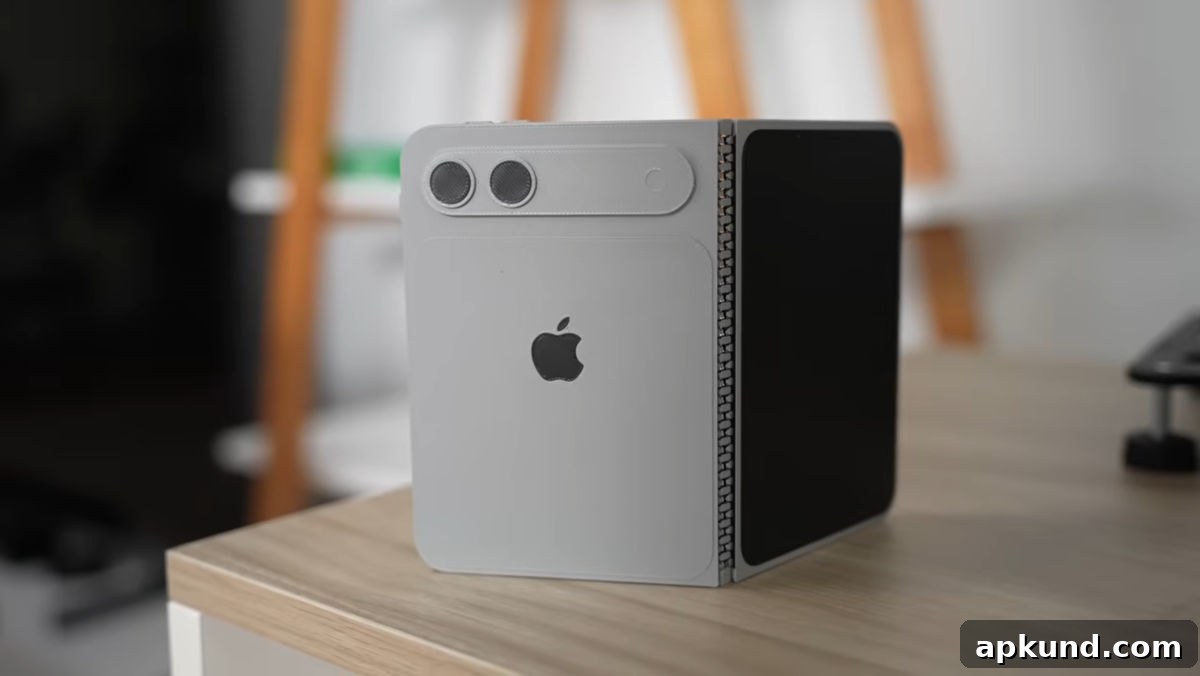
Apple commands a fiercely loyal audience, yet even devoted iPhone users know the company occasionally missteps. Early reports, however, suggest this may be one of the rare times Apple has delivered something that genuinely impresses: a foldable iPhone, widely believed to be called the iPhone Ultra.
Although Apple has not officially announced the device, Bloomberg journalist Mark Gurman reports that several people who handled early prototypes were struck by how solid the hardware feels. Those initial impressions point to a product that addresses some of the biggest challenges that have plagued folding phones so far.
Testers are already sold on the feel of it
According to Gurman’s coverage, testers noted the phone’s pocketability and praised the hinge design, describing it as sturdy and well-engineered. Hinge reliability has been a recurring gripe with folding phones from other manufacturers, so a robust solution would be notable progress for Apple. The report also says the larger inner display switches to a layout reminiscent of an iPad’s, making better use of the increased screen area for multitasking and productivity.
Beyond the hardware, reviewers liked how the device handles common uses: video playback, gaming, and everyday tasks reportedly perform smoothly. The larger display appears useful as a camera viewfinder too, offering a more immersive experience for composing shots. Those details, if accurate, suggest Apple focused on balancing a premium feel with real-world utility rather than relying on novelty alone.
Apple’s late entry into the foldable market has a double-edged quality. On one hand, arriving after competitors like Samsung and Google risks the appearance of trailing the market. On the other, Apple has had the advantage of observing others’ mistakes and iterating based on what worked and what didn’t—potentially skipping many early missteps and launching a more refined product out of the gate.
The company’s reported production plans reinforce that confidence. Sources indicate Apple increased its supply target for this model to roughly 10 million units, up from earlier estimates of 7 to 8 million. Committing to that volume for a first-generation device suggests Apple expects meaningful demand and is willing to make a significant investment in manufacturing.
What you’d be giving up for that premium price
The iPhone Ultra is expected to come with a substantial price tag. Early reports point to a starting price near $2,000, possibly rising above $2,500 for larger-capacity models. If that turns out to be accurate, this would be the most expensive iPhone Apple has offered to date.
High cost aside, the phone may omit certain features some buyers expect at that price point. Rumors suggest Apple could skip a dedicated telephoto lens in favor of a primary camera paired with an ultra-wide shooter. Additionally, Face ID may not appear on this model; instead, the device is said to use a Touch ID sensor integrated into the side button. Those trade-offs could be driven by design constraints inherent to a folding form factor and Apple’s prioritization of build quality and compactness.
Apple has not confirmed specifications, pricing, or release details. Industry watchers anticipate an official unveiling at Apple’s next hardware event, which is widely expected to occur in early September and may include the iPhone 18 Pro and iPhone 18 Pro Max alongside the foldable model.
If the early impressions hold true when the device reaches reviewers and consumers, Apple’s foldable iPhone could mark a meaningful new chapter for the company’s smartphone lineup. The combination of a refined hinge, usable large-screen software, and solid performance would address many of the shortcomings that have limited foldables for mainstream buyers—provided consumers are willing to pay the premium for the first generation of a new form factor.