
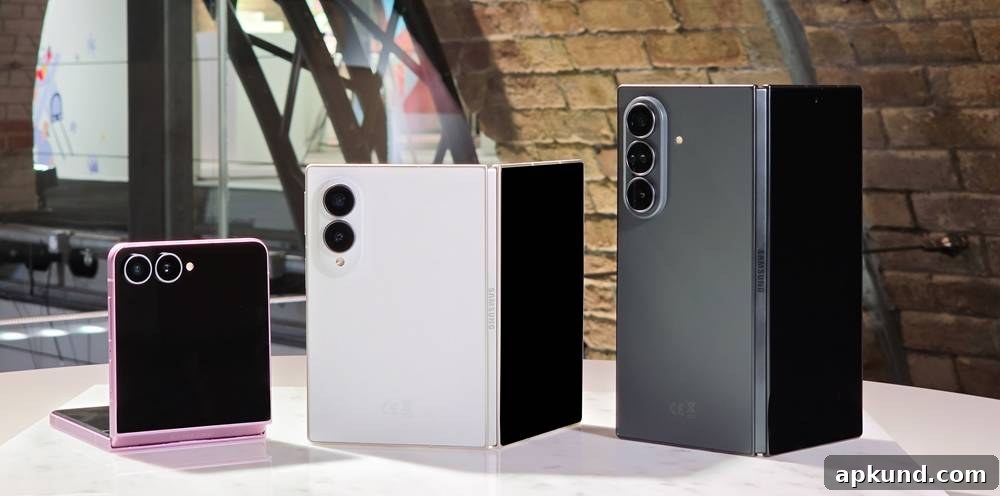
Just a month after launching in the market, Samsung’s eighth-generation foldable lineup is showing strong demand in the United States. Sales of the Galaxy Z Fold8 and Galaxy Z Fold8 Ultra have surged by roughly 30% combined compared with pre-orders for last year’s Galaxy Z Fold7. According to Samsung, these two Fold models now represent about 80% of Galaxy Z purchases in the U.S., indicating solid early consumer interest in the refreshed Fold series.
Early buyer behavior suggests clear preferences based on design and intended use. The standard Galaxy Z Fold8 is attracting customers who prioritize portability: its thinner, lighter chassis appeals to users who want a compact device that still unfolds into a larger workspace. In contrast, the Galaxy Z Fold8 Ultra appeals to buyers who value the biggest possible internal display and want an experience that can reduce or replace the need for a separate tablet. That larger-screen approach suits people who consume media, multitask extensively, or prefer a more substantial canvas for productivity and creativity.
Samsung also reports interest in the Galaxy Z Flip8 as an effective entry point into foldable phones. The Flip8 appears to be luring customers away from rival brands, with roughly 30% of its purchasers coming from competing ecosystems. A significant portion of those buyers are upgrading to a foldable for the first time, which suggests the clamshell form factor remains approachable for consumers curious about foldable technology but not yet ready to commit to the larger Fold models.
The Galaxy Z Flip series continues to serve as a gateway to Samsung’s broader foldable portfolio. More users of the Z Flip are upgrading to the new Z Fold8 and Z Fold8 Ultra devices compared with upgrades to the Galaxy Z Fold7. These early purchase trends indicate that more people are discovering a foldable experience that suits their needs. With design refinements across eight generations, Samsung is broadening the practical applications of foldables while offering flexibility so consumers can choose the form factor that best matches how they live, work, and create.
Beyond immediate sales figures, these patterns highlight a few broader market dynamics. First, the foldable category appears to be transitioning from niche novelty to mainstream consideration. When a high share of buyers are first-time foldable owners or are switching from other brands, it signals growing consumer comfort with the technology and its day-to-day value. Second, product differentiation is proving effective: offering several well-defined form factors—the compact clamshell Flip, the balanced Fold8, and the larger Fold8 Ultra—lets Samsung capture distinct user segments rather than forcing a one-size-fits-all approach.
From a product strategy perspective, emphasizing both portability and productivity helps Samsung address varied consumer priorities. The lighter, thinner Fold8 is well-suited for users who carry their device all day and want a single handset that remains pocketable. The Fold8 Ultra’s larger internal panel targets those who need a more expansive workspace for split-screen multitasking, writing, or consuming media at tablet-like scale. This deliberate choice to design toward specific use cases reduces overlap and makes the decision between models clearer for prospective buyers.
Looking ahead, these early sales trends will likely shape how manufacturers and carriers position foldable devices. Successful adoption in the U.S. market could encourage broader retail availability, carrier promotions, and software optimizations that further enhance the foldable experience. For consumers, the immediate result is greater choice: whether someone seeks portability, a tablet-like canvas, or a compact second-screen lifestyle, the current Galaxy Z lineup offers distinct, polished options backed by years of iterative design.