
We’re finally in the “Ber” months, and that means a wave of major product announcements and new technology arriving before the end of the year. Among those coming announcements, Taiwanese chipmaker MediaTek has teased a new Pro-tier Dimensity processor and confirmed an official reveal scheduled for September 15. The company’s early sneak peek highlights several areas of focus: higher raw performance, a redesigned architecture, and a renewed emphasis on power efficiency through advanced manufacturing.
In its social media post, MediaTek outlined the broad goals for the new chip rather than providing detailed specifications. The company says the processor will deliver significant performance gains while improving thermal and power characteristics, which are critical for both long battery life and sustained performance in demanding tasks. MediaTek also emphasized gaming as a key use case, mentioning AI-augmented graphics, an upgraded HyperEngine suite for optimized gaming performance and resource management, and support for immersive ray tracing to enhance visual fidelity in compatible titles.
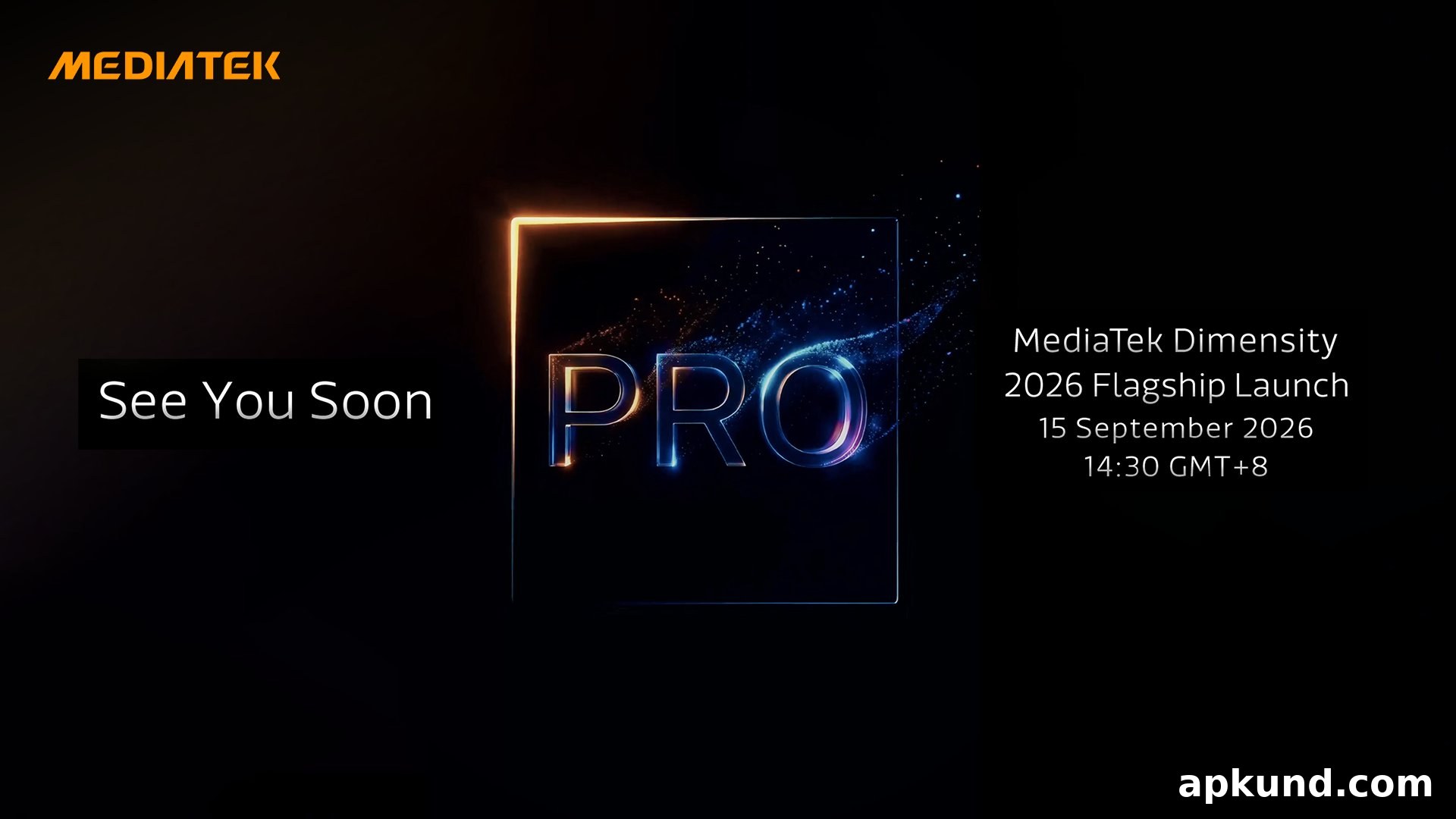
Image: MediaTek
Beyond gaming, MediaTek is positioning the processor as a “professional-grade” solution for content creators. One of the features called out is support for ultra-slow-motion capture, with the company claiming the new silicon can handle 4K video recording at high frame rates suitable for detailed slow-motion footage. That capability would be useful for creators shooting sports, action, or cinematic sequences on mobile devices, where a combination of high-resolution capture and high frame-rate recording opens up new creative possibilities.
At the moment, MediaTek has not confirmed the official product name or shared detailed benchmarks, but rumors are already circulating that the part could be branded the Dimensity 9600 Pro. Those reports are unconfirmed, and MediaTek has only promised a full presentation on September 15 where consumers and reviewers should learn the precise specifications, manufacturing node, CPU and GPU configurations, AI processing capabilities, and power-efficiency measures.
The timing of MediaTek’s reveal is notable. The event precedes Qualcomm’s Snapdragon Summit by roughly a week, an industry gathering where Qualcomm typically unveils its newest Snapdragon flagship platforms. That scheduling suggests MediaTek aims to capture attention early in the fall product cycle and position its new processor as a competitor in the premium Android market. For smartphone makers and enthusiasts, a September reveal gives OEMs a window to announce devices that may ship in the latter part of the year or early next year, depending on supply and integration timelines.
For buyers and industry watchers, there are several things to pay attention to once the full announcement arrives: measured performance across CPU, GPU and AI workloads; real-world power consumption and thermal performance under sustained load; the feature set for photographers and videographers; and support for modern graphics features such as ray tracing and advanced rendering techniques. MediaTek’s mention of AI-based graphics processing also raises questions about how developers will access those capabilities—whether through native APIs, engine integrations, or middleware that expands support across multiple apps and games.
MediaTek’s public messaging so far focuses on practical benefits—better gaming experiences, enhanced creative tools, and improved efficiency—rather than raw spec battles. That framing aligns with broader industry trends where chipmakers are balancing peak performance with sustained efficiency and richer multimedia feature sets.
Until the September 15 reveal, much remains speculative. MediaTek’s hints, however, make one thing clear: the company is preparing a Pro-tier mobile platform aimed at users who expect high performance for gaming and content creation without sacrificing battery life. When the official details arrive, the market will be able to assess how this new Dimensity solution stacks up against competing mobile platforms and what it means for the next generation of smartphones.