
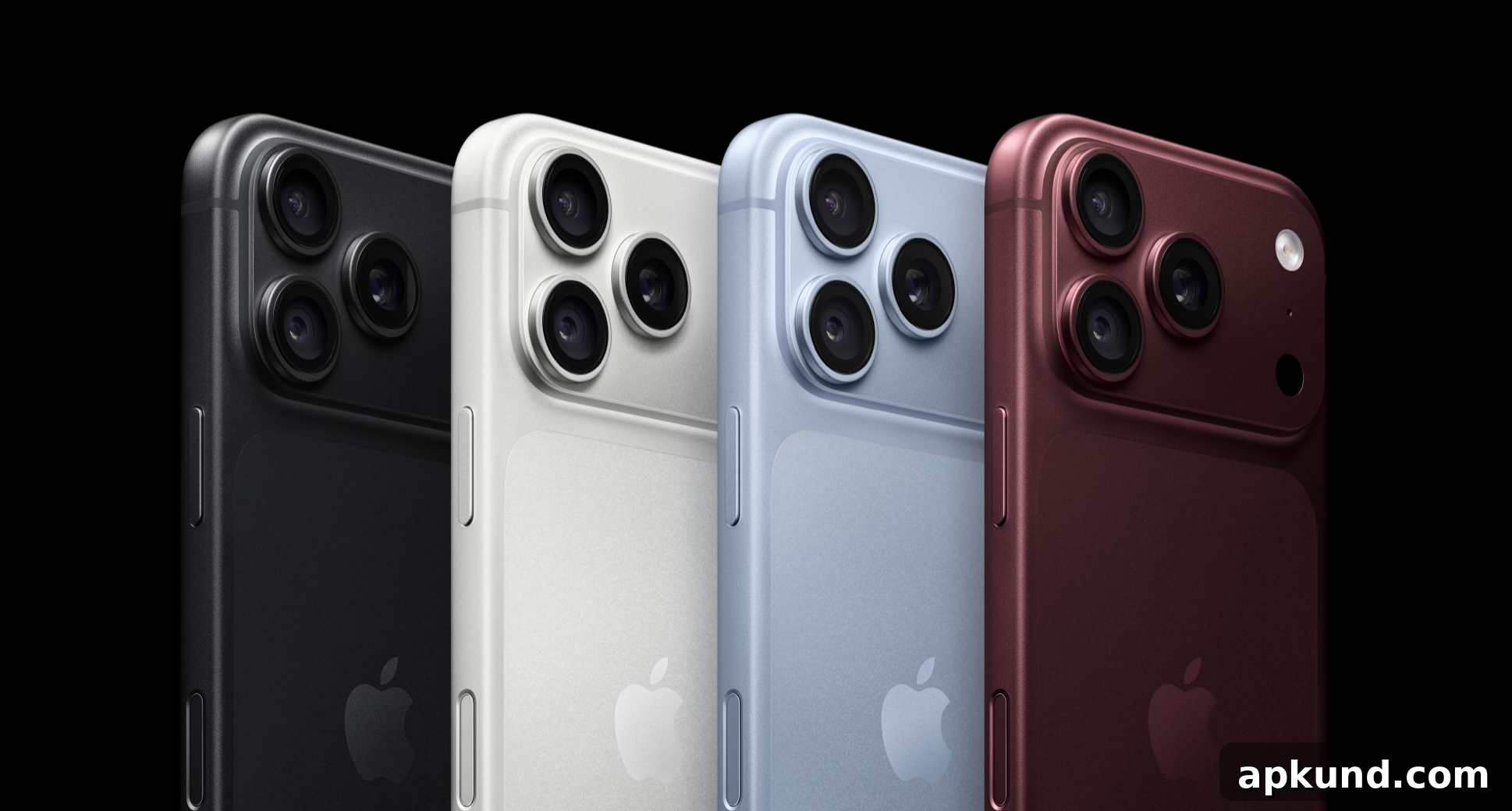
With Apple’s iPhone 18 Pro and Pro Max now official, the company immediately highlighted the new models’ camera capabilities. Apple says the iPhone 18 Pro series packs its most advanced camera technology yet, with a strong focus on hardware-level flexibility. But how meaningful are these changes in practice?




The headline upgrade is the revamped 48MP “Fusion” main camera. Unlike previous models, this sensor includes a mechanical variable-aperture system that can switch between distinct apertures automatically or by user selection. The mechanism uses six laser-cut blades that physically change the aperture size, allowing the lens to adapt to varying light levels and depth-of-field needs.
Variable aperture on phones isn’t entirely new—several manufacturers have experimented with similar hardware—but its inclusion on the iPhone brings finer optical control to Apple’s ecosystem. On paper, this promises optimal exposure and better focus control whether you’re shooting in dim conditions, capturing wide scenes with uniform sharpness, or creating shallow depth-of-field portraits.

Apple’s Camera app now exposes four distinct aperture settings that users can toggle natively, providing a level of manual control more commonly associated with mirrorless cameras. Developers also gain access through a dedicated API, so third-party camera apps can integrate precise aperture adjustments and take advantage of the new hardware.

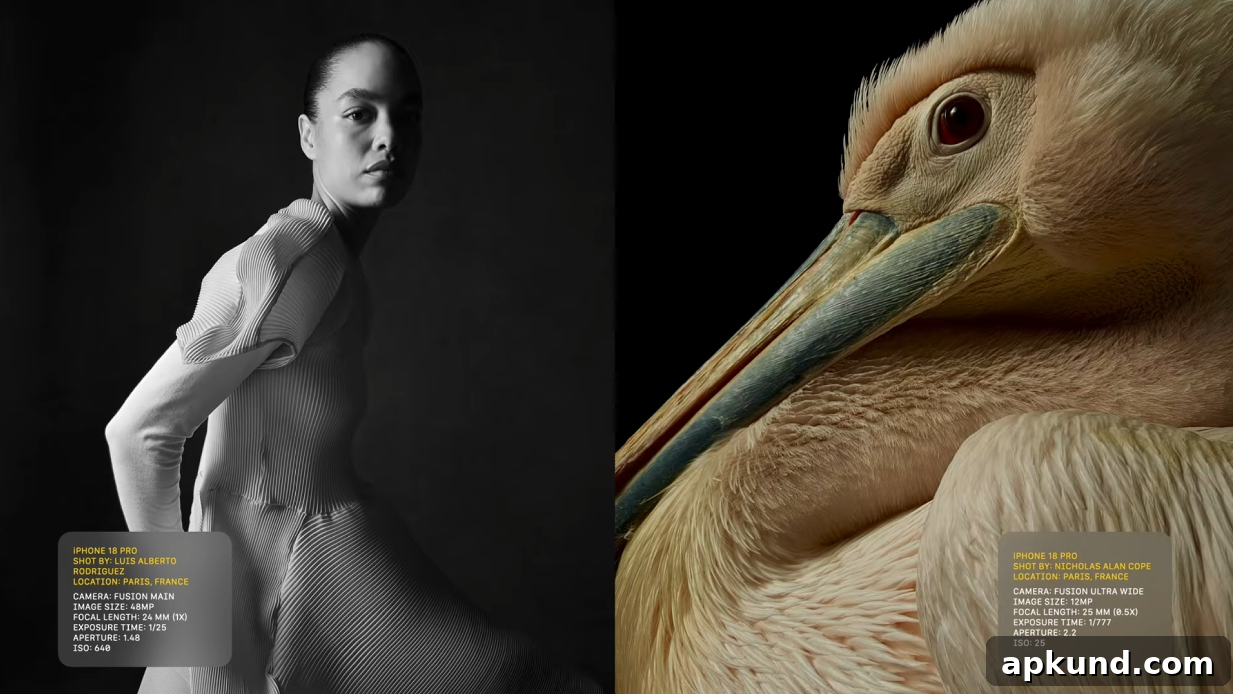
Software improvements accompany the hardware changes. Apple reports better low-light performance with reduced noise and improved detail preservation. Photographic Styles receives new controls for texture and grain, enabling photographers to apply stylistic adjustments without sacrificing image detail or raw data—useful for users who want baked-in character while retaining editing flexibility.
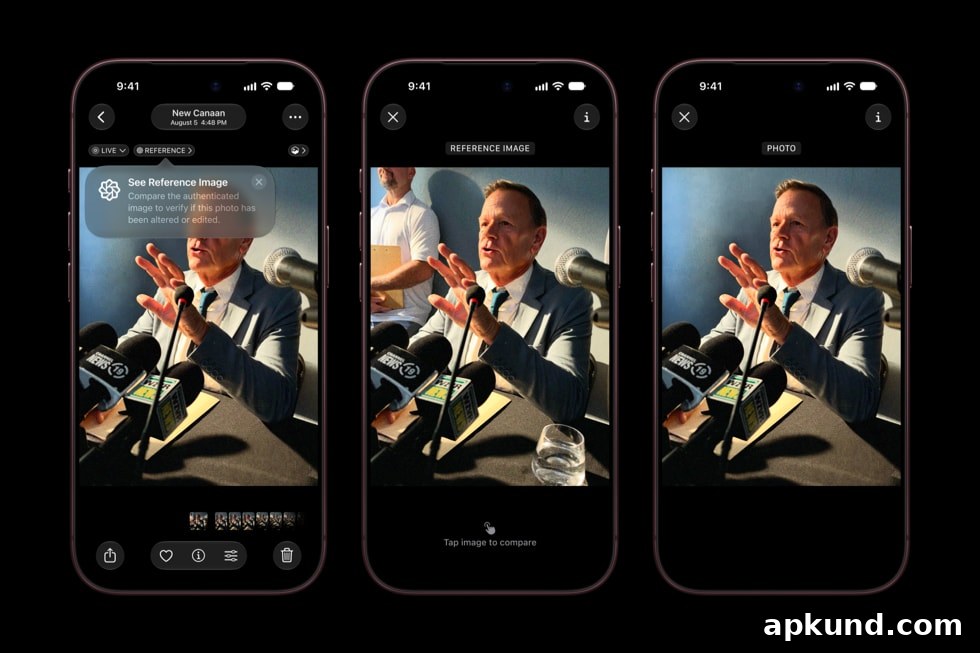
A notable addition is Apple Reference Image, a feature that records signed sensor data to create a verifiable digital negative. This aims to help validate a photo’s authenticity in an era of widespread AI edits and image manipulation. For journalists, content creators, and anyone concerned about image provenance, this kind of signed metadata can be a meaningful safeguard.
Aside from the main sensor, Apple has kept many existing components: a 48MP telephoto and a 48MP ultra-wide still complement the main camera, and the front-facing camera maintains an 18MP multi-aspect design that supports both portrait and landscape selfies without rotating the phone.
It’s encouraging to see a major Western brand adopt hardware features that have been more common among other manufacturers. Progress from companies worldwide has pushed mobile photography forward, and Apple’s approach brings those capabilities into its tightly integrated hardware-software environment. Ultimately, real-world performance will determine how impactful these changes are beyond spec sheets and controlled tests, but early signs suggest the iPhone 18 Pro line could deliver meaningful improvements for enthusiasts and casual shooters alike.
For photographers who value both convenience and control, the combination of mechanical aperture, improved low-light processing, texture and grain controls, and a verifiable image workflow makes this an important step for smartphone imaging. Time and independent testing will reveal how these features hold up across everyday scenarios, but Apple’s direction highlights the continuing importance of optics, sensors, and software working together to advance mobile photography.