
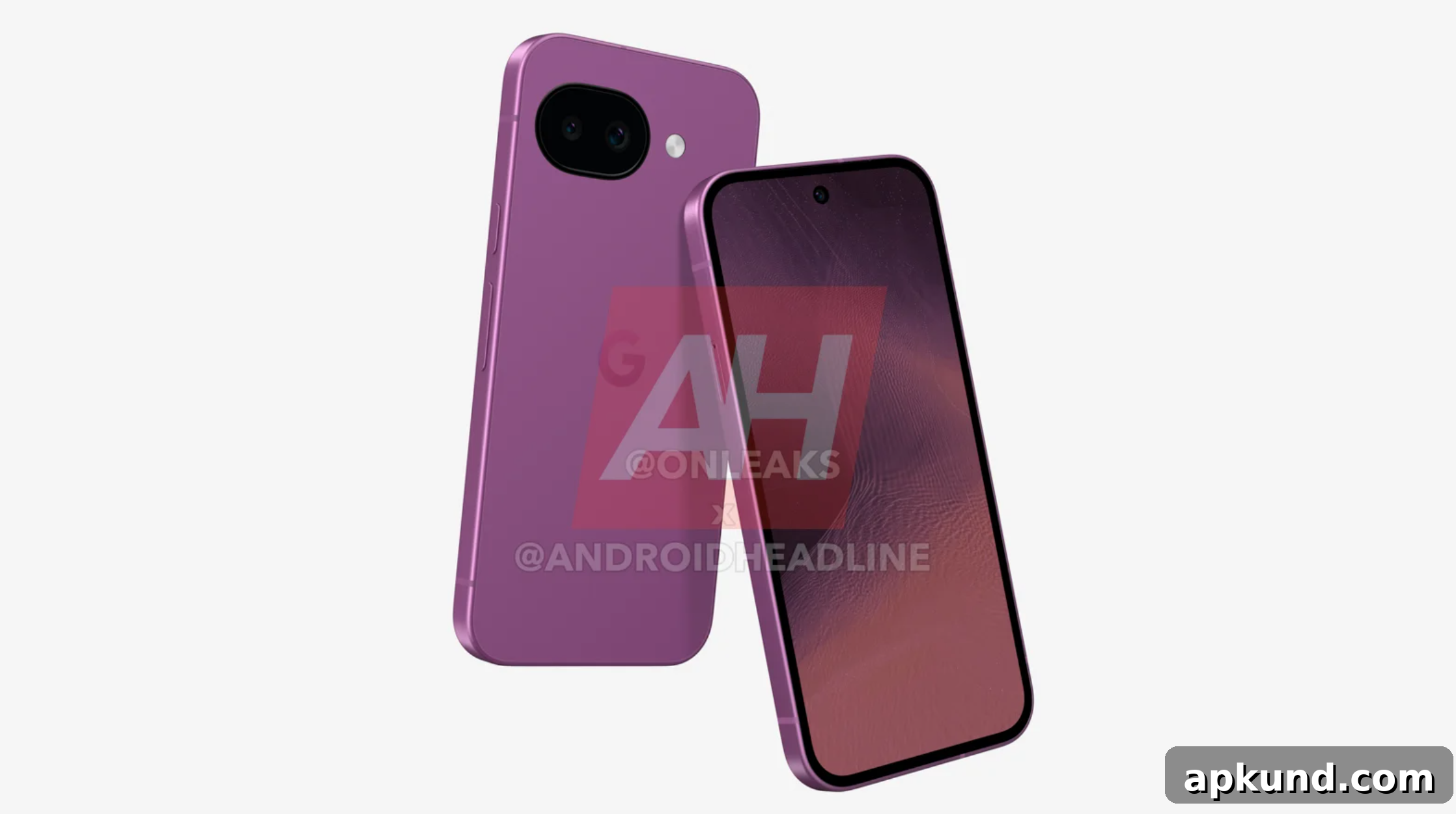
Although Google has not officially announced the Pixel 11a, numerous leaks and renders have already given us a clear picture of what to expect. Following the familiar pattern of previous A-series Pixels, early images suggest the Pixel 11a will continue the design language established by the Pixel 9a and 10a: a minimalist look that moves away from the large, pronounced camera bump found on other Pixel models.
Renders published by Android Headlines and shared by notable leaker OnLeaks show a device that blends elements from recent A-series phones. The visuals appear to merge the larger camera window introduced with the 10a and the plastic frame styling seen on the 9a. The result is a restrained, functional aesthetic that keeps the rear camera layout compact and integrated into the overall back panel design rather than protruding dramatically.
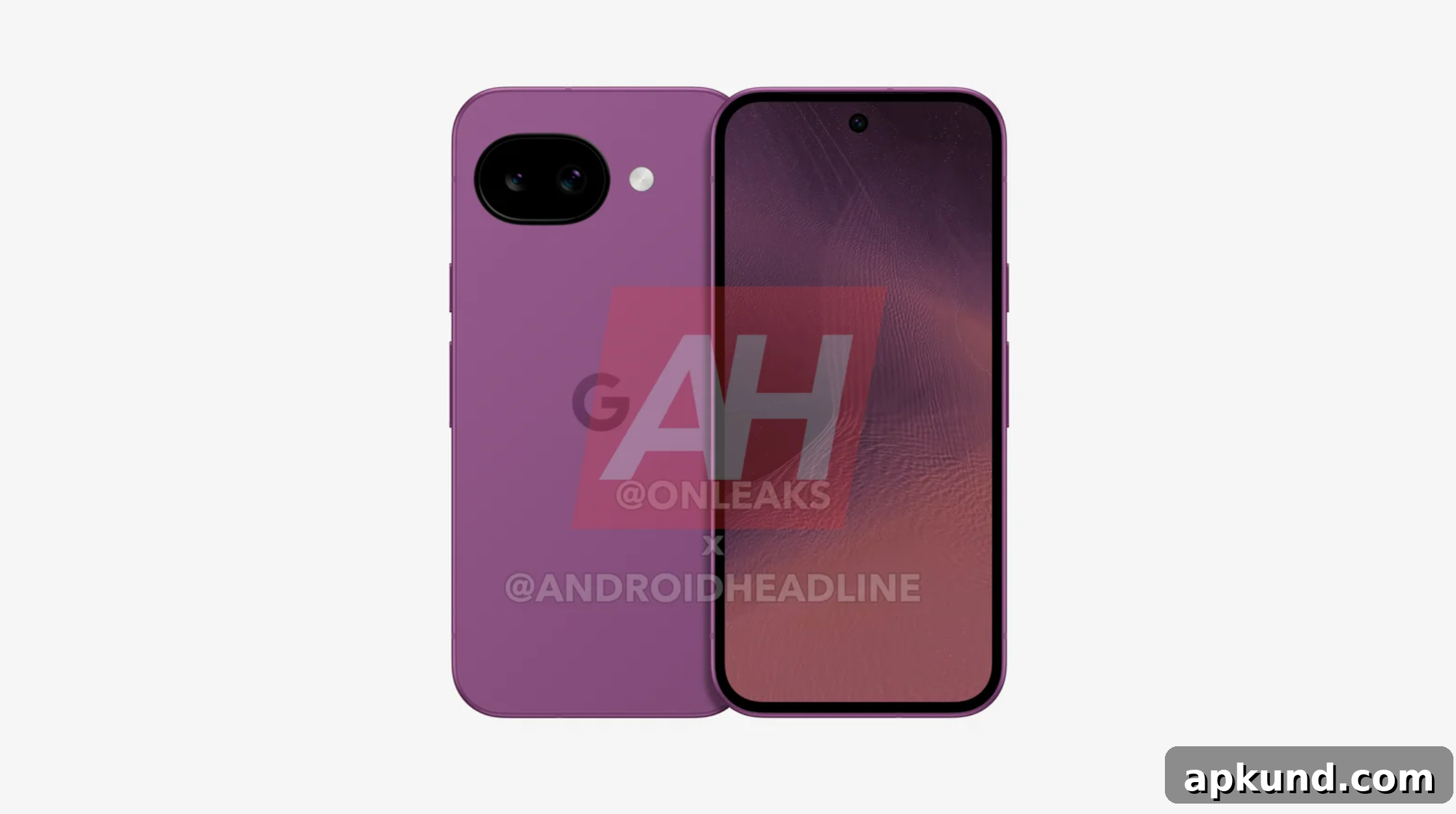
Image: Android Headlines & Onleaks
On the front, the renders show noticeably thick bezels. That styling choice appears intentional: Google has often reserved larger bezels for its A-series phones as a way to visually separate them from the company’s higher-end Pixel models. The sizable bezels create a balanced, symmetrical look, but they also reinforce the budget-friendly positioning of the 11a within Google’s lineup.
Color options for the Pixel 11a are also part of the early speculation. Sources suggest Google will offer the phone in classic neutral shades along with a couple of more distinctive hues. Reported colors include black, silver, green, and purple, which would align with Google’s recent approach of blending standard finishes with a few livelier options to appeal to different buyer preferences.
Under the surface, concrete technical details remain limited. The prevailing rumor is that Google will equip the Pixel 11a with the Tensor G6 processor. If true, that would indicate Google is skipping an intermediate G5 chipset for the A-series and moving directly to the newer generation for this model. For context, both the Pixel 9a and 10a used the Tensor G4, as Google chose to reuse the same chipset across consecutive A-series generations in prior years.
Beyond the processor rumor, few confirmed specifications are available at this stage. There’s no official word yet on screen size, camera capabilities, battery capacity, software features beyond the standard Pixel promises, or exact pricing. Given the A-series’ focus on delivering strong core experiences at a more accessible price point, expectations are that Google will continue to prioritize reliable software performance, sensible camera tuning, and a competitive value proposition rather than pushing flagship-level specs.
Timing remains an open question, but several outlets expect an official reveal in early 2027. As with most unannounced devices, the situation could change: Google’s final product decisions, market factors, and production schedules all influence the launch window. Until Google confirms details, however, these renders and rumors represent the most reliable glimpse we have of the 11a’s likely appearance and general direction.
For readers tracking Google’s A-series evolution, the Pixel 11a appears to emphasize continuity. The possible combination of the 10a’s camera window and the 9a’s plastic frame suggests a conservative, iterative redesign that prioritizes refinement over radical change. That approach has historically appealed to buyers who want a recognizable Pixel experience without the higher cost of flagship models.
As more information becomes available—through official announcements, hands-on reviews, or additional accurate leaks—we’ll get a better sense of how the Pixel 11a compares to its predecessors and rivals. For now, the prevailing impression from renders is clear: the Pixel 11a will look familiar, remain rooted in the A-series design philosophy, and potentially adopt the Tensor G6 as its processor, continuing Google’s long-running balancing act between performance, design, and value.
READ: Google’s New Pixel Update Adds Scam Alerts in 9 More Countries