
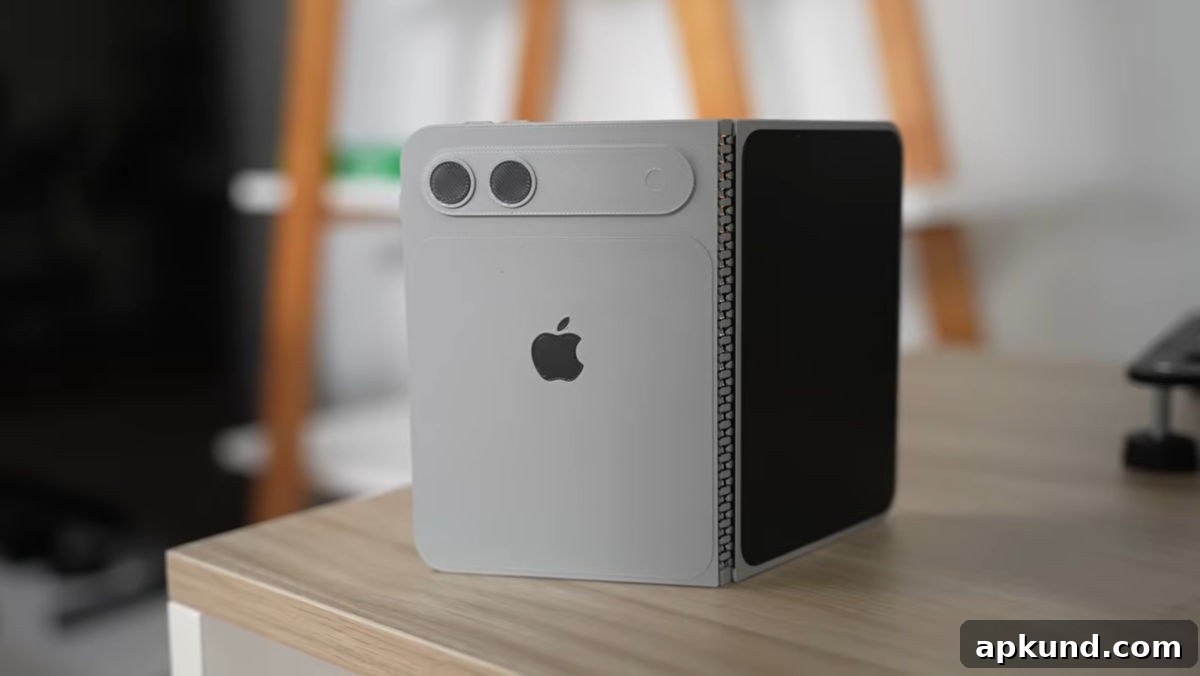
Apple’s long-rumored foldable iPhone has produced a steady stream of mixed signals for months: accomplishments one week, setbacks the next. Lately the narrative has tilted toward optimism. According to reporting from Nikkei Asia, Apple has asked suppliers to prepare for production of roughly 10 million units of an iPhone Ultra foldable model this year, an increase from the earlier target of 7 to 8 million units.
That is a notable escalation for what appears to be a first-generation product that few people outside Apple have seen in person. Alongside the production increase, forecasts for the device’s average selling price have risen too. IDC now estimates a typical price near $2,500, with higher-capacity variants potentially approaching $3,000. Earlier leaks and rumors generally placed the phone closer to the $2,000 range.
Production scale and price trends usually move in opposite directions: larger production runs tend to bring unit costs and retail prices down. So seeing a simultaneous bump in planned volume and in expected retail price is unusual. That combination raises questions about Apple’s strategy for introducing a premium foldable iPhone and how the company expects demand to respond at such high price points.
Why This Combination Is Unusual
The recent production increase does not occur against a backdrop of smooth development. The foldable iPhone’s path to market has been bumpy: early reports flagged hinge creaks, assembly defects, and other manufacturing challenges that threatened to delay a fall launch. Multiple suppliers have reportedly worked to resolve those issues, and more recent supplier updates suggested the most serious problems were addressed.
Rumors about the foldable iPhone’s price have floated around for many months. Earlier estimates from various outlets and industry trackers mostly placed the expected retail price between $2,000 and $2,300. Those figures made the device an expensive niche product but still slightly less extreme than the top-end IDC projection. The new $2,500 average and $3,000 ceiling would position the iPhone Ultra among the priciest consumer phones ever.
At the same time, demand forecasts for the foldable model have also shifted upward. Some recent analyst notes suggest stronger-than-expected interest, and demand estimates have climbed to levels that, in aggregate, rival expected sales of Samsung’s entire foldable lineup for the year. If those demand projections hold, Apple may feel confident that it can sell a higher number of units even at premium prices. That could explain why Apple is instructing suppliers to ready more inventory despite higher-than-expected price points.
Nevertheless, the combination of first-generation product risks and a headline-grabbing price makes for a delicate launch. Early adopters tend to be more forgiving of first-generation quirks if the product delivers a unique experience and premium engineering. But hinge reliability, screen durability, and software optimization for a foldable form factor are all critical to consumer satisfaction. If early units display persistent issues, a high price could reduce tolerance and slow adoption.
Apple’s ability to command premium pricing has long been one of the company’s advantages. Even so, placing a foldable device in the $2,500–$3,000 band would stretch that advantage. Pricing at that level implies Apple is betting on the product’s novelty, build quality, and ecosystem integration to justify the cost. It also signals that Apple expects the foldable to be a luxury item rather than a mass-market mainstream device—at least at launch.
For consumers and observers, the key questions now are whether Apple can deliver a durable, well-engineered hinge and display, whether the software experience adapts smoothly to folding form factors, and how the market responds to a launch price that significantly exceeds earlier expectations. With a rumored launch window targeting September, official details—specifications, confirmed price tiers, and availability—should arrive soon. Until Apple announces the product, industry estimates and supplier reports will continue to shape expectations, but the final picture will depend on the company’s official reveal and consumer reaction.