
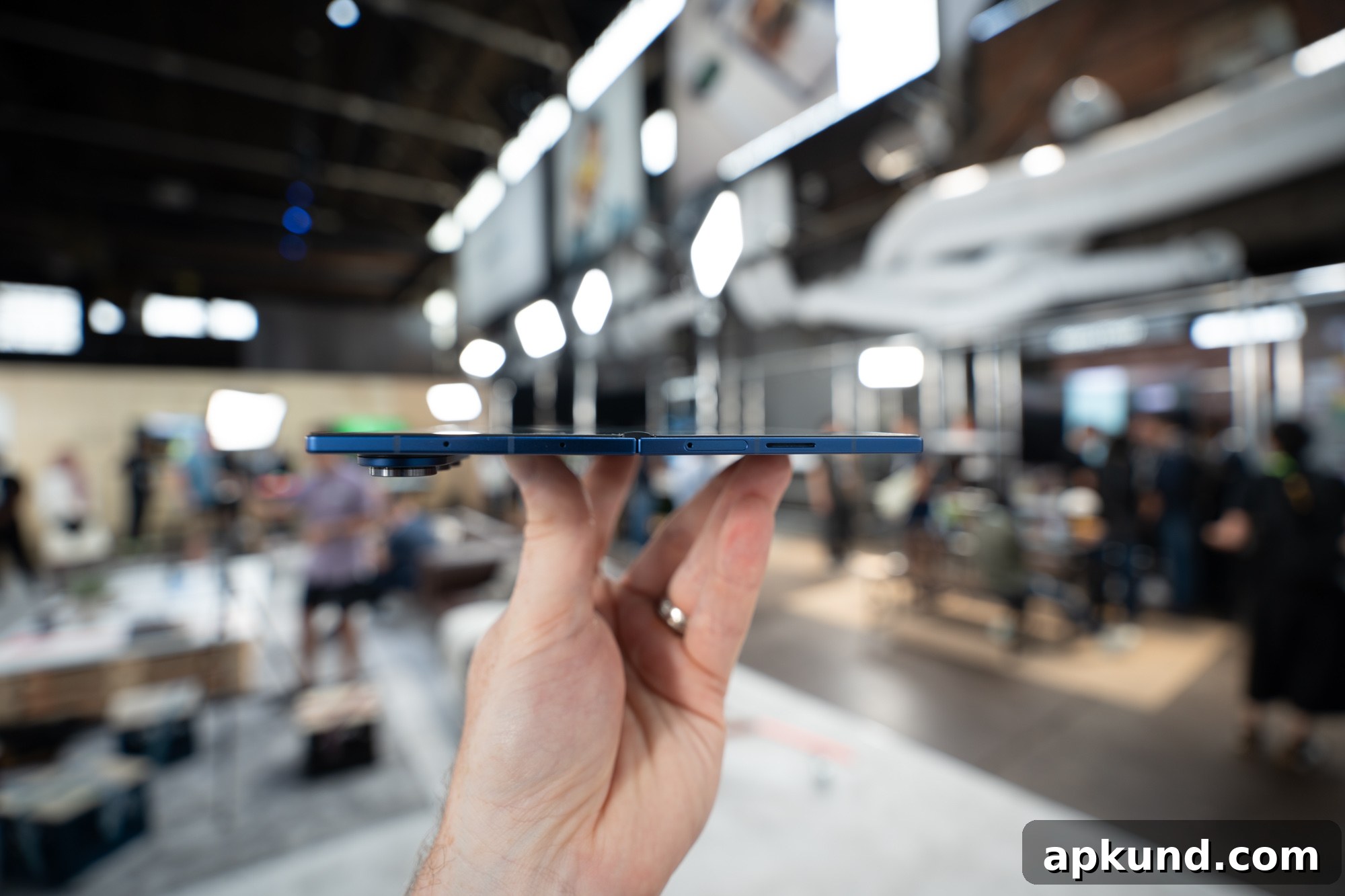
Weight has long been a notable concern for book-style foldable phones. The original Galaxy Z Fold 5 weighed 253 grams, a number many users found heavy for daily carry. With each new generation, Samsung has steadily reduced that weight. Recent leaks suggest the Galaxy Z Fold 8 could represent the lightest model in the lineup to date.
A reliable tipster, yeux1122, indicates the Fold 8 will be lighter than the Fold 7, though no precise figure was provided. Other industry reports from South Korea place the Fold 8’s weight in the 200 to 210 gram range. That would be a meaningful decline compared with the Fold 7, which weighs 215 grams, and a substantial improvement over the Fold 6 at 239 grams. This steady downward trend in weight across models reflects a clear and consistent focus from Samsung on making its foldable phones easier to carry.
A Bigger Battery That Somehow Weighs Less
What makes the Fold 8’s rumored weight reduction particularly noteworthy is the simultaneous claim of a larger battery. Reports suggest Samsung may increase capacity to a 5,000mAh battery, up from the Fold 7’s 4,400mAh cell. A jump of roughly 600mAh is a marked improvement for a foldable device, and achieving that while reducing overall device weight would point to meaningful internal engineering advances.
One plausible explanation is the use of lighter, high-strength materials in the chassis. Carbon fiber-reinforced plastic and other advanced composites can preserve structural rigidity while cutting mass, and they have been used in other industries to reduce weight without sacrificing durability. If Samsung is incorporating such materials into the Fold 8’s frame, it would help explain how a larger battery and lighter overall weight could coexist.
Alongside battery changes, the Fold 8 is rumored to be slightly thinner when unfolded, shaving down to about 4.1mm from the Fold 7’s 4.2mm. Even small reductions in thickness can contribute to a lighter, more refined hand-feel, especially when combined with weight-saving materials and refined internal layout. While Samsung has not officially confirmed weight, battery, or thickness figures for the Fold 8, the company’s pattern of incremental improvements across generations makes these rumors credible.
Another area undergoing improvement is charging speed. Several reports indicate the Fold 8 may adopt faster wired charging, moving away from older 25W limits toward significantly higher wattage. Better charging performance, paired with a larger battery and reduced weight, would make the device more practical for everyday use and travel.
Beyond the core hardware changes, design refinements and internal packaging improvements often play a large role in reducing weight. Engineers can reposition components, use lighter adhesives, and consolidate parts to cut bulk without changing the device’s external dimensions. For a device like a foldable, where hinge mechanisms and dual displays add complexity, every gram saved requires careful tradeoffs and innovation.
Samsung is widely expected to unveil the Galaxy Z Fold 8 at its next Unpacked event, scheduled for July 22 in London. The Z Flip 8 and a rumored Z Fold 8 Wide variant may also appear at the same event. With roughly two months until the reveal, Samsung’s continued emphasis on lighter, more capable foldables looks set to be a central theme for this generation.
In summary, the story surrounding the Fold 8 centers on meaningful weight reduction paired with larger battery capacity, thinner unfolded dimensions, and improved charging. If these rumors hold true, Samsung will have delivered another round of practical refinements that make its foldables lighter, longer-lasting, and more convenient to use every day.