
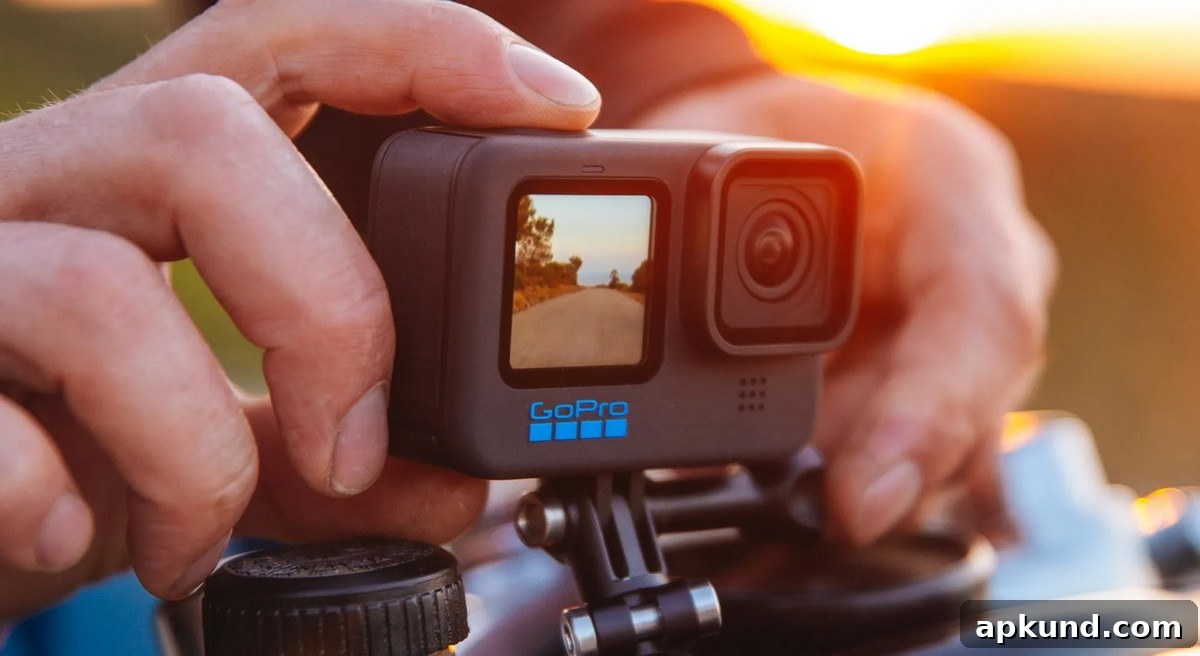
Camera maker GoPro recently announced a multi-year partnership with Yamaha Champions Riding School (ChampSchool), naming GoPro the exclusive camera partner of the motorcycle training organization. The agreement is designed to integrate GoPro’s imaging technology into ChampSchool’s training ecosystem, bringing high-quality video tools directly into both on-bike and classroom instruction.
Under the partnership, ChampSchool instructors will use GoPro cameras to record riders during on-track sessions and drills. These recordings enable detailed, frame-by-frame analysis of riding technique—body position, line choice, throttle control, and braking—which gives students a clear, objective view of their actual performance rather than relying solely on perception. By reviewing footage with instructors, riders can more quickly identify errors, reinforce correct habits, and accelerate skill development while reducing the risk of forming unsafe techniques.
GoPro allows riders to see what they’re actually doing, not what they think they’re doing,… That level of visibility accelerates learning in a way that was never possible before. This partnership puts GoPro at the center of rider development.
The collaboration is intended to touch multiple elements of ChampSchool’s curriculum and operations. Instructors will incorporate camera-based footage into classroom sessions for visual demonstration and critique, and on-bike review sessions will give students immediate playback to compare their inputs and outcomes. Coaches can streamline feedback workflows by tagging key moments in video, highlighting areas for improvement, and tracking progress over time. This structured approach to video coaching supports a feedback loop that is more precise and actionable than verbal instruction alone.
Beyond direct coaching benefits, the partnership creates opportunities for product testing and joint content creation. Using real-world training environments, GoPro can evaluate how its cameras perform in dynamic riding conditions—varied light, vibration, and motion—while ChampSchool benefits from tailored features and workflows that better support rider training. Collaborative content produced with instructors and students can also help demonstrate techniques, teach fundamentals to a wider audience, and document rider progress in compelling, educational formats.
From a safety and performance standpoint, the use of on-bike cameras offers measurable advantages. Video review can reveal subtle issues such as grip pressure, head positioning, or inconsistent throttle control that are difficult to sense in the moment. When instructors and students review these moments together, they can develop targeted drills and corrective exercises that directly address the root cause rather than treating symptoms. Over time, that leads to more consistent lap times, improved confidence, and safer track habits.
ChampSchool’s integration of cameras into coaching also supports data-driven instruction. Combining visual footage with telemetry or instructor notes lets coaches build a more complete picture of a rider’s performance. Even without advanced sensors, high-quality video provides a persistent record of sessions that students can revisit outside the classroom—an invaluable study tool for committed learners who want to practice deliberately between events.
For riders at all levels, from beginners learning the basics to advanced students refining racecraft, the partnership promises to make technical feedback more transparent and repeatable. Novice riders benefit from seeing foundational mistakes and learning correct body mechanics earlier, while advanced riders can fine-tune subtle inputs that shave tenths of seconds off lap times.
Overall, the GoPro–ChampSchool collaboration aligns camera technology with structured coaching to accelerate learning, enhance safety, and expand opportunities for product development and educational content. By placing reliable, high-resolution video tools at the heart of rider development, the partnership aims to give instructors and students a clearer, more objective path to improved performance on track.