
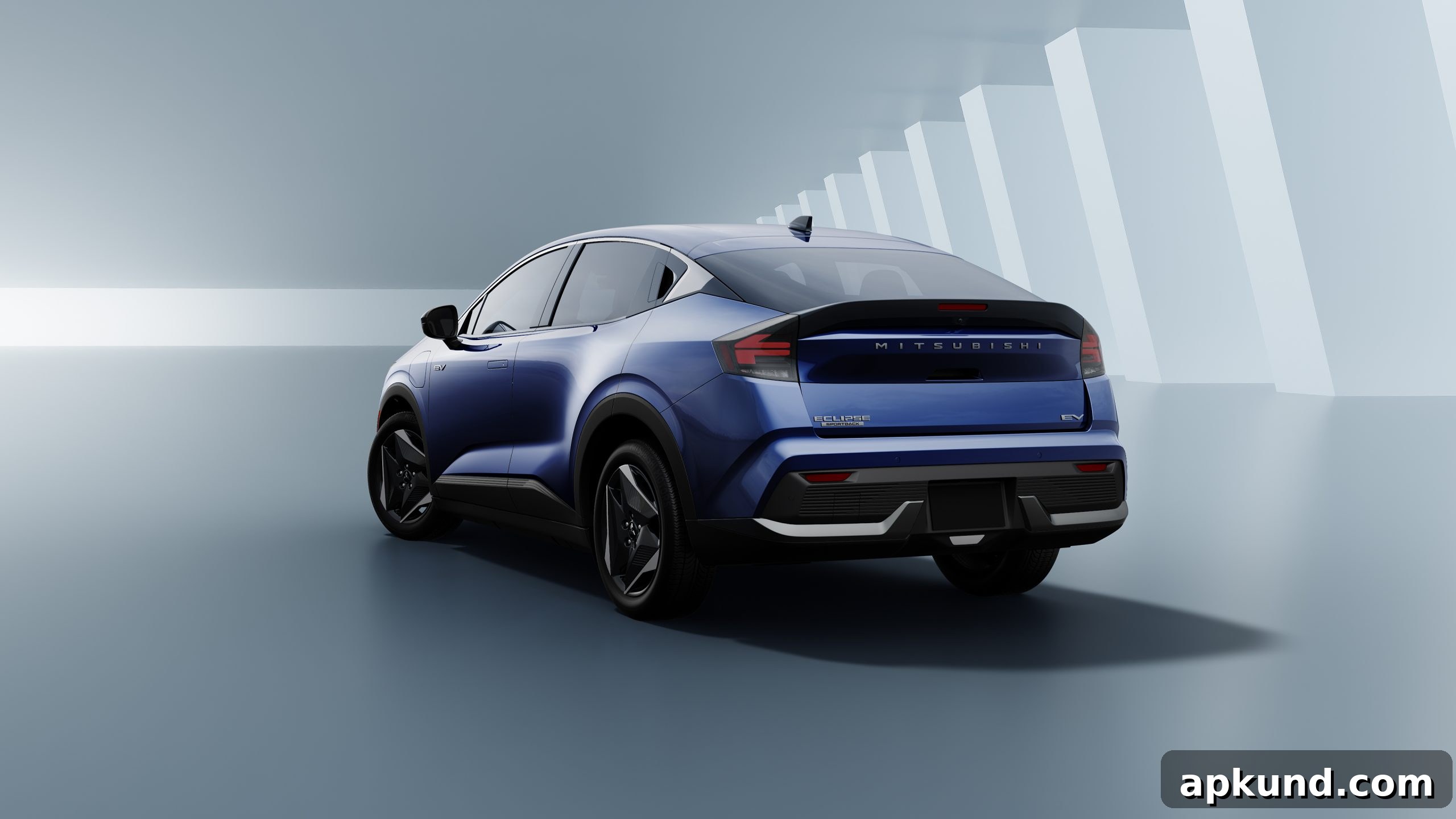
Mitsubishi has announced the arrival of its new Eclipse Sportback for the North American and Canadian markets. The company describes the model as blending sporty styling with everyday practicality, presented as a fully electric vehicle. Notably, production of the Eclipse Sportback is an OEM collaboration with Nissan, reflecting a broader strategic partnership between the two manufacturers. This cooperation highlights how automakers are leveraging shared platforms and engineering to expand electric and conventional model lineups more efficiently.
Stylistically, Mitsubishi says the Eclipse Sportback retains signature visual cues that align it with the brand’s design language. Distinctive elements include updated accents on the front and rear bumpers, a reworked front grille, and bespoke treatments for the headlights and rear combination lamps. The rear gate has been redesigned to match the Sportback profile, and attention has been paid to the wheels and D-pillars to reinforce the vehicle’s sporty yet refined character. These deliberate styling choices aim to give the Eclipse Sportback a unique presence while maintaining recognizable Mitsubishi identity.
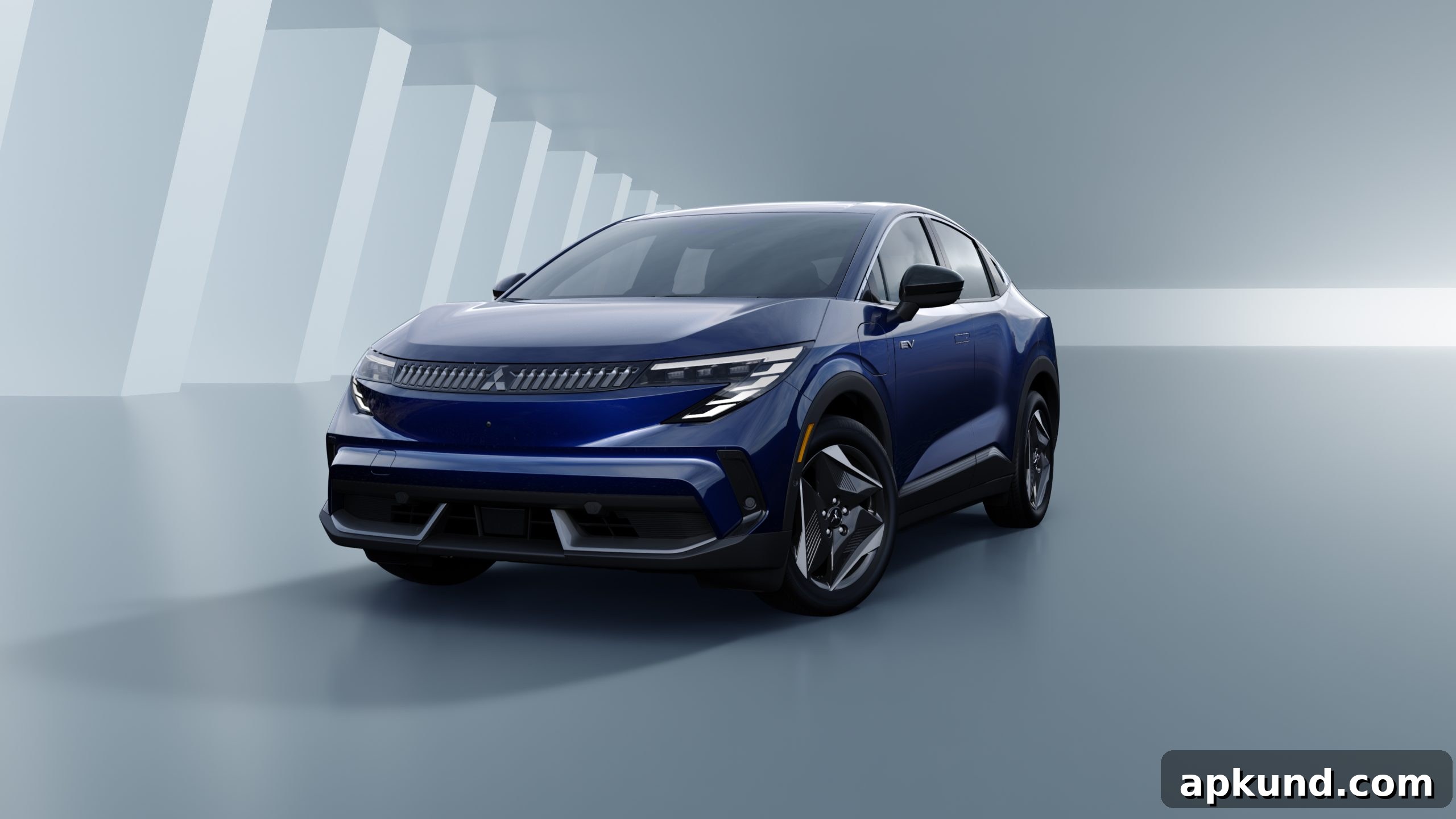
Beyond its appearance, the Eclipse Sportback represents a practical electric option intended for everyday use. Mitsubishi emphasizes a balance between dynamic exterior design and usable interior space, making the Sportback suitable for daily commuting, family errands, and routine driving needs. Offering a fully electric powertrain aligns with the broader industry shift toward electrification and provides buyers with the benefits typically associated with EVs—such as reduced tailpipe emissions and the potential for lower operating costs—while keeping the familiar comfort and utility consumers expect from a compact crossover-style vehicle.
The Eclipse Sportback launch also underscores a growing product-sharing initiative between Mitsubishi and Nissan. The two brands are collaborating on a range of vehicles for different markets: beyond the Sportback, their joint efforts extend to new pickup trucks planned for North America and kei-cars tailored for the Japanese market. This strategy enables both companies to optimize development and production resources while delivering market-specific models more quickly.
This cooperation includes several OEM arrangements that already span multiple global markets. For example, Mitsubishi is supplying Nissan with the Rogue Plug-in Hybrid for North America, the Navara for Oceania, and the Livina for the Philippines. Conversely, Mitsubishi sources the Versa Van from Nissan for the Philippine market. With the addition of the Eclipse Sportback to their shared pipeline, the partnership now reaches into North America in a new way, reflecting a reciprocal approach to product allocation that benefits both firms’ market coverage and portfolio breadth.
For buyers, the collaboration between Mitsubishi and Nissan may offer advantages such as faster access to new technologies, broader dealer support, and a wider selection of electrified models. At the same time, shared manufacturing can help control costs, potentially improving value for consumers. Mitsubishi’s positioning of the Eclipse Sportback as a sporty-but-practical electric option suggests the company aims to appeal to drivers who want modern design and everyday functionality without sacrificing the convenience of an electric vehicle.
As the Eclipse Sportback arrives, Mitsubishi’s messaging focuses on brand identity, electric mobility, and strategic alliances that extend vehicle availability across regions. Consumers interested in this model can expect a design that references Mitsubishi’s established styling cues, a fully electric powertrain suited to daily use, and the benefits of a cross-manufacturer production relationship. Additional details about specifications, trims, pricing, and local availability will typically be provided by Mitsubishi’s regional channels as the rollout progresses.