
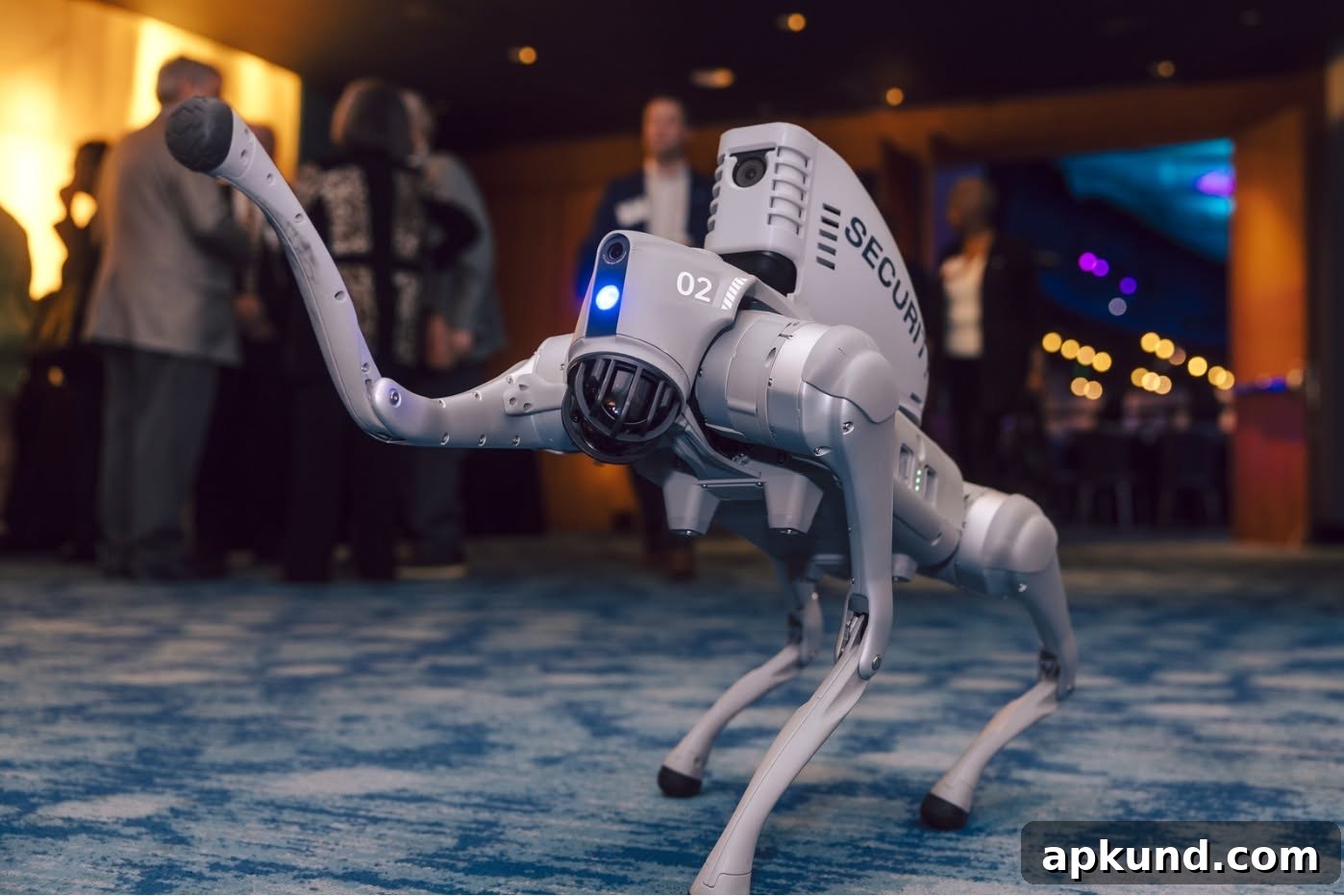
If you live in an Atlanta apartment complex, the figure walking the parking lot at 2 a.m. might not be a person. Several properties in the city have begun replacing overnight security guards with four-legged robot patrol units.
At 445 Cleveland Apartments in southwest Atlanta, two robotic canines now patrol the grounds once the leasing office closes. They travel across parking areas and shared spaces, acknowledge residents, and approach anyone who appears out of place. Previously the community relied on two or three human guards to cover those same overnight and weekend shifts.
How the robots actually work
These machines do not operate without human supervision. A trained security operator monitors each robot via its onboard cameras and can speak directly to anyone the robot approaches through a built-in speaker. The property owner describes the arrangement as similar to controlling a character in a video game, with the important difference that the person at the controls is a trained professional focused on safety and response.
The company behind the system, an Atlanta-based startup, says the robots can reach most locations across a property within roughly 60 seconds and can integrate with many fixed cameras already installed on site. In at least one instance earlier this year, a robot assisted local police by helping track a suspect at an apartment complex; officers later arrived on scene and made an arrest. The vendor also notes that operating robotic patrols can run at about half the cost of maintaining a comparable human guard presence. Reported monthly pricing for such systems varies by package and property size, with estimates commonly placed in the mid-thousands per month. The startup has expanded its fleet across metro Atlanta and now serves a mix of apartment communities, construction sites, and hotel properties.
Property managers and company leaders often highlight safety advantages for human guards. Confronting a group of strangers while alone in a dimly lit parking lot is dangerous work; a machine can be sent forward to assess a situation and keep a safer distance between human staff and potential threats. Robots can also patrol continuously without tiring, providing a visible deterrent and allowing human operators to focus on monitoring and decision-making rather than walking long circuits themselves.
What to watch out for
The trade-off for those benefits is privacy. These devices are mobile cameras capable of following people, capturing video and audio, and entering shared spaces. That mobility raises questions that differ from the ones posed by wall-mounted cameras. Civil liberties and privacy advocates have expressed concern about the normalization of autonomous surveillance tools in everyday environments and the potential impact on residents’ expectations of privacy.
If you rent in an area where these systems are being deployed, it is worthwhile to ask your property manager a number of specific questions. Where exactly do the robots operate and do they enter private or semi-private areas, such as courtyards, hallways, or near windows? What types of data do they collect — video, audio, telemetry — and who has access to that data? How long is footage retained, and under what circumstances will it be reviewed or shared with third parties, including law enforcement? Is the robot monitored by employees of the property owner, by a third-party security firm, or by remote operators employed by the robotics provider?
Lease agreements, building policies, and local privacy rules vary from one property to another, so answers will not be uniform across the city. Tenants who are concerned about privacy and safety should request written policy details and consider asking for any applicable camera and data-retention policies to be attached to leasing documents. For those managing properties, balancing the security benefits of mobile robotic patrols with clear, transparent rules about where and how the robots operate can help address resident concerns while still delivering effective deterrence.
Ultimately, robot patrols represent a new approach to property security that combines remote human oversight with autonomous mobility. They can reduce costs, increase coverage, and protect human guards from dangerous encounters. At the same time, they introduce novel privacy considerations that residents and managers should address openly. Asking smart questions and demanding clear policies will help ensure that the technology enhances community safety without compromising reasonable expectations of privacy.