
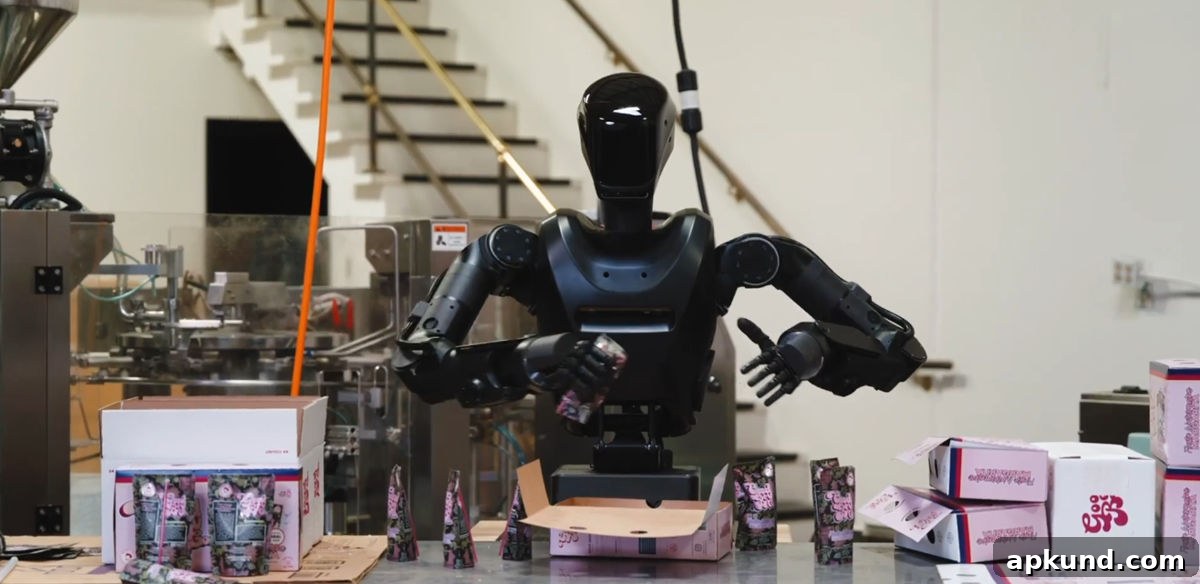
A U.S. startup developing humanoid robots says its machines could eventually serve on the battlefield, and its CEO has publicly stated he would be willing to arm them if a military customer requested it. While that scenario has not occurred yet, the prospect has drawn close scrutiny from human rights experts and policy analysts, who warn about the ethical, legal, and strategic implications of weaponized humanoid robots.
This is not just science fiction or a scene from a movie about robot armies. The company’s humanoid platform is already being tested in a combat environment for non-combat roles such as logistics and reconnaissance. The progression from unarmed support robots to armed autonomous systems raises urgent questions about how military robotics should be governed, who controls them, and how decisions about the use of force are made and supervised.
The Robots Have Already Been Tested in a War Zone
The company, Foundation Future Industries, is a San Francisco startup founded in 2024. It has secured research contracts with multiple branches of the U.S. military and reports tens of millions of dollars in government work supporting development. Its humanoid robot, named Phantom, is roughly 5 feet 9 inches tall and can carry approximately 44 pounds of equipment, including supplies and mission-specific sensors. Although the company says it has not yet installed weapons on Phantom, two unarmed units were sent overseas earlier this year to assist with logistics, scouting, and other support tasks in an active combat zone. Foundation describes those deployments as the first instances of humanoid robots operating in front-line conditions.
Foundation’s CEO, Sankaet Pathak, has stated he would build armed versions of Phantom if asked by military customers. He has argued that a robot intended to operate ahead of troops must present a deterrent effect, asserting that a visibly intimidating system could influence adversary behavior in ways that reduce risk to human soldiers. Pathak and the company have outlined ambitious manufacturing targets, including plans to produce dozens of units initially and to scale rapidly to thousands within a few years, contingent on funding and contracts.
Why Human Rights Experts Are Worried
Human rights organizations, arms control advocates, and international law scholars are expressing strong concerns about delegating life-or-death decisions to machines. Key issues include compliance with international humanitarian law, accountability when lethal force is used, and the potential for autonomous systems to malfunction or be misused. Critics warn that once weaponized robots are deployed, it could be difficult to prevent escalation, accidental engagements, or transfers of the technology to actors who would use it irresponsibly.
Proponents, including some industry leaders, counter that robots can increase precision, reduce human casualties, and carry out the most dangerous tasks without putting soldiers directly in harm’s way. They argue that careful engineering, robust control protocols, and meaningful human oversight can mitigate many risks. Nonetheless, the pace of development and deployment, combined with significant defense funding, means these systems could appear in real conflicts before international norms, regulations, or public consensus are fully formed.
Beyond immediate battlefield concerns, experts also worry about broader implications: the strategic incentives created by autonomous weapons, the possibility of arms races among technologically advanced states, and the ethical consequences of normalizing machines as agents of lethal force. Policymakers face difficult choices about export controls, procurement policies, and international agreements that would limit or govern the deployment of armed robotics.
The debate over humanoid battlefield robots touches on multiple domains — technology, law, ethics, and strategy. As companies push to scale production and militaries consider new operational concepts, transparency, independent oversight, and clear legal frameworks will be essential to manage risk. Public awareness and informed debate are also crucial: decisions made today about development, regulation, and deployment will shape the role of robots in future conflicts and influence whether these systems enhance security or increase harm.