
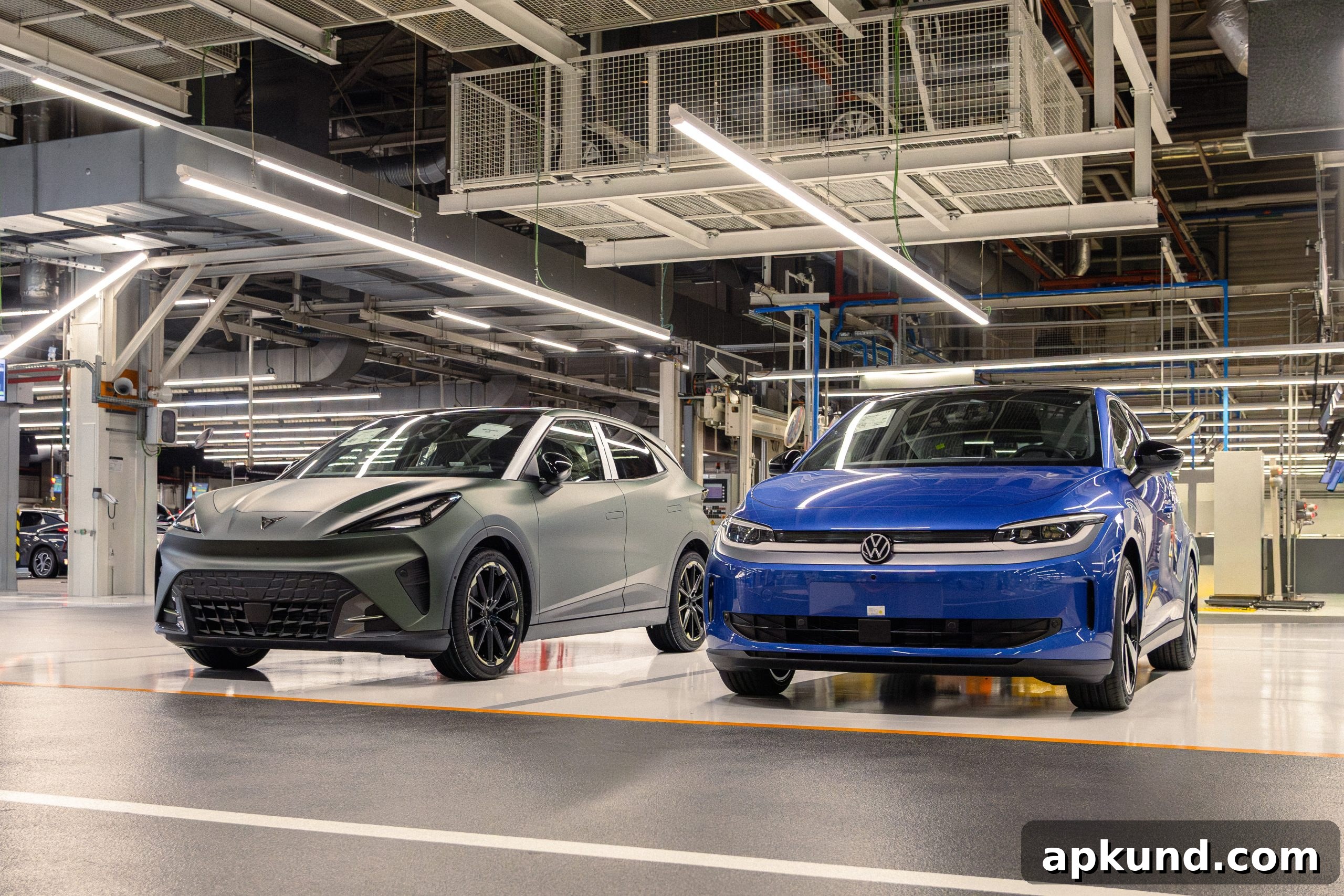
Volkswagen has begun production of two new electric models: the CUPRA Raval and the Volkswagen ID. Polo. Both vehicles are being manufactured at the Martorell plant in Spain under the leadership of SEAT & CUPRA on behalf of the Volkswagen Group Brand Group Core. The start of production marks a significant step in Volkswagen Group’s broader push to expand affordable electrified options in Europe and strengthen its on-continent manufacturing footprint.
Compelling entry-level cars, affordable for many, offering space and top technology customers know from higher segments: with the Electric Urban Car Family, Volkswagen Group is stepping up the pace of electrification in Europe. We are investing several billions to make Spain a central hub of electromobility. And we are proving a clear point: even as global competition intensifies, we believe in our home market Europe – our Electric Urban Car Family will be from Europe, for Europe. It is now crucial to build on this momentum with a clear Made-in-Europe strategy that ensures a level playing field and strengthens Europe’s industrial base.
Both new models are part of Volkswagen Group’s Electric Urban Car Family, a program designed to deliver practical, affordable, fully electric vehicles for urban and suburban drivers. The family will eventually include four distinct battery-electric models produced across three brands within the group. All models will be built on the shared MEB21 platform, a modular electric architecture that reduces production complexity, improves economies of scale, and helps lower manufacturing costs—benefits that can be passed on to buyers in the form of more competitive pricing.
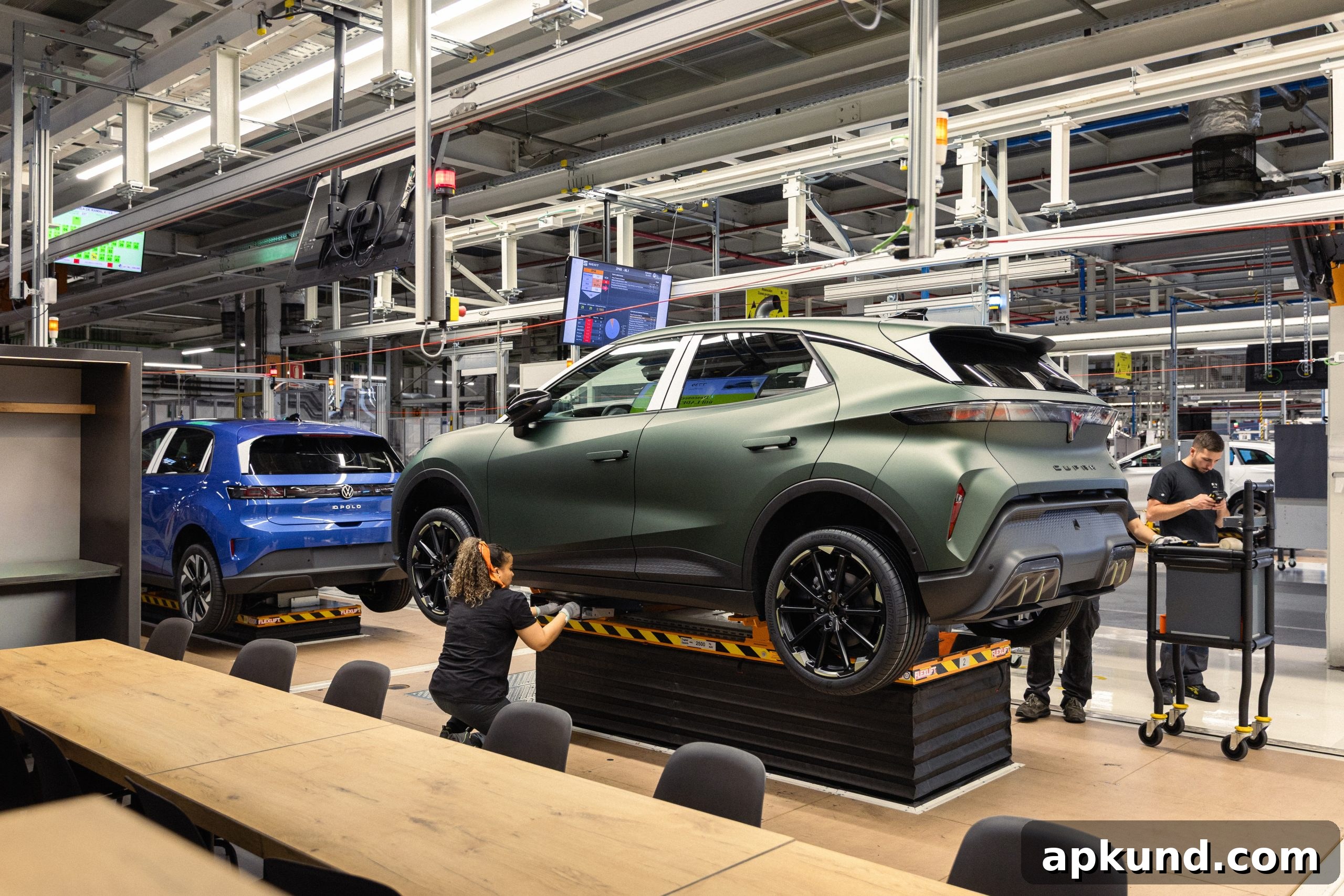
Photo courtesy of Volkswagen
The CUPRA Raval and Volkswagen ID. Polo are intended to be compelling entry-level choices, combining roomy interiors and advanced technology borrowed from higher segments with pricing and features tailored for a broad European market. Volkswagen Group emphasizes that the Electric Urban Car Family is a Europe-first initiative—designed, manufactured and sold for European customers—to reinforce the company’s industrial presence in the region and help Europe remain competitive in the fast-evolving global EV market.
SEAT & CUPRA’s plant in Martorell was chosen as the production hub for these models to capitalize on Spain’s growing role in the group’s electrification strategy. Volkswagen Group says it is investing several billion euros to make Spain a central hub of electromobility, strengthening local supply chains, creating jobs and expanding production capacity for electric models. The decision underlines the company’s commitment to a “Made-in-Europe” manufacturing approach that aims to maintain resilience and control over key production steps.
The launch comes at a strong moment for CUPRA. Ahead of the Raval’s market debut in summer 2026, the CUPRA brand reached the milestone of 1 million cumulative sales and reported one of its best financial quarters. That momentum supports Volkswagen Group’s plan to scale output efficiently across multiple brands while targeting a diverse set of customers who are ready to adopt electric vehicles.
To mark the start of series production, Spanish Prime Minister Pedro Sánchez attended an institutional ceremony at the Martorell plant alongside Volkswagen Group CEO Oliver Blume, VW Brand CEO Thomas Schäfer, and SEAT & CUPRA CEO Markus Haupt. Their presence underscores the political and economic significance of the investment and its expected contribution to regional industrial growth and employment.
Operational advantages of the MEB21 platform include standardized battery packaging, consolidated electronics architecture, and scalable manufacturing processes that allow multiple models to be built on the same production lines. By using a shared platform, Volkswagen Group aims to reduce development costs and simplify logistics, which are essential steps to make electric mobility more accessible across price points.
As production ramps up toward the market launches, Volkswagen Group is positioning the CUPRA Raval and VW ID. Polo as important additions to the European EV landscape: practical, technology-rich, and manufactured locally. The move reinforces the group’s strategy to broaden its electric lineup with models that meet the demands of everyday drivers while supporting a resilient, Europe-based industrial ecosystem.