
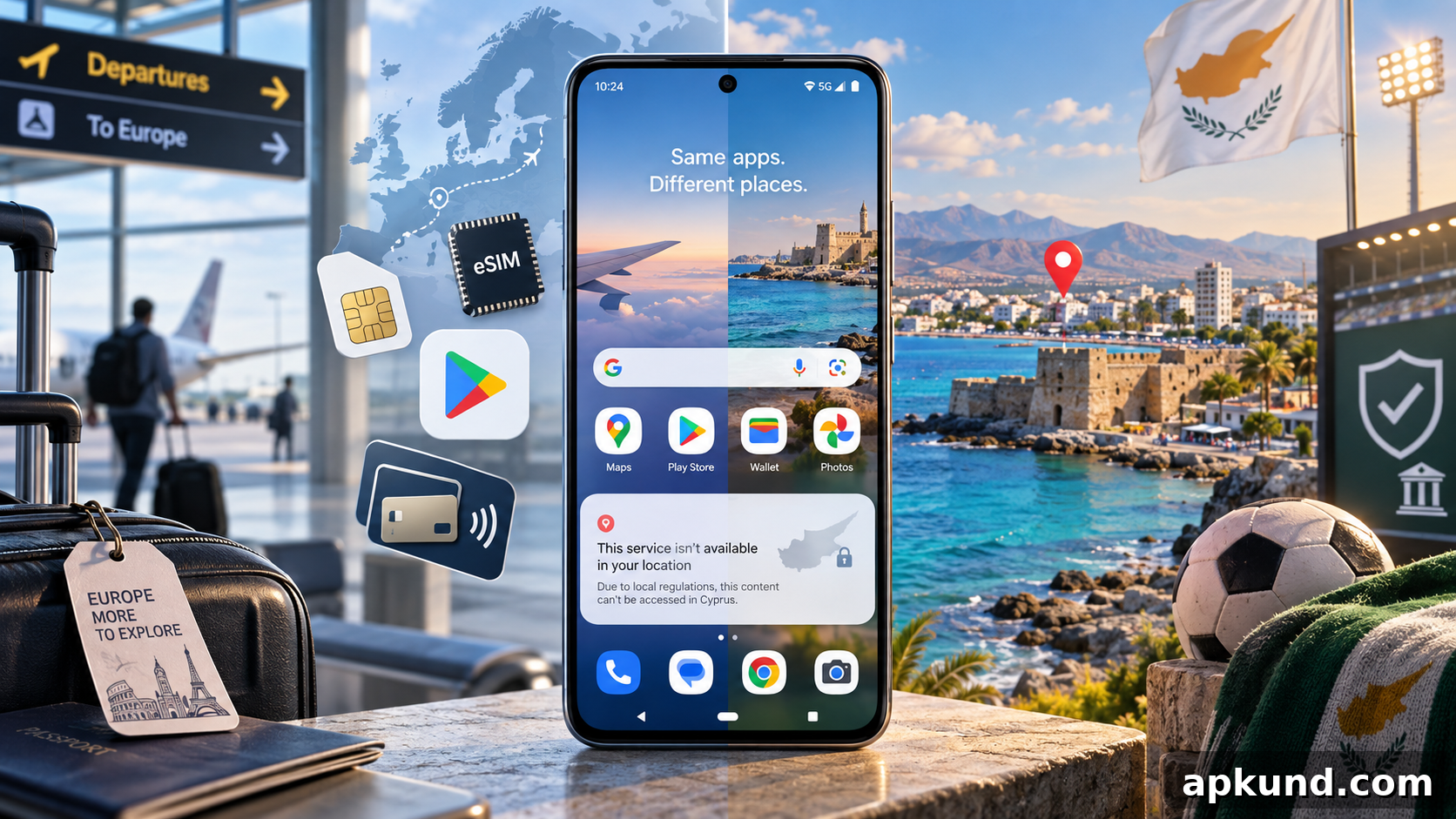
Your Android phone may look the same when you arrive in a different country, but many of the apps on it can behave very differently. What you can download, watch, buy, pay for, or even sign into often changes with your location. Google Play may show a different catalog, a banking app might lock or limit features, and streaming services frequently swap libraries or enforce new checks before certain functions work.
These differences are not random. Apps detect signals such as your IP address, SIM card, account region, GPS location, and payment method to determine where you are and what rules apply. Local laws, licensing deals, and business policies also shape what an app can provide in each market.
That last point is especially important for travelers. Some online services operate under strict country-specific regulations, so the apps, payment options, and providers available in one country might be different just across the border. For example, people comparing locally available platforms in a specific country often consult local guides to understand which services are licensed or accessible there.
For travelers this creates a hidden layer of Android behavior that only becomes obvious when something fails to work as expected.
Why Apps Change When You Cross a Border
An app doesn’t need your passport to tell you’ve traveled—your phone leaves plenty of clues. The most common signals developers and services use are:
- IP address: reveals the country associated with your current internet connection.
- SIM card: a local SIM often indicates the mobile network and country you’re using.
- Google Play region: your account settings and payment profile affect what content you can access.
- GPS location: apps with permission can determine your position with high accuracy.
- Payment method: a credit or debit card usually shows the issuing country.
Different apps rely on different signals. A navigation app will typically use GPS, a streaming service may check both account region and network location, and a banking app will compare a new login to previous activity. That’s why two people sitting in the same hotel can open the same service and see different content or face different checks.
Google Play Is More Local Than It Appears
Google Play appears global, but its catalog is tailored by region. Your Play country or region influences the apps, games, and digital products available to your account. Developers can choose where to distribute their apps, and local payment options or rules can also affect visibility and billing.
These distinctions become more significant when you move permanently rather than travel briefly. Changing your Play country or region can alter which apps you can install, what billing options you have, and how subscriptions are handled. Existing subscriptions may remain tied to an older payment profile, so switching regions can introduce extra steps and complications.
For short trips, changing your account region is usually more trouble than it’s worth. It’s better to plan around your existing account settings when possible.
Payments Can Fail Even When the App Works
Just because an app opens doesn’t mean all features will function. Payment failures abroad are common: a card that works at home may be rejected in another country, a service might require a payment method issued in the same market as your account, or your bank may flag an unusual transaction and block it.
Payment information itself acts as a location signal. Your IP address might indicate you’re in Italy, your card could be issued in France, and your account might be registered in Germany—these mismatched markers can trigger declines or verification checks.
To avoid problems, carry a backup payment method and save important tickets and receipts offline before you travel.
Streaming Rules Change by Country
Media apps make regional differences easy to notice. A movie or show available at home may not be available abroad, sports coverage can vary by market, and music and TV catalogs often differ because media rights are sold by country or region.
The app itself can work fine while the content inside it changes. How travel is treated (short trip versus permanent move) can also affect access. Downloads are helpful but not foolproof—some services periodically re-verify your account or license even for offline content.
If you need access to media while traveling, download it in advance and test offline playback before you leave.
Banking Apps May Become More Cautious
Financial apps treat a new country as a security risk. A login from abroad can trigger multi-factor authentication, biometric checks, or additional identity verification. Transfers and payments may be put on hold until the bank confirms the activity is legitimate.
Public Wi‑Fi, such as airport or hotel networks, can complicate things further by routing traffic in ways that make your connection appear suspicious. Make sure you can receive verification codes while away, and set up a secondary login or approval method if your bank supports it.
Local Apps Can Be Useful
Travel doesn’t just remove features—it can also unlock helpful local services. City transport apps often provide better route planning and ticketing for local networks. Municipal or regional apps can display parking rules, bike-share locations, or live transit alerts. Local delivery services may cover areas that large global platforms don’t.
Always check the publisher before installing an unfamiliar app and use the official store listing when possible. Review requested permissions: a transport app will typically need location access, but it shouldn’t require contact lists unless there’s a clear reason.
What to Check Before You Travel
Android makes travel easier, but apps do not cross borders with the same freedom. Location, account region, payment methods, and local regulations all influence what appears on your screen.
Before you leave: update the apps you rely on, verify your payment methods, and download tickets, maps, media, and important files for offline use. Avoid changing your account region for a short trip. For regulated services, confirm how local rules will affect access ahead of time.
Most issues begin with a small mismatch between your actual location and the location an app associates with you. Anticipating those differences can prevent failed payments, unavailable apps, and locked features. Your phone may look the same, but its digital surroundings often won’t.