
YouTube Updates AI Labels to Make AI-Generated Videos Easier to Spot
AI-generated content has become a growing concern across streaming platforms, and YouTube is adjusting its approach to help viewers quickly identify videos created or significantly altered by artificial intelligence. The company recently announced changes to how AI disclosures appear and introduced automated detection tools to supplement creator-provided information. These updates aim to give viewers clearer, faster context while maintaining options for creators to correct mistakes.
Under the new presentation, long-form videos will display an AI notification directly beneath the video player and above the description box. For YouTube Shorts, the disclosure will appear as an overlay on the video itself. This placement replaces older disclosure methods and ensures that viewers see the label immediately, without needing to expand the description or hunt for the information. Content that is clearly unrealistic, animated, or only minimally altered will still list AI disclosures inside the expanded description box, preserving a consistent approach for different content types.
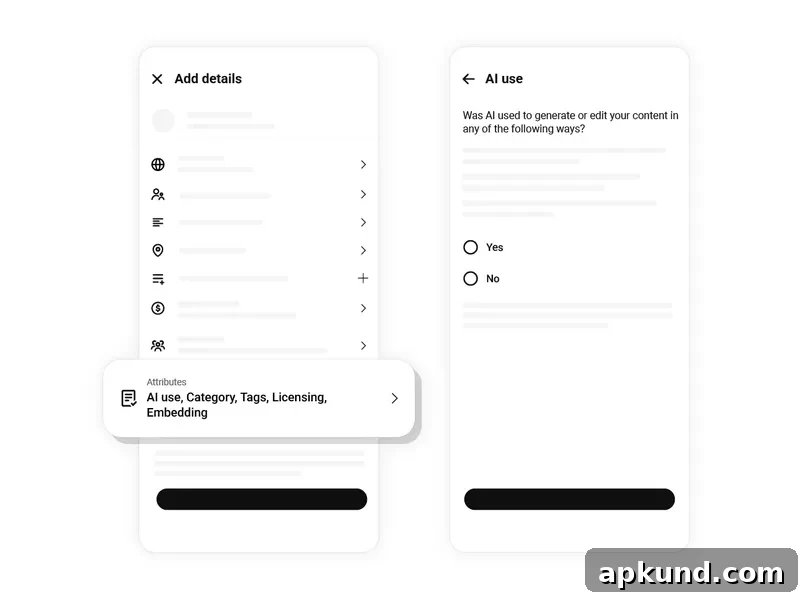
Beyond the visual changes, YouTube is also introducing automated detection systems to identify AI-made content. These internal signals will analyze uploads for signs of photorealistic manipulation and other markers indicative of AI generation. If a creator does not disclose the use of AI during the upload process but YouTube’s systems detect substantial AI manipulation, the platform will automatically apply an AI disclosure label to that video. This two-pronged approach—creator disclosure plus automated detection—seeks to reduce undisclosed AI content and improve transparency for viewers.
Creators will retain the ability to contest automated labels through YouTube Studio. If a video is mistakenly tagged, creators can provide evidence or clarification to request a review. However, there are specific scenarios in which disclosures will be permanent and uneditable. Content created using YouTube’s own AI tools, such as its native Veo or Dream Screen features, will carry permanent disclosure labels. Additionally, videos that include C2PA (Coalition for Content Provenance and Authenticity) metadata confirming AI origins will also receive a non-editable disclosure. These safeguards help preserve the integrity of provenance data and ensure consistent attribution for content produced with platform tools.
The changes reflect a broader industry trend toward clearer labeling and better provenance detection for synthetic media. As AI tools grow more capable of producing photorealistic images and videos, platforms face pressure from users, regulators, and advertisers to make synthetic content identifiable and properly contextualized. YouTube’s updated labels and automated systems are designed to balance transparency with creator control—giving viewers clear signals while still allowing legitimate appeals and corrections when the system errs.
For creators, these updates underscore the importance of accurate disclosure during upload. Properly labeling AI usage not only aligns with platform policies but also helps preserve audience trust. Creators using native YouTube AI features should expect their videos to carry permanent indications of AI involvement. Creators working with external AI tools or manual edits should ensure metadata and descriptions accurately reflect any AI-assisted production or significant manipulation to avoid automatic flagging.
From a viewer perspective, the new placement and automatic tagging make it easier to immediately understand whether a video has been generated or altered using AI. The overlay on Shorts and the prominent placement under long-form players reduce friction and help viewers evaluate content at a glance. While no system is perfect, this update moves YouTube toward more consistent and visible disclosure practices that can improve content transparency across the platform.
As AI continues to transform media creation, platforms will likely refine detection techniques and labeling standards. YouTube’s combination of automated identification, prominent labeling, and creator dispute options represents a significant step in addressing the challenges posed by synthetic media while preserving pathways for creators to correct mistakes or provide context.