
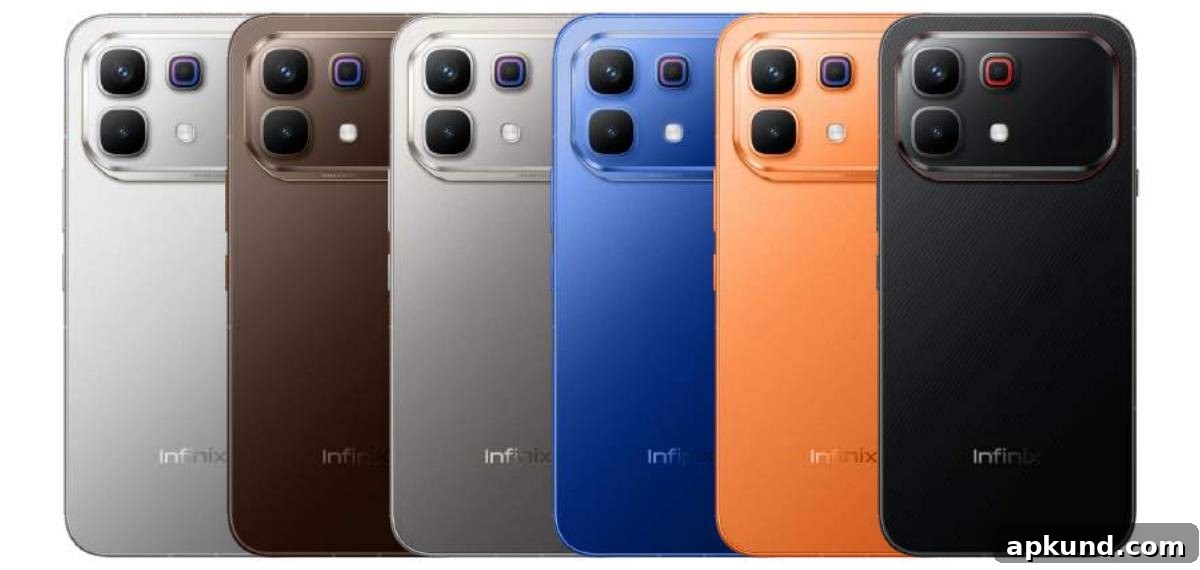
Infinix has been preparing for a major shift, and the company has now officially unveiled the Infinix NOTE 60 Pro. After teasing a move away from MediaTek and revealing a collaboration with Italian design house Pininfarina, Infinix has delivered its most ambitious NOTE-series phone yet. The NOTE 60 Pro introduces several notable firsts for the lineup and refines elements that mattered most to users.
For the first time in the NOTE family, Infinix has switched to Qualcomm silicon: the NOTE 60 Pro runs on the Snapdragon 7s Gen 4. According to the company, that change brings significant performance improvements over the previous NOTE 50 Pro, promising up to 75% faster CPU performance and roughly 210% better GPU rendering. Those gains should translate to smoother multitasking, improved gaming performance, and more responsive app behavior across everyday tasks.
However, the chip is not the star feature. The most distinctive hardware addition is a small Active Matrix Display embedded in the rear camera island. This compact LED matrix stays off when not in use, then lights up to display notifications, animated pets, mini-games, and user-customized signatures or emojis. It’s a subtler take on the rear-screen trend—offering personalization and glanceable interactions without the power draw or complexity of a full secondary display.
The NOTE 60 Pro’s core hardware otherwise holds up well. The phone features a 6.78-inch 1.5K OLED panel with a 144Hz refresh rate and a reported 4,500 nits peak brightness, promising bright, smooth visuals for media and gaming. Audio is tuned by JBL and delivered through stereo speakers. The device launches with Android 16 layered with Infinix’s XOS 16, and the company has committed to three major OS updates plus five years of security patches—an encouraging support promise for buyers who plan to keep their devices for several years.
What else is in the NOTE 60 series?
Battery life and charging are standout areas for the NOTE 60 Pro. The phone includes a large 6,500mAh battery with 90W wired and 30W wireless charging. Infinix also highlights a self-healing battery technology that it says can repair micro-cracks over time, aiming to sustain reliable battery performance for at least six years. If that claim holds up in real-world use, it would be a meaningful improvement in longevity compared with typical smartphone batteries.
Camera hardware is similarly upgraded. The NOTE 60 Pro leads with a 50MP OIS “Night Master” camera designed for low-light shooting, supported by a 112-degree ultrawide lens and 4K video recording capabilities. Infinix also emphasizes an Ultra HDR processing pipeline to retain more detail in highlights and shadows, which should help deliver cleaner results in challenging lighting conditions.
The broader NOTE 60 lineup includes a standard NOTE 60 model that swaps the Snapdragon chip for MediaTek’s Dimensity 7400 Ultimate while keeping the same 1.5K 144Hz display and the 50MP OIS camera. Infinix additionally teased a premium NOTE 60 Ultra developed with Pininfarina, promising a more stylized variant with details to be revealed later.
Rear displays and secondary LED panels are becoming more visible across brands: recent launches from other manufacturers have introduced back-facing screens or decorative panels, and some companies have committed to keeping that aesthetic after positive sales. Infinix’s approach—the Active Matrix Display—is more modest than a full back screen but captures the same trend toward personalization and glanceable rear interactions.
Pricing and regional availability for the NOTE 60 series have not been announced yet. Given the scope of the launch and the company’s recent activity, wider availability and pricing details are likely to be revealed soon. The NOTE 60 Pro aims to blend stronger performance, long-lasting battery innovations, and a distinctive rear interactive element, positioning it as a noteworthy contender in its segment.