
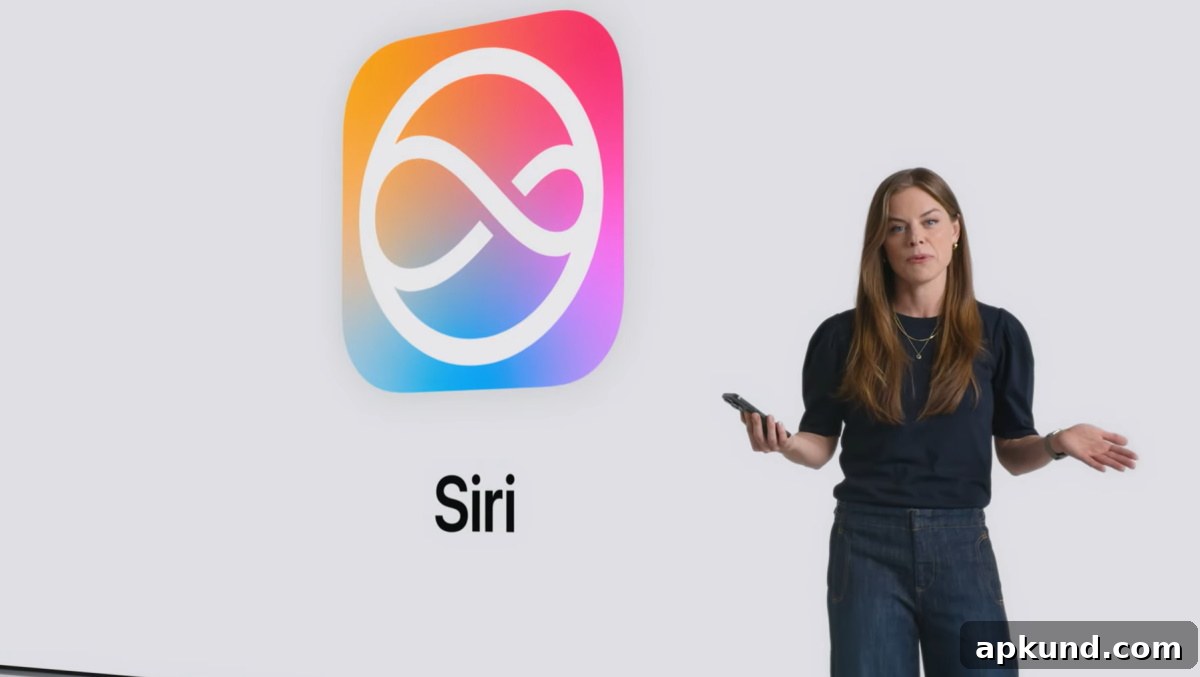
Siri has spent the last few years lagging behind rival AI assistants, with promised features delayed and incremental updates that often felt light compared with what competitors released. Recent reporting indicates Apple is testing a standalone Siri app as part of a larger redesign for iOS 27, with a reveal expected at WWDC on June 8. This new approach aims to reposition Siri from a voice-only assistant to a full conversational interface that works across Apple devices.
Internally codenamed “Campos,” the standalone Siri app is being developed for iPhone, iPad, and Mac. Rather than simply surfacing Siri as a transient overlay, the app provides a persistent space for conversations and requests. Users will see a history of past interactions, be able to search through previous conversations, pin important threads, and start fresh chats. The interface adopts familiar chat-style elements, using message bubbles and a clear layout that resembles modern AI chat applications. A toggle will let users switch quickly between voice and text input, and the app will accept uploaded files and photos for Siri to analyze. In short, Siri will support both typed and spoken interaction in a single, cohesive experience.
More than just a new app
The standalone app is only one element of a broader Siri overhaul. Apple is reportedly testing tighter integration with system UI features such as Dynamic Island, where a compact “Search or Ask” prompt would appear when Siri is summoned. While Siri processes a request, the Dynamic Island could show a small animated Siri icon along with a “Searching” label. When processing completes, the UI would expand into a larger translucent panel that provides more space for multi-step interaction. Users could pull down that panel to continue a back-and-forth conversation, making follow-up queries feel more natural and immediate.
Beyond the Dynamic Island, Apple is experimenting with context-aware tools that bring Siri directly into built-in apps. An “Ask Siri” button inside app menus would allow users to send the current page or selected content from apps like Safari or Mail straight to Siri without switching apps. This reduces friction for tasks such as summarizing an article, drafting an email, or extracting specific information from a web page. Additionally, a “Write with Siri” option may appear on the keyboard, launching writing tools that let Siri assist with drafting, editing, and reformatting text right where users are typing.
These interface changes aim to make Siri feel less like a separate helper and more like an integrated, context-aware assistant. By embedding quick access points inside native apps and offering a persistent chat space, Apple appears to be addressing one of the main shortcomings of previous Siri iterations: the lack of a dedicated conversation-first environment that supports ongoing, multi-turn interactions.
Reports suggest Apple’s Siri overhaul will draw on external large language model technology as part of a multi-faceted strategy to dramatically improve the assistant’s capabilities. The company has reportedly worked on partnerships and agreements that enable access to advanced models, and Apple’s engineering teams are combining those models with on-device intelligence and system-level integrations. While details remain unconfirmed by Apple, the overall direction is clear: the company is investing in making Siri more capable, conversational, and useful across everyday tasks.
It’s worth noting that plans have evolved over time. Previous reports suggested Apple was not planning a standalone Siri app, so the current direction represents a meaningful shift. The decision to build a dedicated app makes practical sense: chat-based assistants generally work best when there is a dedicated place to review and manage conversation history, upload files, and continue multi-step tasks. A centralized app also makes it easier to offer features like searchable past queries, pinned conversations, and saved prompts.
Until Apple provides official details, expectations should remain measured. The company’s work on Siri has progressed through several iterations and partnerships, and timelines have changed more than once. That said, a standalone app combined with deeper system integrations would bring Siri closer to how many users now expect conversational AI to behave—persistent, context-aware, and easy to interact with by text or voice. If Apple follows through, the result could be a noticeably more useful assistant that fits smoothly into everyday workflows across iPhone, iPad, and Mac.