
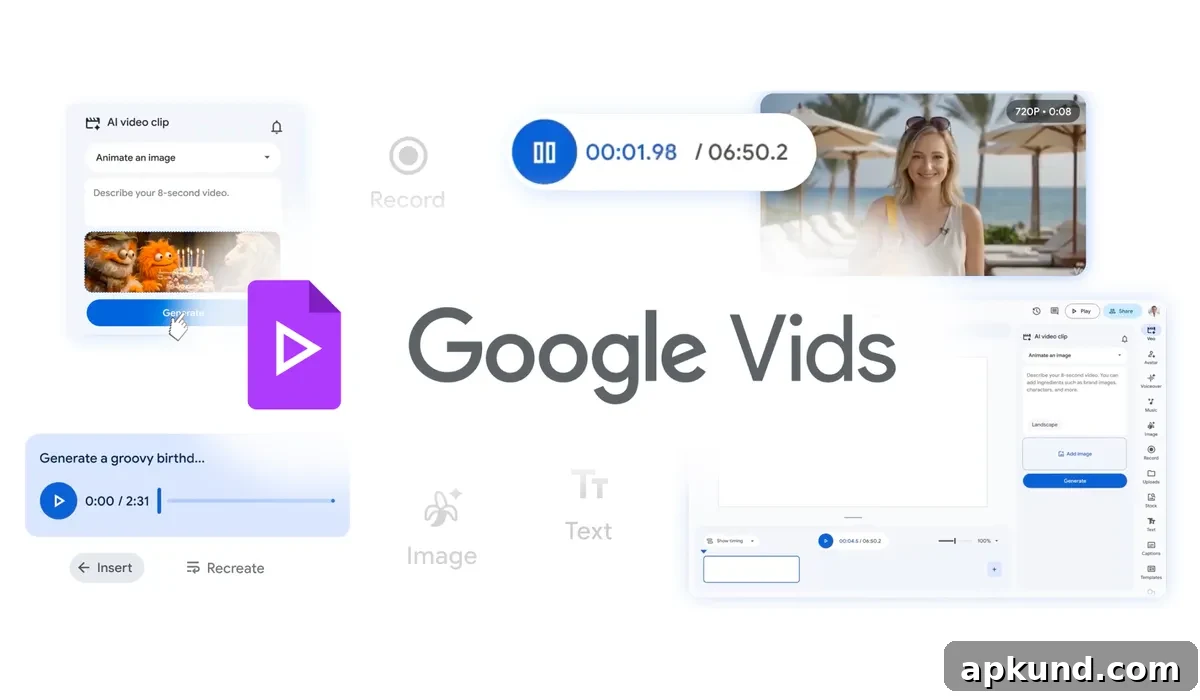
Google has continued its steady integration of artificial intelligence across its suite of products, and this week the company broadened its content-creation offerings with the launch of Google Vids, an AI-driven video editing and generation tool. The new platform aims to simplify video creation by letting users convert simple text prompts or static images into short video clips and by offering additional tools to refine and publish those creations.
According to Google, anyone with a Google account can access Google Vids and generate AI-created video clips at no cost using the Veo 3.1 model. At launch, the free tier enables users to produce short clips—typically around eight seconds—by providing a text prompt or a single image as a starting point. This capability is intended to lower the barrier to entry for casual creators, educators, and anyone who wants to experiment with visual storytelling without needing advanced editing skills.
In addition to video generation, the platform integrates AI-powered audio tools. Users can add custom soundtracks created by Lyria 3, the audio model bundled with Vids. While basic soundtrack options are available across free accounts, Google says that subscribers to Google AI Pro and Ultra tiers receive expanded audio generation capabilities, including the ability to produce longer, full-length music tracks of up to three minutes. These features allow creators to match audio more closely to the mood and pacing of their generated visuals.
A notable premium feature is directorial control over AI avatars. Subscribers to Google Vids’ premium plan can customize and direct virtual avatars that act as performers or presenters within a project. These avatars serve as on-screen talent controlled by the user’s creative choices, which can be helpful for creators who want consistent on-camera personalities without filming live actors.
To make recording and assembling content more convenient, Google also launched the Google Vids Screen Recorder Chrome extension. This browser-based recorder enables creators to capture their screen and webcam directly from any tab and feed those recordings into the Vids recording studio. The integration streamlines workflows for tutorial creators, product demos, and other screen-centered content. Finished videos can be exported or published directly to YouTube from the Vids interface, simplifying distribution for creators who rely on Google’s video platform.
For heavier users, Google is offering expanded monthly generation limits for higher-end customers. Starting this week, Google AI Ultra and Workspace AI Ultra account holders can generate up to 1,000 Veo videos per month, providing ample capacity for professional creators, teams, and organizations that plan to produce a large volume of short-form content.
Overall, Google Vids appears designed to serve a wide range of users: from casual creators experimenting with AI-assisted visuals to professionals who need scalable, integrated tools for producing and publishing content. The combination of automated video generation, AI-composed audio, avatar direction, and in-browser screen recording reflects Google’s strategy of embedding AI capabilities directly into everyday creative workflows, reducing technical barriers while offering advanced options through subscription tiers.