
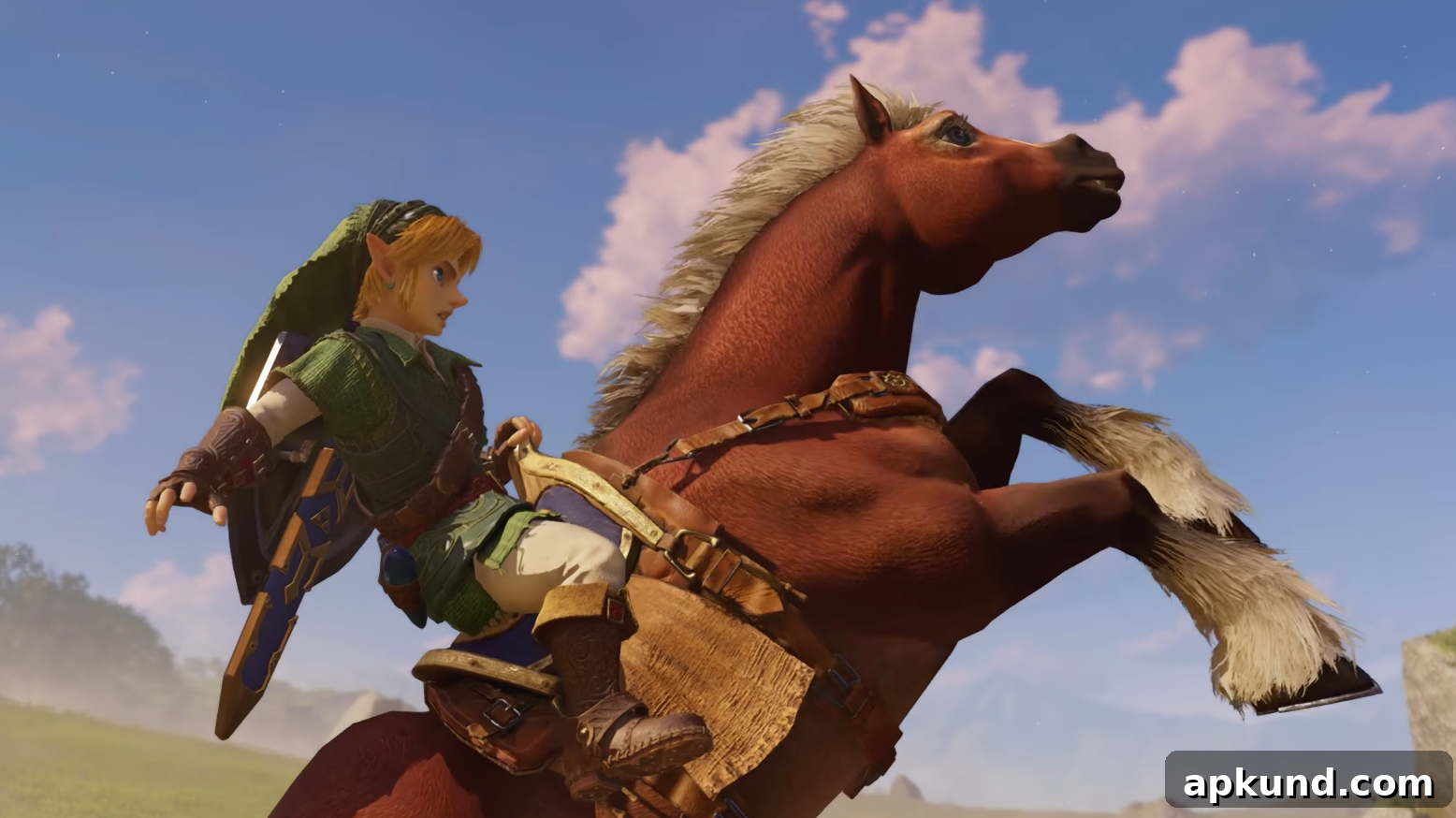
Nintendo has finally revealed its long-anticipated remake of Ocarina of Time, a centerpiece of the company’s 40th anniversary celebration for The Legend of Zelda franchise. The announcement came as part of a brief online presentation that gave fans a clear look at the remake and highlighted several additional Zelda-related projects and special editions tied to the anniversary.
The remake is scheduled for release on November 5, 2026 for the Nintendo Switch 2. Nintendo confirmed the game will feature significantly updated visuals while preserving the core feel of the original title. Alongside the graphical enhancements, the studio has introduced a series of modern quality-of-life improvements designed to make the experience more accessible and fluid for contemporary players. These include a dedicated jump button, a free swimming mechanic, and a dynamic day-night cycle in Hyrule Castle Town that improves immersion and world consistency. A new “Threads of Time” quest log will help track objectives and lore, streamlining navigation for both newcomers and returning players.
Nintendo emphasized that the team carefully balanced modernization with respect for the original game’s design, aiming to retain the spirit and pacing that made Ocarina of Time a landmark title while integrating features that modern audiences expect. The remake includes subtle adjustments to controls and camera behavior, alongside clearer HUD elements and updated visual cues to guide exploration and puzzle solving.
One notable innovation is the use of the Switch 2’s onboard microphone: players will be able to hum or sing melodies directly into the console to replicate the experience of playing Link’s Ocarina in-game. This mechanic is intended to deepen immersion and provide an intuitive method for interacting with musical puzzles and story moments tied to legendary tunes.
To coincide with the celebration, Nintendo announced a special 40th Anniversary Edition of the Switch 2. This themed bundle launches on October 29 and features green Link-inspired Joy-Cons, a Triforce-patterned chassis, a matching Pro Controller, and a themed carrying case. The package is presented as a collector-friendly option for fans who want a cohesive aesthetic and commemorative hardware to go with the remake.
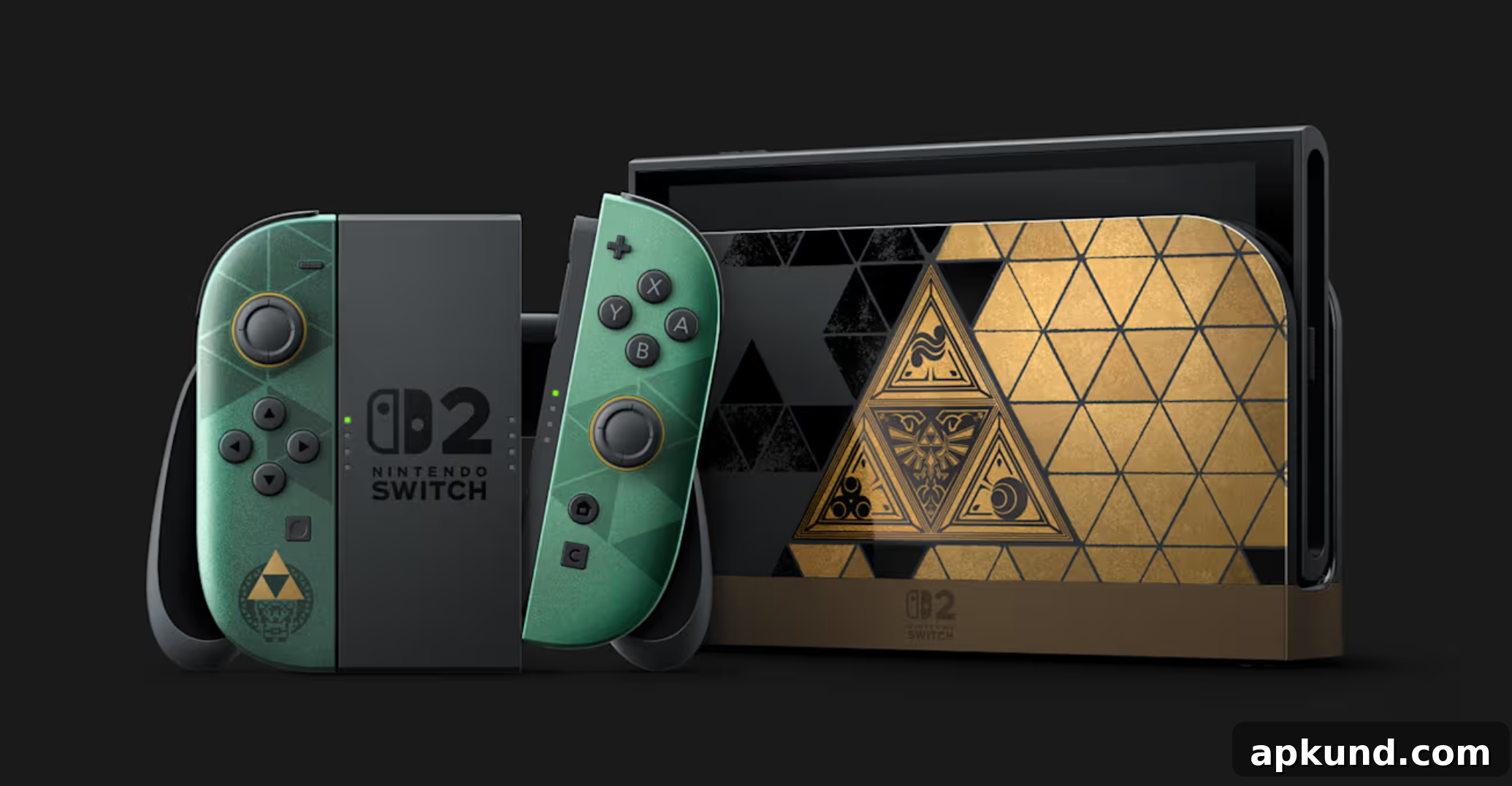
Image: Nintendo
Beyond the game and the hardware bundle, the anniversary presentation touched on several other projects. Nintendo veteran Shigeru Miyamoto appeared to provide an update on the upcoming live-action The Legend of Zelda movie, confirming its worldwide theatrical premiere on April 30, 2027. Miyamoto’s brief appearance underscored Nintendo’s continued involvement with key adaptations and the care taken to shape how the property is presented to a broader audience.
The company also announced a number of supporting initiatives that will roll out across the anniversary window. These include a global live orchestra tour celebrating Zelda music, updates to the Nintendo Switch companion app to better integrate with Zelda content, new Amiibo figures, and a large-scale LEGO set depicting Link and Epona composed of 1,750 pieces, planned for release next spring. Each of these tie-ins extends the anniversary beyond the game itself and offers multiple ways for fans to engage with the franchise.
Throughout the short presentation, Nintendo balanced nostalgia with forward-looking features. The remake’s focus on retaining the original title’s tone while adding modern conveniences indicates a careful approach aimed at satisfying both longtime followers and newer players discovering Ocarina of Time for the first time. The addition of features such as the quest log and microphone-based ocarina play are clear examples of design choices intended to modernize interaction without rewriting the core narrative or puzzle design.
With the November 5, 2026 release date for the Switch 2 version and the special hardware edition arriving October 29, Nintendo has laid out a clear schedule that ties hardware, software, and celebratory events together. Fans can expect continued updates as the launch window approaches, including more detailed looks at gameplay mechanics, customization options, accessibility features, and any platform-specific enhancements that take advantage of the Switch 2’s hardware improvements.
The 40th anniversary effort appears to be a broad, multi-pronged celebration: a remastered and refreshed Ocarina of Time, commemorative hardware, cross-media projects like the live-action film, large-scale collectibles, and live music events. Together, these initiatives aim to honor the long legacy of The Legend of Zelda while introducing the franchise to new audiences and providing long-time fans with fresh ways to celebrate a beloved series.