
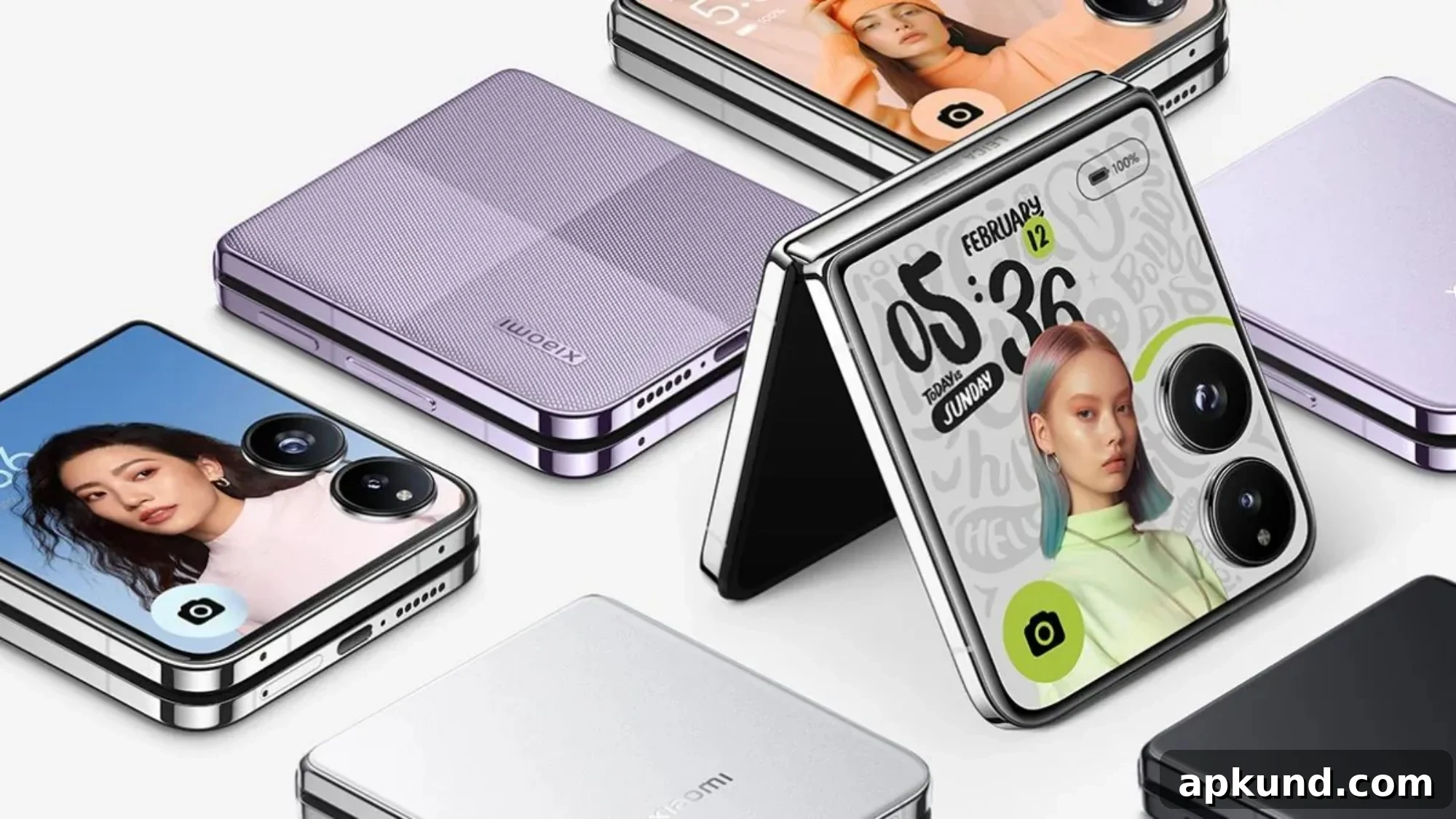
Xiaomi has only been competing in the clamshell foldable market for roughly two years. The original MIX Flip arrived in mid-2024, followed by the MIX Flip 2 in June 2025, and rumors suggested a MIX Flip 3 was next in line. Recent reports, however, indicate that the MIX Flip 3 will not be released.
According to leaker Digital Chat Station, with corroboration from firmware tracking reported by XimiTime, Xiaomi has suspended development of its clamshell foldable line. The MIX Flip 3 was reportedly canceled even though it was nearing its final release window. Early reports said the device would have used a next-generation Snapdragon chipset and that Xiaomi had given it the internal codename “pixiu.” While the company has not issued an official statement, a direct reply from Digital Chat Station on Weibo suggested the MIX Flip series is finished.
What Xiaomi Is Doing Instead
Xiaomi’s decision to discontinue the MIX Flip 3 appears to follow an earlier cancellation of the MIX Fold 5 prior to its intended launch. Sources indicate the company is shifting its attention toward larger foldable devices. One project reportedly in development carries the codename “lhasa” and is described as a big-screen foldable expected to launch in China in the second half of 2026. Reports have suggested this larger device may use Xiaomi’s in-house XRING O3 chipset. The final consumer name remains unconfirmed; industry whispers list possible names such as MIX Fold 5, Xiaomi 17 Fold, or Xiaomi 18 Fold, but Xiaomi has not confirmed any of these.
Strategically, this pivot makes sense given Xiaomi’s recent performance with clamshell models and the limited regional availability those devices have experienced. The MIX Flip 2, for instance, remained a China-only product, while the original MIX Flip received a wider global debut alongside the Xiaomi 14T series. Reported sales challenges for the MIX Flip 2 appear to have influenced Xiaomi’s reassessment of its clamshell strategy. If the clamshell market does not produce the expected returns, reallocating resources toward larger foldables could better match consumer demand and market opportunities.
Market dynamics also play a role in this decision. Motorola has recently expanded its Razr lineup and appears committed to the clamshell segment, while Samsung continues to iterate on both large and small foldable categories. With Xiaomi stepping back from clamshell devices, Samsung and Motorola may face one less competitor in that niche, which could shape product strategies and pricing across the segment.
For customers and fans of Xiaomi’s foldables, the shift raises several questions. Will Xiaomi prioritize building a single standout large foldable to compete with high-end alternatives, or will it broaden its range once market conditions improve? How will the XRING O3 chipset perform in real-world usage, and what advantages might it deliver compared with Qualcomm’s mobile platforms? These are open questions until Xiaomi provides concrete details or a formal product announcement.
At present, the most concrete takeaway is that Xiaomi appears to be concentrating development efforts on larger foldable smartphones rather than pursuing a third-generation clamshell MIX Flip. That strategic move reflects both past sales performance and a desire to focus on projects with clearer global potential. As always with industry rumors, official confirmation from Xiaomi will be necessary to fully validate the reported cancellations and the company’s future product roadmap.