
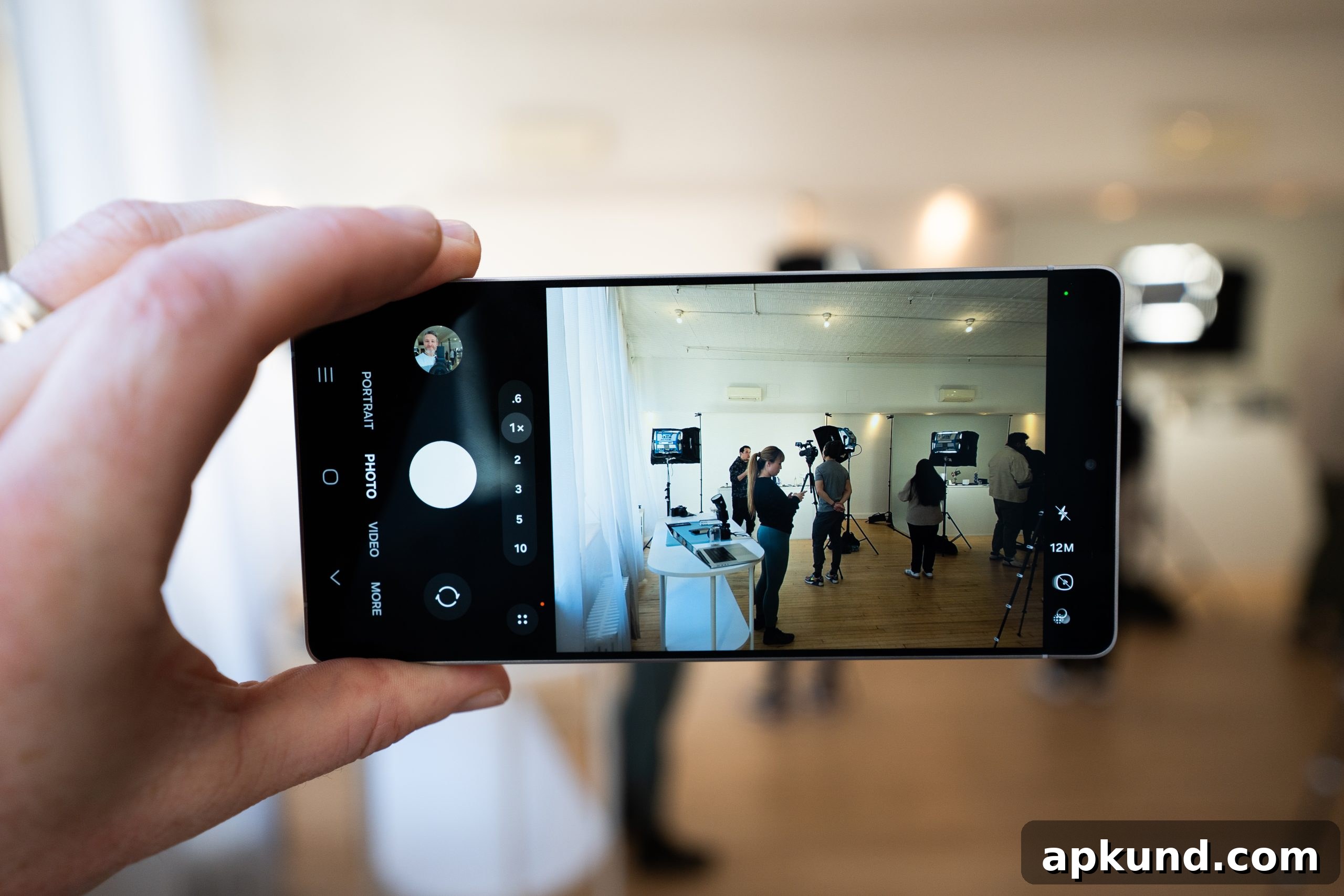
Samsung originally developed a specialized camera feature for coral reef scientists called Ocean Mode. Built as a research tool in partnership with the nonprofit SeaTrees, Ocean Mode was designed to help divers capture usable underwater photos by automatically correcting color shifts and reducing motion blur. It also offered interval shooting at two-, five- or ten-second gaps to assist with time-lapse and steady imaging. The feature was not intended for general consumers, but for controlled scientific use with suitable protective housing.
Earlier this year, Samsung began making Ocean Mode available to consumers. The company added Galaxy S25 Ultra Ocean Mode to the Expert RAW app when it released the S26 Ultra, and that capability started appearing for S26 owners. Recently, an Expert RAW update (version 5.0.08.2) has brought Ocean Mode to devices running the One UI 8.5 beta, extending the feature to a wider set of flagship phones. The update integrates the same automatic color correction and motion blur reduction that helped scientists capture clearer reef images, now optimized for everyday divers and underwater photographers using compatible Galaxy devices.
What to know before you dive in
Ocean Mode is a software-driven enhancement, and Samsung has used targeted software rollouts to share select S26 features with earlier models. Because the S24 and S25 Ultra hardware can support similar camera processing, the company has gradually enabled features across generations rather than locking them to a single phone. That approach explains why Ocean Mode first showed up on the S25 Ultra and is being tested more broadly through beta firmware channels.
However, there are important limitations to keep in mind. The Galaxy S25 Ultra carries an IP68 rating, which covers dust and immersion in freshwater under controlled conditions. That rating does not guarantee long-term resistance to saltwater or chlorinated water, both of which can accelerate seal degradation. For its initial coral reef work, Samsung used a specialized watertight case to protect the hardware—an extra precaution that consumer underwater photographers should consider replicating. If you plan to shoot serious dive photography, don’t rely on the IP rating alone; use appropriate protective housing to prevent water damage.
At present, Galaxy S25 Ultra Ocean Mode is accessible via the One UI 8.5 beta and through the Expert RAW app update. A wider, stable release is expected to follow alongside the full public One UI update. Once broadly available, Ocean Mode could make underwater photography more approachable for divers who want natural-looking colors and crisper images without manual editing.
Beyond the technical benefits, Ocean Mode has a notable origin story: it began as a tool to support coral reef research and conservation. That scientific pedigree guided its design priorities—accurate color reproduction, reduced blur from motion, and interval shooting for repeated observations—making it particularly useful for documenting marine ecosystems. Those same qualities translate well to recreational diving and underwater content creation, offering a meaningful example of how research efforts can inform mainstream camera features.
Practical tips for underwater shooting with Ocean Mode
To get the best results from Ocean Mode, follow a few simple practices. Use a watertight housing rated for your planned depth, and rinse equipment thoroughly after exposure to saltwater. Stabilize your body and the phone to limit motion, and consider using interval shooting to capture sequences that you can later choose the best frames from. Be mindful of lighting—natural light diminishes quickly with depth, so shallower dives or supplemental lighting will yield stronger colors even with software correction. Finally, test the feature in controlled conditions before attempting more demanding dives.
Overall, Ocean Mode represents a useful step forward for mobile underwater photography. Its transition from a specialist research tool to a consumer camera feature shows how targeted software enhancements can broaden the practical capabilities of modern smartphones, while also highlighting the ongoing need for proper protection and careful technique when shooting underwater.