

If you’ve been watching Steph Curry’s wrist over the past few months, you probably suspected something was coming. Google has now confirmed it: the Google Fitbit Air is a screenless fitness tracker priced at $99, positioned to compete with recovery-focused wearables like WHOOP. This lightweight device emphasizes continuous health monitoring and guidance without the distractions of a display.
The core concept is straightforward: no screen, fewer interruptions, and a slim band that quietly measures key health metrics around the clock, then surfaces insights on your phone. The Fitbit Air itself is extremely light, weighing just 5.2 grams excluding the band. Despite its minimal form factor it includes continuous heart rate monitoring, SpO2 sensing, skin temperature tracking, and a 3-axis accelerometer for movement and activity detection. Google quotes battery life up to seven days under typical use, and a fast-charge feature that delivers roughly a full day of power from only five minutes plugged in, which is useful for people who need quick top-ups between workouts or travel.
What sets the Fitbit Air apart from many basic trackers is the integration with Google Health Coach, powered by Gemini. This AI-based coach generates personalized fitness plans and adapts recommendations to fit your routine and progress. It also provides continuous guidance, nudges for recovery, and an improved Sleep Score that draws on multiple nightly metrics to give a more nuanced assessment of sleep quality. The coach functionality is tied to Google Health Premium, which is a subscription service; new Fitbit Air purchases include three months of the premium tier so customers can try the full coaching experience before committing to a subscription.
A New Direction for Fitbit
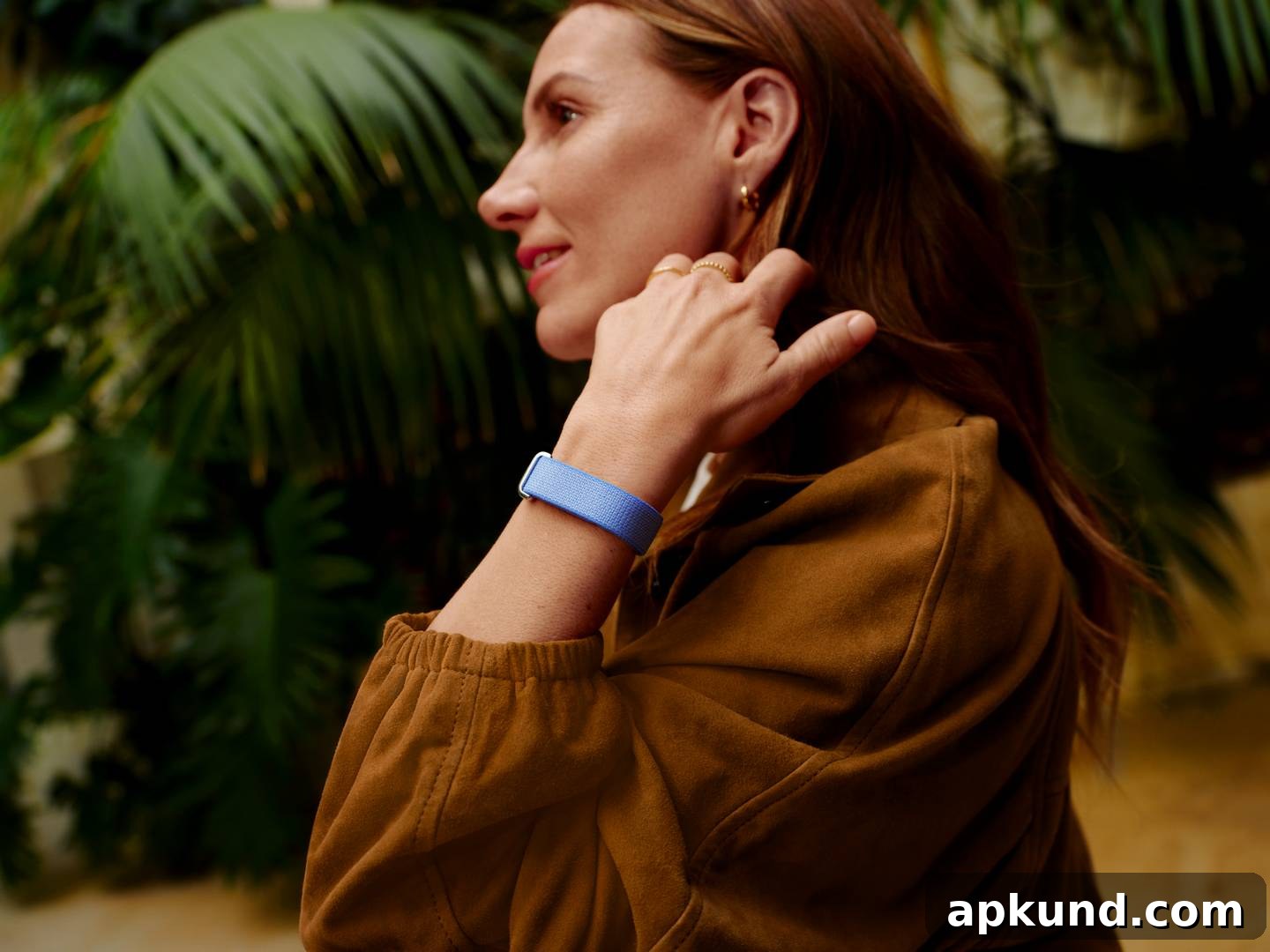
Not long ago, Fitbit’s outlook felt uncertain. New hardware was scarce, the standalone Fitbit.com store was closed, and popular smartwatch lines like Sense and Versa had not seen major refreshes. The Fitbit Air represents a clear strategic shift: rather than doubling down on full-featured smartwatches, Google appears to be steering the Fitbit brand toward focused, unobtrusive fitness and recovery tracking. By removing the screen, the Air leans into a quieter user experience where the wearable’s primary role is data collection and insight delivery through the companion app.
The Fitbit Air will be available in four colorways: Obsidian, Fog, Lavender, and Berry. Google is offering several band options to suit different lifestyles and occasions, including a Performance Loop for workouts, an Active silicone band for everyday wear, and an Elevated Modern Band that pairs better with dressier attire. There’s also a special edition designed in collaboration with Stephen Curry that adds a water-resistant coating and raised interior printing to improve airflow and comfort during intense activity. For users who already own a Pixel Watch or another smartwatch, the Fitbit Air can operate alongside a watch; both devices can pair to the Google Health app and let you switch focus between them depending on whether you want full smartwatch functionality or discrete, always-on health tracking.
Pricing is a notable part of the Air’s appeal. At $99 it undercuts many subscription-focused rivals, and even when factoring in the cost of Google Health Premium, the combined price is competitive relative to services such as WHOOP. The lower entry price makes the Fitbit Air an attractive option for people who prioritize recovery metrics, sleep tracking, and guided coaching but don’t want or need a full smartwatch interface. For many shoppers evaluating the best fitness trackers on the market today, that $99 price point will be hard to ignore.
Beyond basic comparisons, the Fitbit Air is aimed at users who want to simplify their wearable setup. Without a screen, there are fewer interruptions from notifications, fewer decisions to make mid-day about whether to respond, and lower battery drain from display usage—allowing longer stretches between charges. The continuous biometric sensors and the AI-powered coaching can help users focus on performance and recovery goals, from improving sleep consistency to optimizing training load and ensuring adequate rest. For athletes and casual users alike, the combination of lightweight hardware and phone-based insights offers a compelling balance of convenience, comfort, and actionable data.
In short, the Google Fitbit Air is a deliberate move toward specialized health tracking: a light, discreet band that prioritizes biometric accuracy, long battery life, and coaching-driven outcomes over on-device features and notifications. Whether that narrow focus will attract a broad audience remains to be seen, but at $99 with three months of premium coaching included, the device is positioned as an accessible entry into a more recovery-minded approach to wearable health technology.