
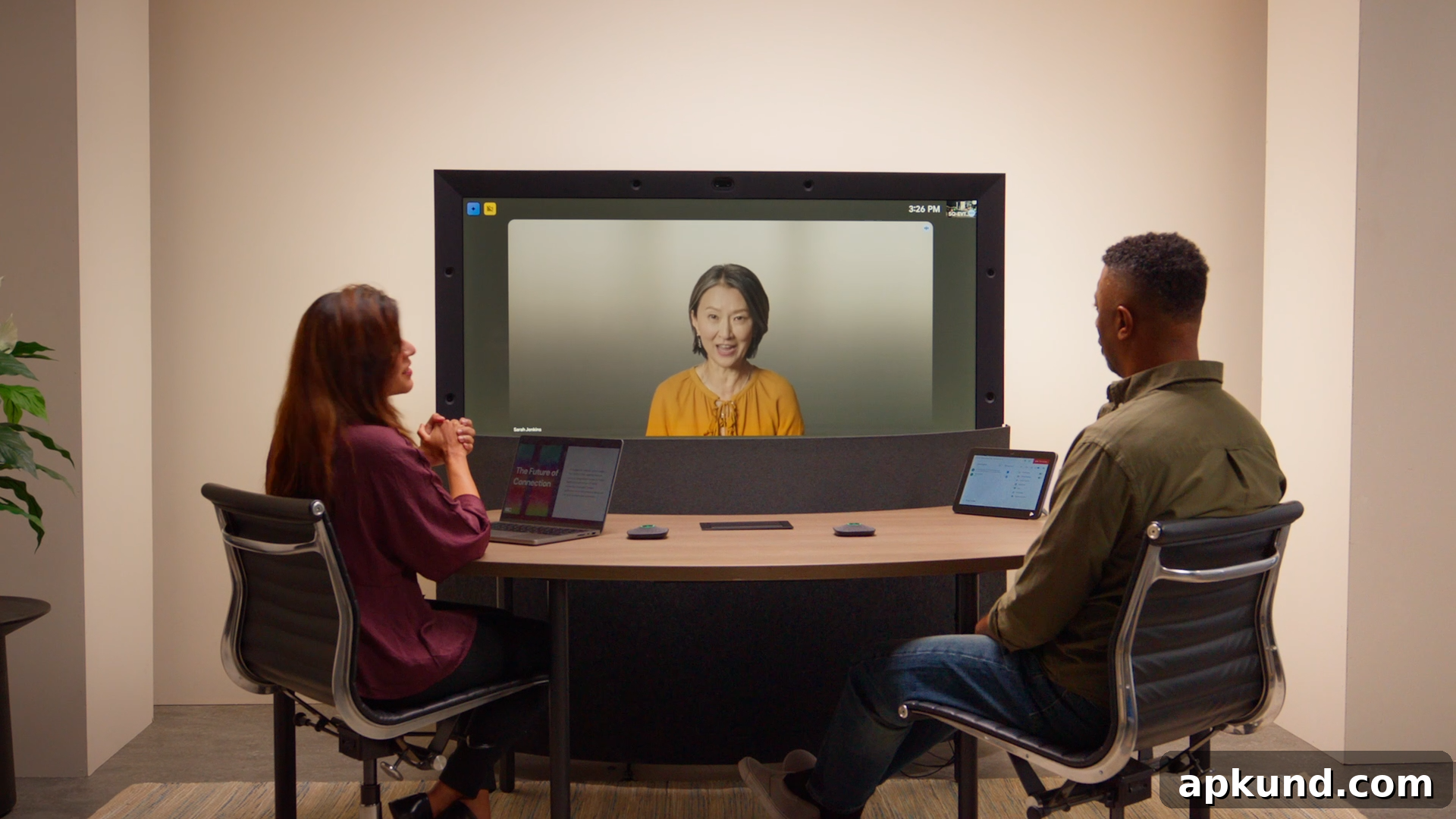
Google recently announced enhancements to Google Beam, its immersive meeting platform designed to make hybrid meetings feel more natural and more inclusive across a broader range of devices. The company says these updates will improve how remote and in-office participants connect and interact, creating a stronger sense of presence and enabling smoother collaboration whether people are joining from dedicated Beam hardware or from standard video endpoints.
A key element of the update is a partnership with HP Dimension to use immersive display technology that renders participants who join from non-Beam devices at an approximated true physical size. Those remote participants are positioned virtually around a shared table, which helps teammates recognize spatial relationships and eye lines more naturally. This visual placement is combined with spatial audio that anchors each voice to the corresponding virtual position, so a speaker’s sound appears to come from where their image is displayed. Together, these visual and audio cues aim to reduce the friction and cognitive load that often accompany hybrid meetings.
Google emphasizes that these improvements are meant to work across typical meeting setups and to apply automatically for both remote and in-office attendees. The update does not require individual participants to perform complex setup steps; instead, Beam’s platform-level adjustments handle render scale and audio spatialization so meeting organizers and participants can focus on the conversation rather than configuration.
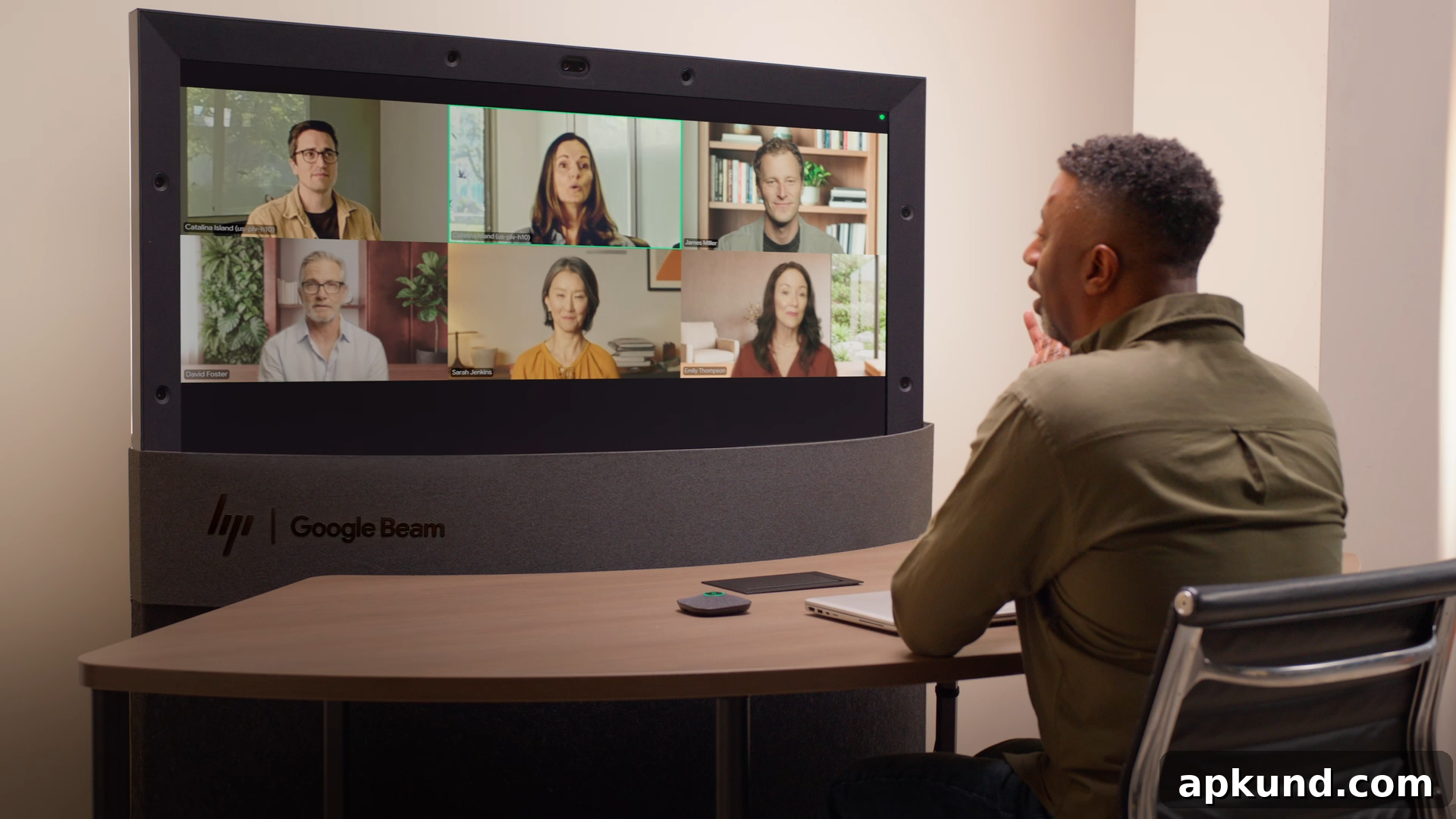
In addition to hardware collaborations, Google confirmed it continues to work with major collaboration services, including ongoing integration efforts with Workspace and Zoom. These integrations are intended to bring familiar meeting features into the Beam environment so teams can use the tools they already rely on while benefiting from Beam’s immersive presentation and spatial audio capabilities. Jeff Smith, Head of Product for Zoom Workplace, commented that Zoom’s reliable meeting features are being brought into Google Beam for Zoom to deliver a polished collaboration experience for every meeting.
Zoom is known for meetings that just work, and now we’re bringing our most-loved features into Google Beam for Zoom to deliver a best-in-class collaboration experience for every meeting.
Google cites research showing that addressing the hybrid “inclusion gap” can significantly improve meeting outcomes. According to the company’s internal studies, features that increase perceived presence and auditory clarity can lead to a 50% stronger sense of social connection among participants and a 21% increase in individuals’ reported ability to contribute to conversations. Those gains reflect improved engagement, more balanced participation, and a greater feeling that all voices are heard during hybrid discussions.
From an organizational perspective, the Beam updates are positioned as tools to promote equal participation and reduce the common disparities between in-room attendees and remote contributors. When remote participants are rendered at a realistic scale and their voices are spatially anchored, nonverbal cues and conversational turn-taking become easier to interpret. This can result in fewer interruptions, more natural interactions, and a meeting culture where contributions from distributed team members are more readily recognized.
Google also indicates that the Beam platform will continue to evolve with feedback from hardware partners, enterprise customers, and collaboration platform integrations. Future improvements may focus on refining presence rendering, optimizing performance across diverse network conditions, and broadening compatibility so more organizations can adopt immersive meeting experiences without overhauling existing infrastructure.
Overall, Google Beam’s latest changes aim to bridge the gap between physical and virtual meeting environments by combining visual realism with directional audio cues, simplifying setup for participants, and deepening integration with the collaboration tools teams already use. For teams striving to make hybrid work more inclusive and effective, these updates are designed to deliver clearer communication, better engagement, and a more natural sense of shared space.