
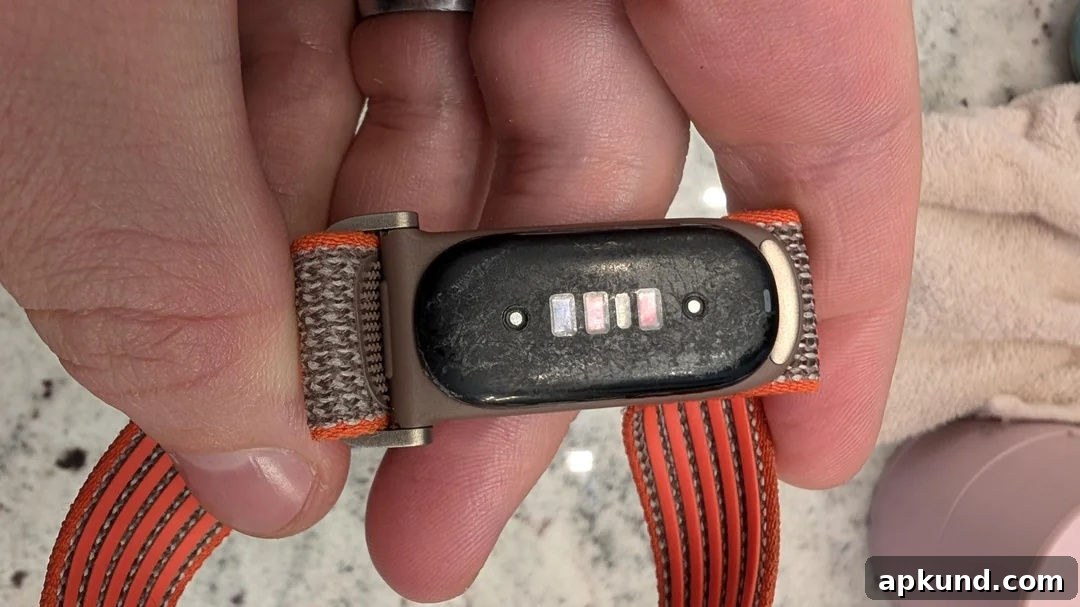
If you own a Fitbit Air, be careful around insect repellent. A Reddit user discovered this the hard way after a weekend hike when bug spray transferred from a shirt cuff to their tracker and began degrading the plastic casing. The same corrosive effect happened to their spouse’s Fitbit Air, and another owner reported nearly identical damage in the same forum. These reports suggest the issue is not an isolated incident but something owners should be aware of when using chemical repellents outdoors.
The primary culprit appears to be DEET, the active ingredient in many common insect repellents. DEET is known to react with certain plastics and coatings, and on the Fitbit Air it can chemically attack the polymer that forms the back casing. Once that material begins to break down, the device’s water resistance is compromised, and the tracker becomes more susceptible to further damage from everyday use, sweat, or exposure to water. In short, a single exposure can cause permanent degradation of the housing and void the device’s ability to withstand moisture as designed.
Google says it’s not covered
When owners raised the issue with Google support, they were told the damage is classified as environmental and accidental rather than a manufacturing defect. According to support staff, the compromised water resistance resulting from chemical exposure means any subsequent problems caused by normal wear or moisture won’t be covered under warranty. As a result, Google declined to provide a courtesy replacement in the reported cases. This position aligns with typical manufacturer guidance: damage caused by external chemicals and improper use is often excluded from warranty coverage.
Google’s own support documentation and forums already warn Fitbit owners to avoid contact between their devices and products such as sunscreen and bug spray. However, that warning may not be front of mind for many users preparing for outdoor activities. It’s easy to forget about protective gear after a quick spray of repellent or when sunscreen is applied, and a smartwatch or fitness tracker can easily come into contact with those substances during routine use.
Given the risk, some practical steps can help protect a Fitbit Air or similar wearable. The simplest measure is to remove the tracker before applying any sprays, lotions, or sunscreens. If removing the device isn’t practical, take care to apply products to exposed skin first and allow adequate drying time before putting a tracker back on. Wiping the band and case afterwards with a damp cloth and mild soap (and following the manufacturer’s cleaning recommendations) can reduce residue buildup, although this will not reverse chemical damage once it has occurred.
For those looking to avoid DEET entirely, alternative repellents based on picaridin or IR3535 are commonly recommended because they are generally less aggressive toward plastics. Likewise, mineral-based sunscreens that use zinc oxide or titanium dioxide tend to be gentler on many materials than chemical spray sunscreens. That said, there is no comprehensive testing showing any repellent or sunscreen is completely safe for the Fitbit Air’s materials, so these alternatives should be considered cautionary options rather than guaranteed solutions.
Owners who rely on a wearable for daily activity tracking or workouts should be mindful of how products they use on their skin interact with device materials. Preventing exposure is the best way to preserve water resistance and the device’s finish. Until manufacturers produce wearables specifically tested and certified against common personal-care chemicals, keeping sprays and lotions away from your wristband remains the safest course of action.
When the Fitbit Air was introduced earlier this year, coverage around durability focused on general build and features rather than chemical resistance of the casing. That gap means many buyers might not anticipate this specific vulnerability when taking the device outdoors. For now, avoiding direct contact with DEET-containing repellents and taking simple protective steps will help reduce the chance of costly, irreversible damage to your tracker.