
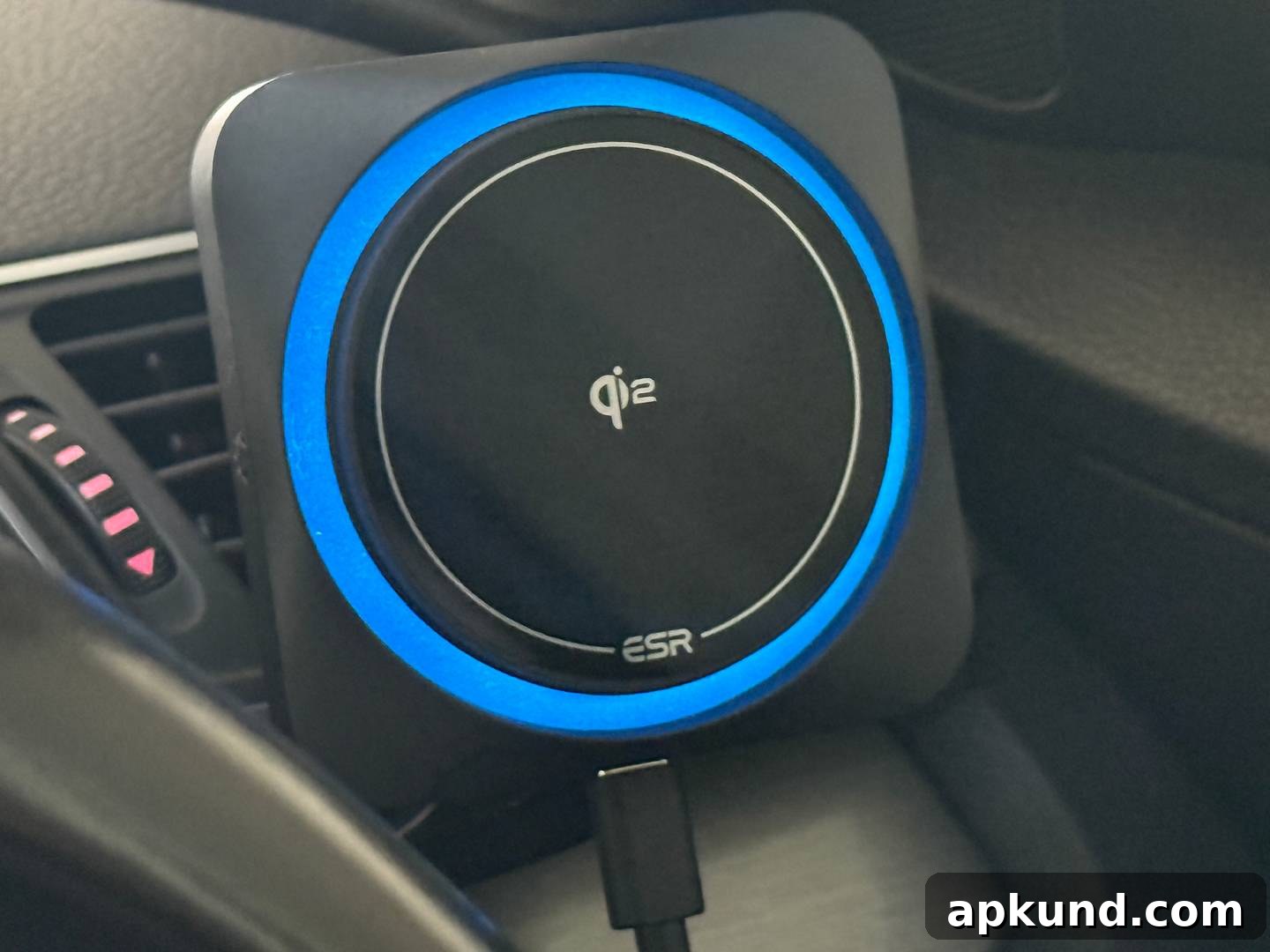
Wireless charging has long been a compromise: it offers the convenience of simply setting a phone down to charge, but it has lagged behind wired charging when it comes to speed. That balance may be shifting. According to a recent ITHome report, the Wireless Power Consortium (WPC) is developing a Qi2 update that could support 50W wireless charging for future smartphones. If realized, this would narrow the gap between wireless and wired charging performance and change how people rely on cables.
The current Qi2 specification reached up to 25W, a level that became widely noticed with the introduction of the Google Pixel 10 in 2025. Before that, many phones hovered around 15W wireless charging for years. The new push toward 50W represents a significant step up from both those figures. ITHome reports that the WPC met off-cycle at Xiaomi’s Beijing headquarters in late June, bringing together major industry players including Apple, Google, and Huawei to discuss technical details. Xiaomi has reportedly taken a leading role, proposing an architecture designed to deliver higher power while minimizing overheating and other thermal issues.
What this means for your next phone
Doubling wireless charging speed would be a meaningful advancement. Even at 25W, wireless charging typically requires noticeably more time than plugging in a cable. Moving to 50W could make wireless charging fast enough that many people would stop reaching for a cord as often. Apple and Google’s participation in recent Qi2 development efforts makes future iPhone and Pixel models plausible candidates to adopt the higher-power standard when it becomes available.
That said, don’t expect Qi2 50W to appear on the next generation of phones overnight. Reports suggest an official launch is unlikely until roughly 2028. This delay gives phone makers and accessory manufacturers time to develop and certify the necessary hardware—charging pads, coils, and phone components—that can safely handle the additional power. The industry needs to ensure thermal management, battery safety, and regulatory compliance are all addressed before a broader rollout can occur.
According to insiders, the technical foundation for Qi2 50W charging is largely in place, but the extended timeline reflects the care required to bring a higher-power wireless standard to market responsibly. Higher wattage introduces new engineering challenges: managing heat, ensuring efficient energy transfer, and maintaining battery longevity are all crucial. Accessory makers will also need time to test and certify chargers, and phone manufacturers will have to integrate compatible receivers and thermal control systems into their designs.
From a user perspective, the practical benefits are straightforward. Faster wireless charging reduces the friction of topping up a phone throughout the day and could make public or shared wireless charging solutions more attractive. It also simplifies lifestyle habits: if wireless charging becomes closer to wired speeds, more people may leave their cables at home or in drawers and rely on wireless pads or docks instead. For commuters, frequent travelers, and anyone who prefers a clutter-free desk, that improvement would be welcome.
However, higher wireless power won’t be the only factor shaping adoption. Pricing, accessory availability, and manufacturer support will all influence how quickly consumers see 50W wireless charging in everyday devices. Even when the standard is finalized, it will take several product cycles for it to filter into a wide range of phones and accessories.
In short, Qi2 50W promises a tangible improvement in convenience and usability for wireless charging, but it will take time before it becomes a mainstream feature. For now, the prospect is encouraging: wireless charging may finally catch up to the speed and practicality that many users have long wanted.