
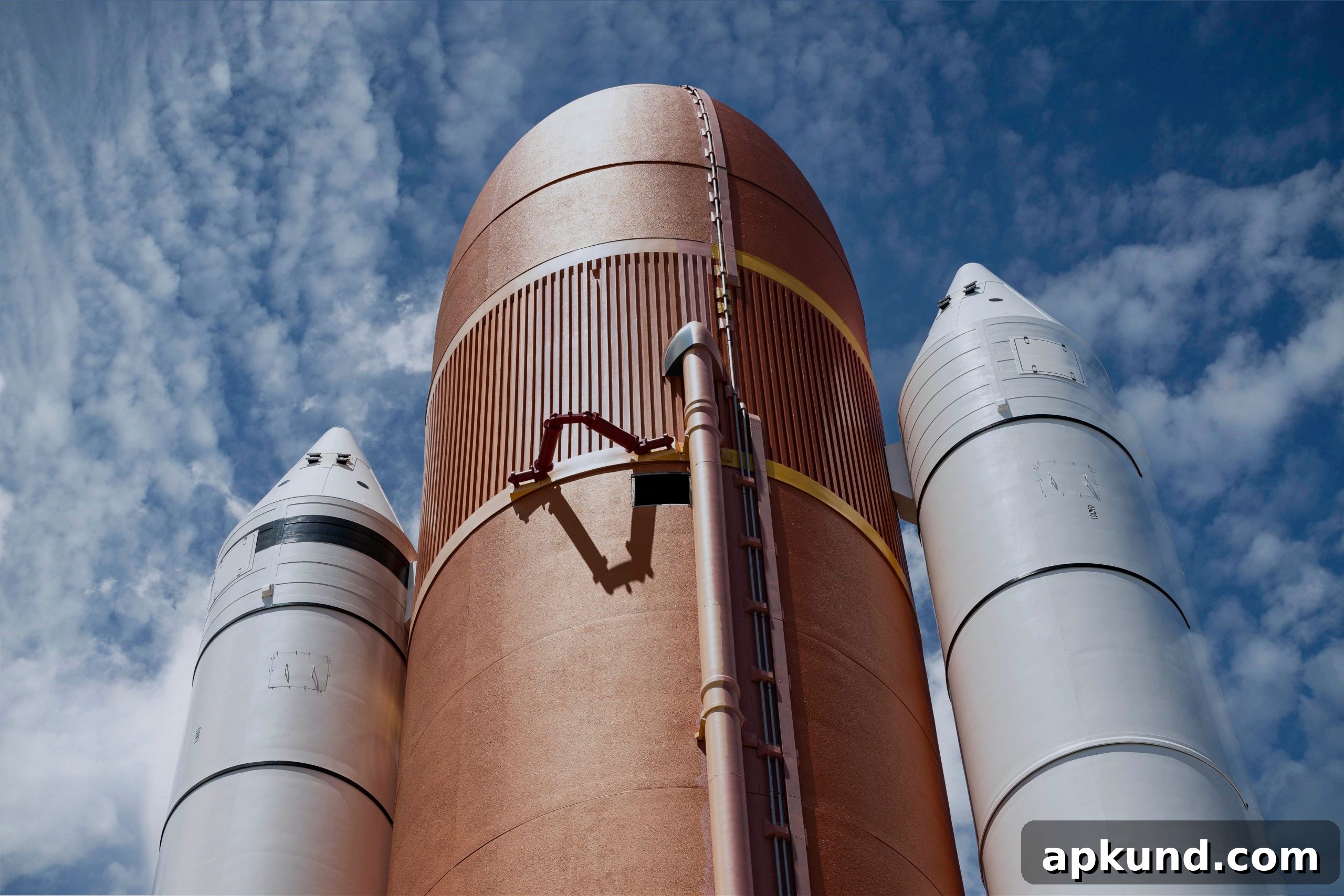
NASA has opened a new, state-of-the-art wind tunnel at the Flight Dynamics Research Facility located within the Langley Research Center in Hampton, Virginia. The 25,000-square-foot installation is the agency’s first major wind tunnel facility built in more than four decades, and it establishes a modern testing environment that will support a wide range of aerospace projects, from military aircraft evaluation and commercial drone development to space capsule testing and planetary entry vehicle research.
The facility was built in partnership with the U.S. General Services Administration as part of Langley’s long-term campus revitalization plan. It consolidates and modernizes the capabilities previously provided by the historic 20-Foot Vertical Spin Tunnel and the 12-Foot Low-Speed Tunnel, bringing those testing functions together under a single, more capable roof. Consolidation reduces redundancy, streamlines operations, and helps teams collaborate more closely across disciplines.
While the facility will support a broad range of aeronautics research, its operational scope extends into deep-space exploration as well. The wind tunnel will play an important role in NASA’s Artemis lunar campaign and in planning for future interplanetary missions by enabling researchers to refine aerodynamic designs for probes and entry systems bound for Mars and other atmospheres. By providing controlled, repeatable wind conditions, the facility helps engineers evaluate how vehicles behave during critical flight phases such as entry, descent, and landing.
The opening of the Flight Dynamics Research Facility represents a significant advancement for NASA and for the nation… By bringing modernized testing capabilities under one roof, we are enabling transformative research that will ensure the United States remains at the forefront of aeronautics and exploration.
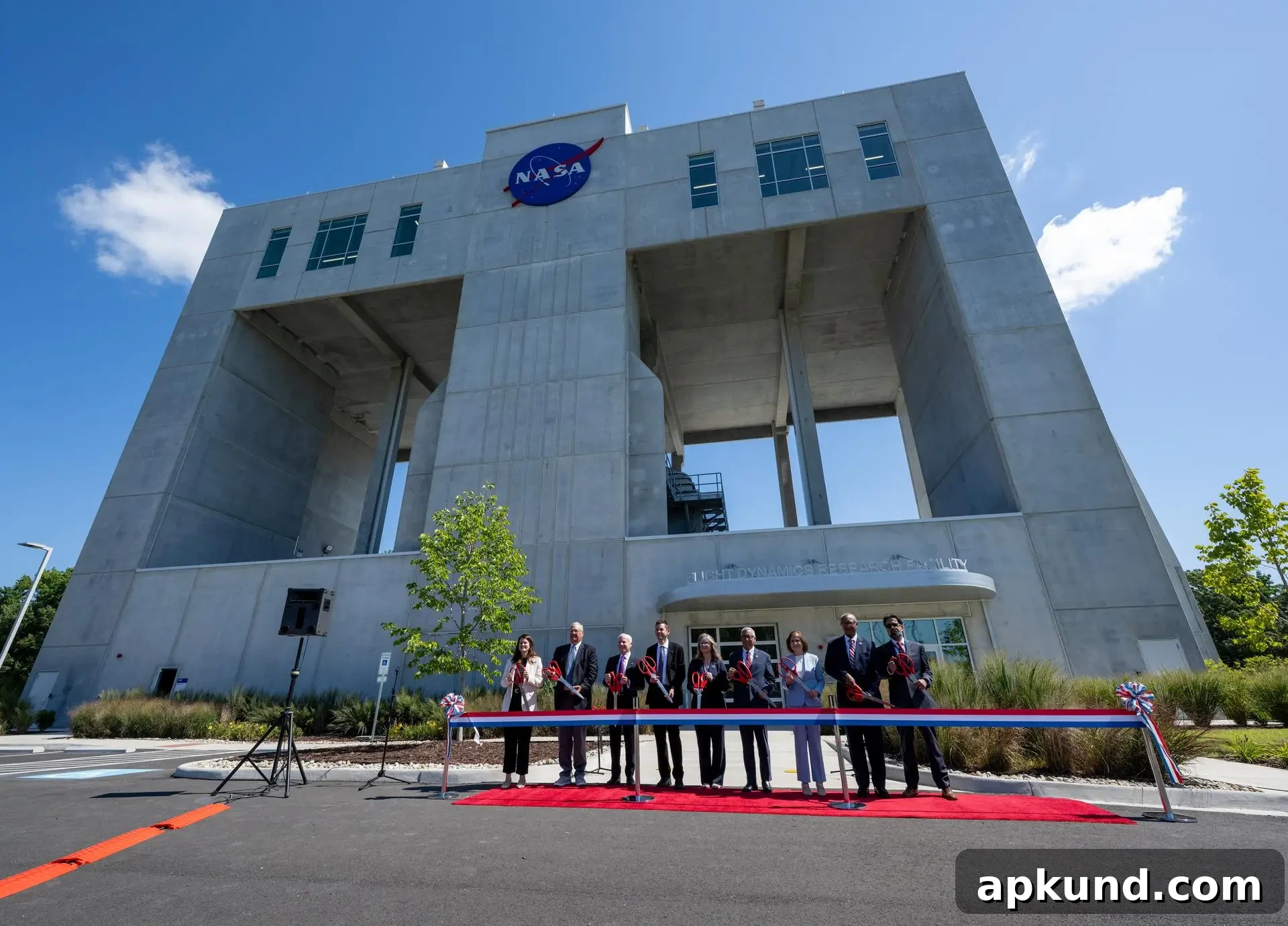
Photo credit: NASA/Keegan Barber
The new wind tunnel is powered by four 750-horsepower motors that turn custom 14-foot carbon-fiber fan blades, enabling a maximum airspeed of 117 miles per hour. That top speed roughly doubles the upper limit of some older facilities, giving engineers a broader envelope for testing aerodynamic performance. The increased airspeed, combined with modern control systems, allows researchers to simulate more realistic conditions for live free-flight maneuvers, rapidly iterate designs, and verify performance for both full-scale and scale-model configurations.
Beyond speed, the facility offers flexibility in how tests are conducted. Teams can run mounted model tests to gather high-fidelity aerodynamic data and also perform free-flight experiments that replicate unrestrained vehicle dynamics. Those capabilities are especially valuable when evaluating entry, descent, and landing profiles—procedures where small aerodynamic differences can have large effects on trajectory, stability, and crew safety. Data gathered in the tunnel will inform design changes, refine simulations, and reduce risk during flight certification and mission planning.
Replacing older infrastructure, the new facility is expected to lower long-term maintenance demands while giving researchers access to more capable instrumentation and data acquisition systems. Modern facilities reduce downtime and support a faster pace of testing, which benefits university partners, government programs, and industry collaborators working on next-generation aircraft, autonomous systems, and spacecraft.
In practical terms, the consolidated facility enables tighter collaboration among multidisciplinary teams, including aerodynamicists, flight dynamics specialists, and vehicle systems engineers. This closer integration can shorten the development cycle for new concepts, improve the accuracy of predictive models, and accelerate the transition of promising technologies from the laboratory to flight demonstrators or operational use.
As NASA and its partners pursue more ambitious aeronautics and exploration goals, having a modern wind tunnel at Langley strengthens the nation’s technical base and supports the iterative testing necessary for safe, reliable flight. Whether the focus is improving aircraft efficiency, validating control laws for autonomous vehicles, or ensuring safe returns from space, this facility provides an essential environment for controlled, rigorous experimentation and verification.