
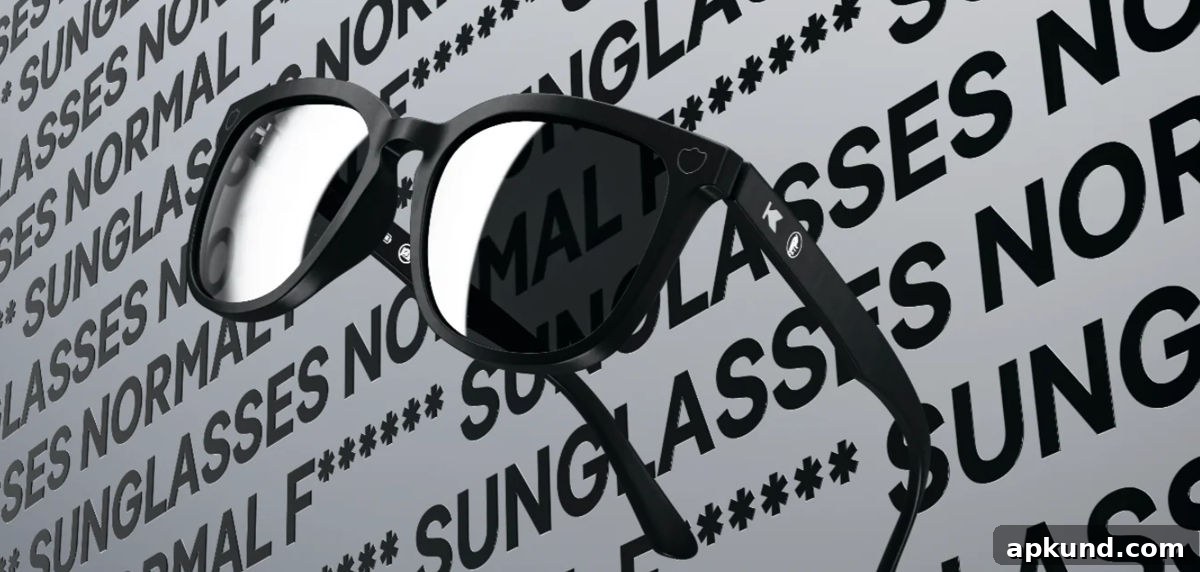
DuckDuckGo, the search engine known for prioritizing privacy, has released a simple new product: a pair of sunglasses. They contain no camera, no microphone, no artificial intelligence, no battery and no electronics of any kind. The company markets them as “anti-surveillance” sunglasses, and the point is deliberately tongue-in-cheek.
Made in collaboration with Knockaround, the model is called the Paso Robles and retails for $35. The frames are matte black and fitted with polarized lenses that offer UV400 protection. On the inside of the arm is a printed label that mimics the technical specifications often found on smart eyewear: the words “SMART GLASSES” appear alongside icons for battery, camera, Wi‑Fi and microphone — each crossed out by a diagonal line. That visual gag makes the product’s message immediately clear.
Why a search engine is selling sunglasses
The sunglasses are a direct jab at smart-glasses products from larger tech companies, notably designs that include built-in cameras and microphones. Those devices have raised privacy concerns because they can record photos and audio in public spaces, sometimes without obvious indication that recording is taking place. DuckDuckGo’s sunglasses lean into that debate by offering the simplest possible privacy claim: these glasses cannot record you because they contain nothing to record with.
No camera. No AI. Just Normal Sunglasses.
From DuckDuckGo x Knockaround.
DuckDuckGo has built its brand around being an alternative to data-hungry search engines and services. The company has frequently highlighted privacy risks associated with AI and persistent sensing technologies, arguing that products which can constantly capture images or audio represent a new front for surveillance. In that context, the Paso Robles sunglasses act as both a practical accessory and a marketing statement reinforcing the company’s stance.
The glasses went on sale July 30 and quickly saw a strong initial response. Much of the demand appears to be driven by the novelty and humor of the product, but interest also reflects genuine discomfort some people feel about wearable cameras that resemble ordinary eyewear. When everyday objects can hide sensors, consumers and bystanders alike become unsure whether they are being watched or recorded — and that unease can influence behavior in public spaces.
What these sunglasses do — and don’t — offer
It’s important to be clear about what the Paso Robles sunglasses actually are: they are a conventional pair of shades with polarized lenses and UV protection. They do not include any technology to detect or block recording devices, nor do they claim to provide any active privacy protection beyond the absence of embedded sensors. If someone is worried about being filmed or recorded by another person’s smart glasses, wearing this pair will not prevent that. Instead, the product’s value is symbolic — a visible reminder of the privacy trade-offs built into many modern devices.
At the retail price of $35, these sunglasses are a practical, affordable option for everyday sun protection. For others, they function as a lighthearted statement about privacy and technology: a way to express skepticism about surveillance-driven hardware while carrying a durable, usable pair of shades. Whether purchased for style, function or commentary, the glasses underscore a growing conversation about how wearable technology should be designed and regulated.
The broader conversation
The release of these sunglasses highlights a wider cultural and policy debate. As sensors and AI capabilities become smaller and more ubiquitous, questions about consent, notification and public comfort gain urgency. Some argue that manufacturers should implement clear indicators or restrictions to prevent covert recording, while others call for stronger rules governing where and when such devices can be used. DuckDuckGo’s offering doesn’t solve those problems, but it does keep the discussion visible in a way that is both accessible and memorable.
In short, the DuckDuckGo x Knockaround Paso Robles sunglasses are a low-cost, fully non-electronic product that makes a pointed statement about surveillance and wearable tech. They won’t shield you from being recorded by someone else, but they do serve as a useful conversation starter and a small, tangible expression of a privacy-first perspective. For anyone who wants a straightforward pair of sunglasses with a clear message, $35 buys both sun protection and a reminder that true privacy often means opting out of always-on technology.