
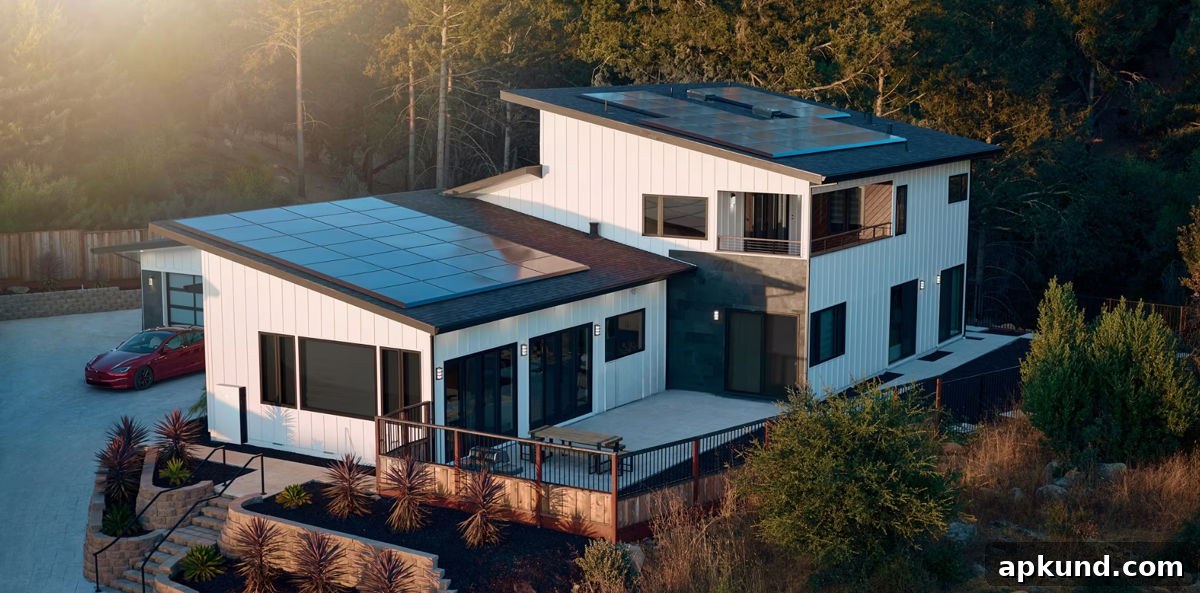
Tesla has quietly stopped producing its Solar Roof tiles. Once promoted as an elegant way to replace an entire roof while generating electricity, the Solar Roof program is no longer being supplied to Tesla’s installer network. From this point on, Tesla will concentrate on offering conventional rooftop solar panels instead of selling its integrated solar tiles.
Tesla has not issued a formal public announcement about the change, but its online presence reflects the shift: the company’s Solar Roof page now redirects visitors to the standard solar panels page. Installer communications and industry reporting indicate the move is company-wide and represents a retreat from the ambitious vision that first launched in 2016.
What the Solar Roof aimed to deliver
When Tesla introduced Solar Roof in October 2016, the concept was straightforward and compelling. Rather than mounting panels on top of an existing roof, the roof itself would be built from tiles that generate electricity. Tesla positioned the product as an attractive, integrated alternative to traditional shingles plus added solar panels, pitching it as cost-competitive with a typical roof plus a separate solar array.
Initial pricing estimates suggested a Solar Roof could cost in the range of the price of a normal roof plus panels — early publicized figures mentioned roughly $22 per square foot. However, real-world installations and customer experiences revealed a different picture. Installed costs were frequently much higher than the optimistic early estimates. Some customers reported substantial price increases after signing contracts, undermining confidence in pricing stability and predictability.
Pricing disputes and customer complaints eventually led to legal action. Tesla reached a settlement in 2023 to resolve a class-action lawsuit that challenged how the company handled pricing and sales for the Solar Roof, signaling that the product’s commercial rollout had not gone as smoothly as advertised.
Why Tesla is discontinuing the Solar Roof tiles
Insiders familiar with Tesla’s decision say the company concluded that manufacturing and selling the tiles was not financially viable at scale. Early promises were ambitious: CEO Elon Musk at one point forecasted installations of about 1,000 Solar Roof systems per week. The reality fell far short. Over nearly a decade, the total number of installed Solar Roof systems appears to number in the low thousands — a fraction of the company’s initial target.
Industry analysis from energy research firms estimated that, on average, Tesla installed only a few dozen Solar Roof systems per week at best, rather than the hundreds projected. Low installation volume, high production and installation costs, and ongoing logistical challenges all seem to have contributed to the program’s decline.
For existing Solar Roof owners, the immediate impact should be limited: installed systems continue to operate. Tesla has not publicly clarified whether the discontinuation will change warranty terms, service policies, or long-term repair commitments for current customers. Owners concerned about warranty coverage or future service should contact Tesla or their certified installer for specific guidance.
Prospective customers who had been considering a Solar Roof will no longer be able to purchase or schedule new installations of the tiles through Tesla’s certified network. Instead, Tesla will focus on selling and installing conventional solar panels and will continue to offer its Powerwall home battery product for energy storage. For homeowners seeking solar solutions, standard rooftop panels remain the primary Tesla option going forward.
This change marks a notable strategic shift for Tesla’s energy division. The company is consolidating its solar offerings around products with clearer cost structures and broader market demand. While the Solar Roof concept promised a seamless, design-forward approach to residential solar, practical and financial realities appear to have driven Tesla back to more traditional solar hardware and installation models.