
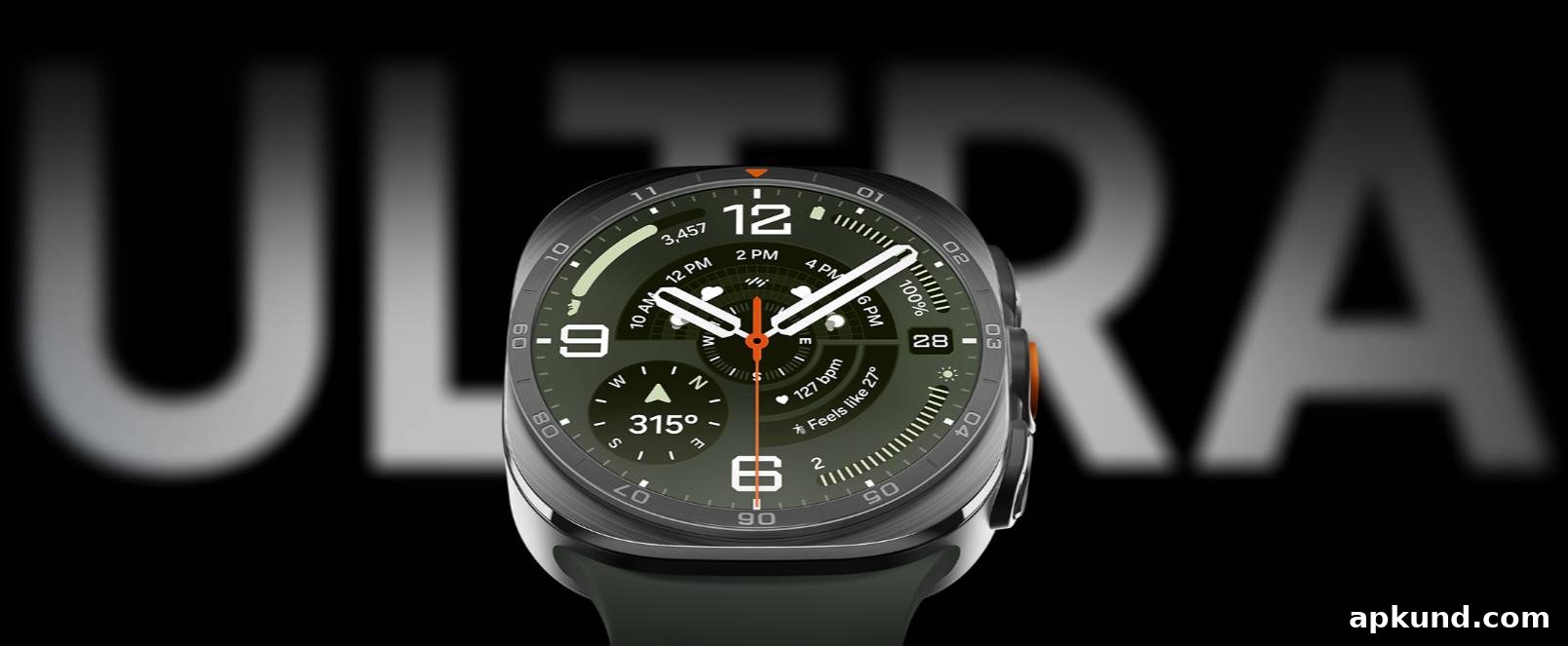
It’s been nearly two years since Samsung introduced its first rugged smartwatch. Early buyers quickly learned the device required daily charging, and that complaint followed the original Galaxy Watch Ultra through reviews and user feedback. Now Samsung has launched the Galaxy Watch Ultra 2, and the company spent much of that time addressing the single biggest criticism: battery life. The key question for anyone using the original is whether the Ultra 2 improves enough to justify the $699 price tag.
Galaxy Watch Ultra vs. Galaxy Watch Ultra 2: Specs
| Spec | Galaxy Watch Ultra (2024) | Galaxy Watch Ultra 2 |
|---|---|---|
| Display | 1.5″, Super AMOLED, 3,000 nits | 1.5″, Super AMOLED, 5,000 nits |
| Chipset | Exynos W1000 | Snapdragon Wear Elite |
| RAM / Storage | 2GB / 32GB (64GB on 2025 refresh) | 2GB / 64GB |
| Battery | 590mAh | 800mAh (35% larger) |
| Durability | 10ATM, IP68, MIL-STD-810H | 10ATM, IP69K, MIL-STD-810H |
| Price | $649.99 | $699.99 |
What Actually Changed
Samsung kept the core aesthetic familiar while making targeted improvements. The increase in peak brightness from 3,000 to 5,000 nits is meaningful, but mostly when using the watch in direct sunlight; the original Ultra was already very readable outdoors, so everyday differences may be subtle. The display change is a refinement rather than a dramatic redesign.
The more consequential update is the processor. Samsung moved from its Exynos W1000 to Qualcomm’s Snapdragon Wear Elite, the same platform many Wear OS makers are adopting. This chipset emphasizes power efficiency alongside performance, and it plays a central role in the Ultra 2’s most notable upgrade: longer battery life.
Battery Life Is the Real Upgrade
This is where the Galaxy Watch Ultra 2 stands out. Battery capacity increases from 590mAh to 800mAh—a roughly 35% jump—and yet the watch manages to be thinner than its predecessor. Samsung achieved this by redesigning the internal layout to accommodate a higher-density cell and pairing it with the more efficient Snapdragon chip.
Exact endurance figures from Samsung are limited at launch, so any published “days of battery life” claims should be treated as early estimates until reviewers test retail units in real-world conditions. Still, the combination of a larger battery and a more efficient processor suggests the Ultra 2 should surpass the original’s typical two-day real-world runtime for many users.
Beyond battery gains, the Ultra 2 brings practical durability improvements. It adds IP69K certification, which means it can withstand high-pressure, high-temperature water jets—useful for outdoor work or power-washing gear. Samsung also introduced new activity features, including a Trail Run mode tailored to hikers and trail runners, and a dedicated dive-tracking app planned for later this year.
What About Software?
Both models will run One UI 9 Watch, and reports indicate the original Ultra could receive the same software update, so the user interface will not be a clear reason to upgrade. However, some features take advantage of the Ultra 2’s enhanced hardware and are unlikely to be back-ported. Trail Run mode, which measures elevation change and tallies total ascent and descent, is exclusive to the newer model for now. Samsung also refined its hydration guidance: an upgraded Sweat Loss estimate now includes a Nutrition Alert to warn runners when they should rehydrate or refuel during workouts.
The upcoming dive-tracking app is another example of hardware-dependent functionality. It relies on the Ultra 2’s IP69K and EN13319 certifications—standards the original Ultra does not meet—so this capability probably won’t arrive for older hardware even after software updates.
So, Is It Worth Upgrading?
If your original Galaxy Watch Ultra still performs well and its battery life meets your needs, there’s no urgent reason to upgrade. The two watches look very similar, and enhancements such as the brighter display will be incremental for many users. Paying an extra $50 primarily for a larger battery and a more efficient chipset is a practical decision based on how much you value improved endurance and a slight boost in performance.
On the other hand, if the original’s battery anxiety has bothered you, the Ultra 2 delivers a focused fix. For new buyers without an existing Ultra to compare, the Ultra 2 presents the clearer choice: better battery life, improved durability, and a more modern chipset make it the more future-proof option.
Note: this article may contain affiliate links that support authors and site operation.