
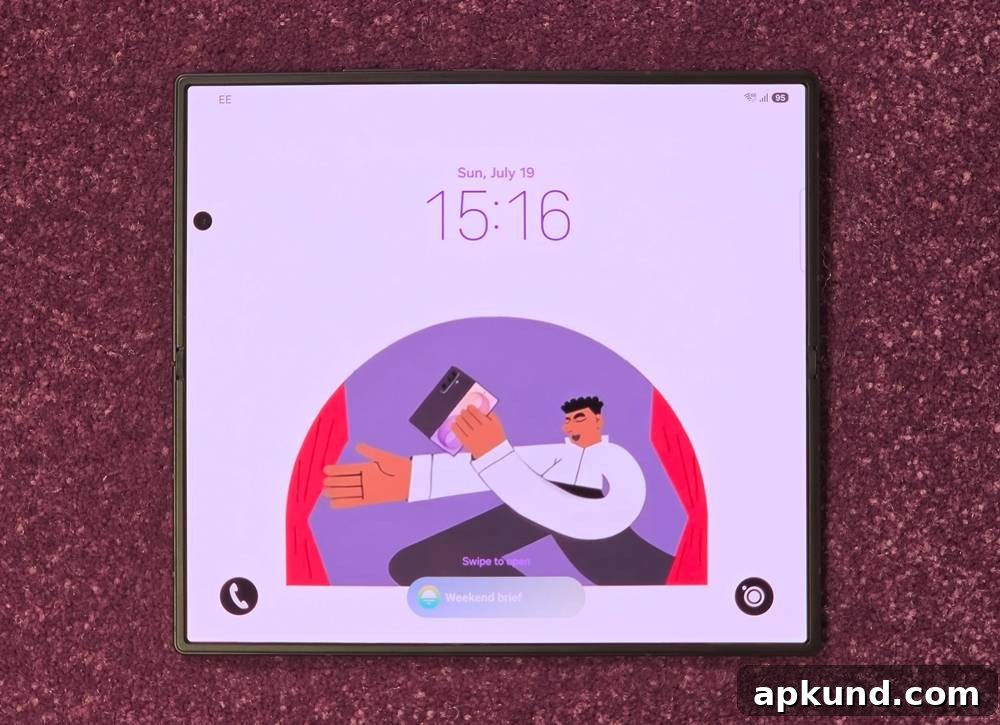
Apple finally unveiled its first foldable iPhone, the Duo, aiming to lure buyers away from Samsung’s Galaxy Z Fold 8. But initial reports from Korea suggest the opposite happened: rather than losing customers, Samsung’s Fold 8 actually saw sales increase in the wake of Apple’s announcement.
Samsung’s Sales Rose Right When They Were Supposed to Fall
Industry sources cited by Yonhap and Maeil Business News report that Galaxy Z Fold 8 sales in South Korea climbed roughly 10% in the week after Apple unveiled the iPhone Duo, compared with the week before. Analysts had expected the opposite: that some shoppers would delay purchases to wait for Apple’s new model and that Samsung’s sales would dip. Instead, many buyers who had been holding off apparently chose Samsung’s established option.
Price appears to be a major factor. In South Korea the iPhone Duo is priced about 1 million won higher than the Galaxy Z Fold 8, a gap of roughly $700. While that difference narrows in the United States to around $100, a price premium still exists. Availability also matters: Samsung’s Fold 8 is already on store shelves, while the Duo is scheduled to ship in October. For buyers who want a foldable now rather than later, the immediate availability of the Fold 8 is a persuasive advantage.
Physical size and weight are additional considerations. The Duo is bulkier and heavier, weighing 254 grams with a thickness of about 5.2 millimeters, compared with the Galaxy Z Fold 8 at around 201 grams and 4.5 millimeters thick. For many buyers, a lighter, thinner device is more comfortable for everyday use, and those differences can sway decisions when the form factor and price are both in play.
Apple’s Big Bet Hasn’t Paid Off Yet
Apple appears to be placing a major strategic bet on the foldable format. As Bloomberg’s Mark Gurman has noted, Apple hopes the Duo can eventually become one of the dominant models in the foldable segment. But early market signals indicate that Apple’s entry has yet to dent Samsung’s momentum—at least in its home market. Research firm Counterpoint projects Samsung will hold about 38% of the foldable phone market by the end of 2026, while Apple, even before shipping its first Duo units, is forecast to capture roughly 25%.
That projection reflects both brand strength and the practical realities of product launches. Samsung has run multiple generations of foldables and built a stable of buyers familiar with the mechanics, software adaptations, and use cases of a folding phone. Apple’s strengths—smooth hardware-software integration, strong ecosystem appeal, and brand loyalty—will matter, but converting interest into sales depends on convincing users that the Duo’s design, weight, pricing, and app support justify the switch.
Another factor is consumer behavior around flagship launches. Rather than uniformly postponing purchases to await Apple, some shoppers use a rival launch as a decision trigger: seeing Apple enter the space can validate the category and prompt buyers to commit to an already-available alternative rather than wait. In this case, the Duo’s announcement may have functioned as a category endorsement that pushed hesitant buyers to buy the Fold 8 immediately.
If you are weighing the two phones, timing and priorities should guide your choice. The Galaxy Z Fold 8 is on sale now and may be the better pick if you want a thinner, lighter device at a lower effective price today. The iPhone Duo arrives later and may appeal to buyers already invested in Apple’s ecosystem or those who prefer iOS and Apple’s hardware design choices. For prospective buyers, comparing both devices’ practical differences—size, weight, battery life, camera performance, software features, and long-term support—will give the clearest sense of which one fits daily needs.
Market dynamics will continue to evolve after both devices are on sale. Apple’s entry is likely to increase awareness of foldables overall, but whether it shifts long-term market share or mainly expands the category without unseating Samsung remains to be seen. For now, early Korean sales figures suggest that Apple’s announcement has not immediately hurt Samsung and may even have helped its local sales, as buyers committed to a ready and familiar choice rather than waiting for a new entrant.