
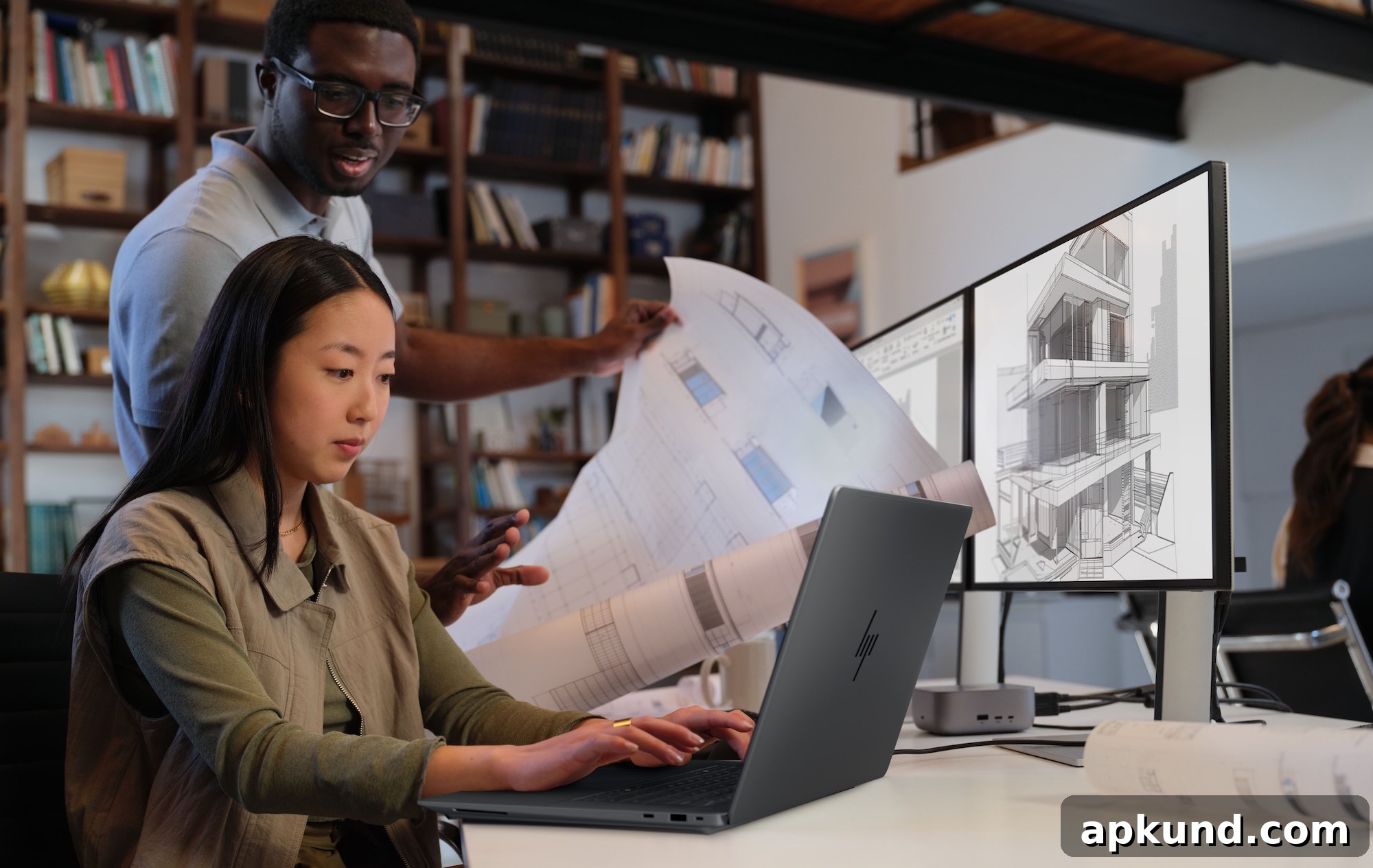
It’s 2026, and artificial intelligence continues to shape the priorities of consumer electronics makers. In line with that trend, HP has introduced the ZBook Ultra G3a, a 16-inch mobile workstation developed for enterprises and teams that are adopting AI workflows across engineering, architecture, and media production. Co-engineered with AMD, this system emphasizes on-device AI performance and corporate deployment readiness.
The ZBook Ultra G3a is powered by the AMD Ryzen AI Max+ PRO 495 and supports up to 192GB of unified memory, with a reported 160GB allocation for VRAM and a 55 TOPS NPU. That hardware combination is designed to let users run demanding AI workloads locally, reducing dependence on cloud compute for many tasks and enabling faster, more private processing directly on the laptop.
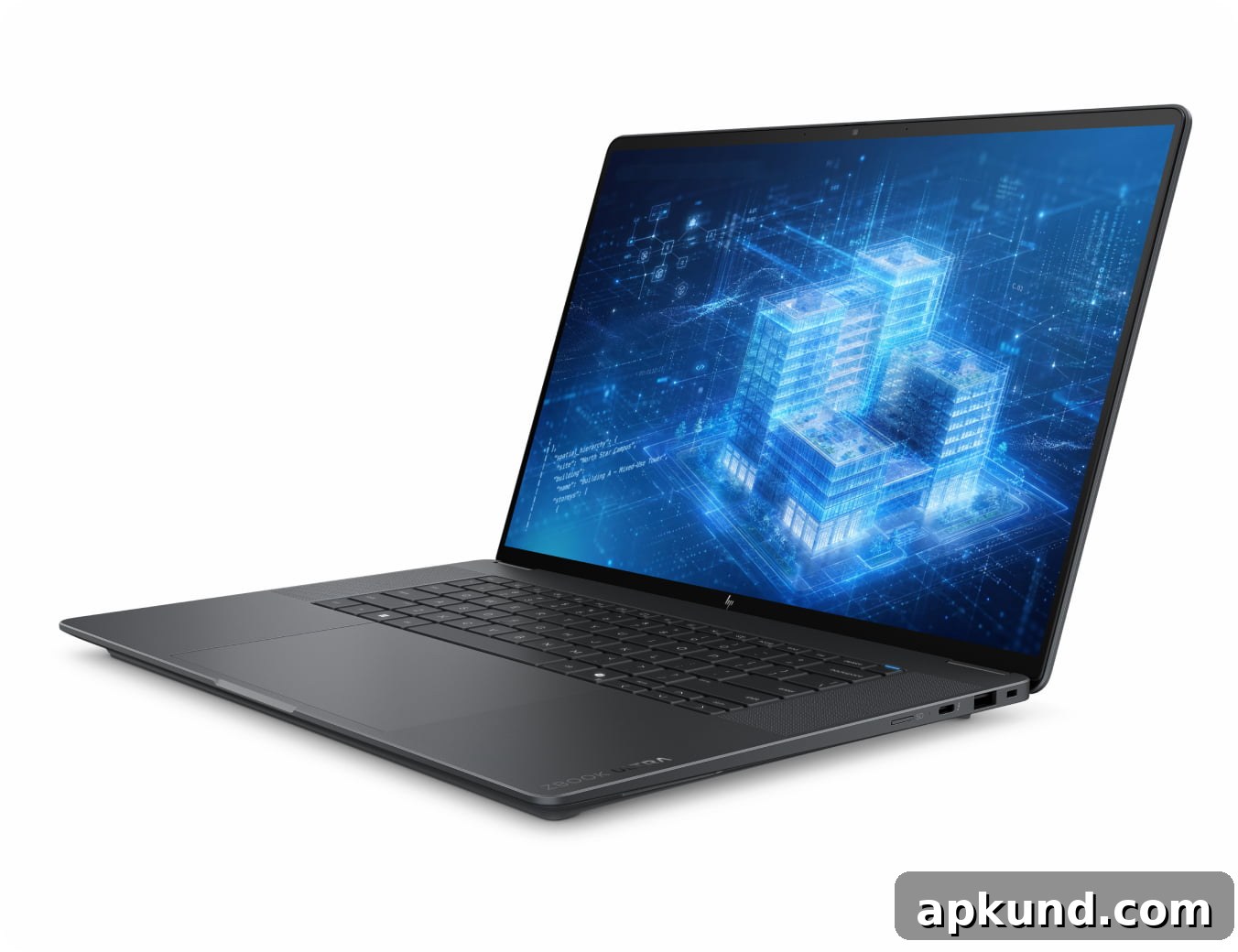
Image: HP
Software integration is a central focus for the G3a. The laptop ships with Perplexity Computer preinstalled, offering on-device AI assistants that can work alongside project files for tools such as Autodesk Revit, Autodesk 3ds Max, and Chaos Enscape. This kind of integration aims to streamline team workflows: rather than composing elaborate prompts each time, users can leverage the AI to execute repeatable tasks, automate routine steps, and surface context-aware suggestions tied directly to local project data.
On the physical side, the ZBook Ultra G3a is relatively light for a high-performance workstation, weighing about 4.2 lbs and measuring approximately 17.9 mm thin. HP has upgraded the thermal design to sustain higher sustained performance, with the system tuned to deliver up to 100 watts of power for remote or prolonged workloads. For professionals who need persistent connectivity, HP also includes built-in 5G via HP Go, which can simplify remote collaboration and data transfer without relying solely on Wi-Fi.
These features indicate HP’s emphasis on hybrid work scenarios where teams run sophisticated simulations, renderings, and generative AI tools near the source of data. Local AI inference on capable hardware brings advantages in latency, data privacy, and offline capability, while the ZBook’s memory and NPU specifications are meant to support those benefits across a range of creative and technical applications.
Beyond raw performance and AI features, HP’s enterprise positioning typically includes manageability and security features important to IT departments. While exact corporate-focused options and supported management tools will vary by buyer and deployment, enterprises tend to evaluate devices like this for lifecycle management, endpoint security, and ease of integrating into existing IT workflows.
HP is positioning the ZBook Ultra G3a as a practical choice for organizations committed to agentic and on-device AI, especially teams that need to balance powerful local processing with durability and mobile usability. The device’s combination of a high-capacity unified memory architecture, a dedicated NPU, and native Perplexity-powered AI tooling is intended to lower friction when adopting AI-enhanced workflows.
The HP ZBook Ultra G3a is expected to launch in October 2026, with pricing to be announced closer to availability. For organizations evaluating AI-ready hardware, the ZBook Ultra G3a represents a clear example of how workstation vendors are prioritizing on-device intelligence, connectivity, and enterprise suitability for the next generation of professional laptops.
READ: Mistral AI & Mozilla’s new web browsing tool focuses on user privacy (article reference)