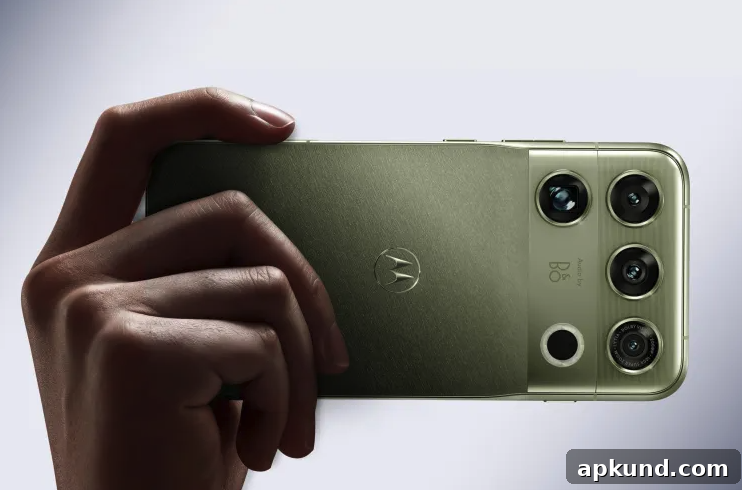
Not long ago, the GrapheneOS team announced they would prioritize support for select upcoming Motorola smartphones, citing technical difficulties they encountered with Google’s Pixel 11 series. Today, GrapheneOS confirmed that the newly launched Motorola Signature 27 will be the first Motorola flagship to receive upcoming GrapheneOS updates. This marks a notable shift in focus for the project and signals growing support for Motorola hardware among privacy-focused Android users.
GrapheneOS is a privacy- and security-focused open-source Android distribution designed to replace the factory-installed Android on compatible devices. Its core aim is to minimize telemetry and preinstalled services, reduce attack surfaces, and provide hardened privacy features for users who want a lean, secure mobile operating system. Unlike stock Android builds that bundle Google services by default, GrapheneOS takes a deliberately minimal approach, enabling users to choose which apps and services they trust.
The move toward Motorola reflects practical considerations: GrapheneOS developers have repeatedly noted that hardware and firmware compatibility significantly affect the ease and reliability of porting and maintaining a hardened Android build. Recent Pixel 11 models have presented unexpected challenges for the project, making them more difficult to support reliably. By contrast, certain Motorola devices—especially those equipped with Snapdragon chipsets—have proven more amenable to the low-level adjustments and extended testing that GrapheneOS requires.
For users who prioritize long-term privacy and device control, the new arrangement is promising. The Motorola Signature 27 receiving priority updates means faster parity with security fixes, privacy enhancements, and new GrapheneOS features as they roll out. This should make the Signature 27 an attractive option for anyone considering a GrapheneOS installation or a privacy-first device from the outset.
It’s worth emphasizing what GrapheneOS does and doesn’t change about a device. The project does not manufacture hardware; instead, it builds a custom software layer that replaces the existing Android system. Installation requires an unlocked bootloader and a willingness to accept certain trade-offs—some convenience features tied to factory firmware and vendor apps may be lost, and a different approach to app installation and updates is needed. In return, users gain a tightly controlled environment with reduced background data collection, stronger sandboxing, and enhanced permissions management.
The shift away from Pixel 11 models also reflects the complex interplay between vendors, hardware design choices, and the open-source community. Some devices are designed in ways that make low-level access and modification more difficult, while others expose the necessary interfaces and documentation that enable long-term maintenance by independent projects. Motorola’s recent lineup appears to offer a combination of accessible hardware and chipsets that match GrapheneOS requirements, which likely influenced the team’s decision.
For those unfamiliar with the Motorola Signature 27, it is positioned as a premium handset with flagship-class specifications. Prioritizing it for GrapheneOS updates means users who choose that model may benefit from one of the more privacy-conscious software options available on Android without waiting through prolonged compatibility work. Prospective buyers and developers should still verify official compatibility lists and installation instructions before attempting to install any custom OS.
GrapheneOS has a history of careful, methodical engineering. That cautious approach helps ensure that releases maintain a high standard for security and privacy, but it can also lengthen the time required to bring new devices fully into the supported roster. The announcement about Motorola is an encouraging sign of expanded hardware support, and it signals that the project is adapting its priorities to focus on devices that best meet its technical needs.
Anyone interested in switching to GrapheneOS or buying a privacy-minded phone should keep an eye on official compatibility updates, installation guides, and community resources. As GrapheneOS broadens its hardware base, those resources will become increasingly important for users seeking a secure, Google-free Android experience on modern devices such as the Motorola Signature 27.
READ: Pixel 11 Security Risk: Why GrapheneOS shifted focus away from Google’s latest smartphones