
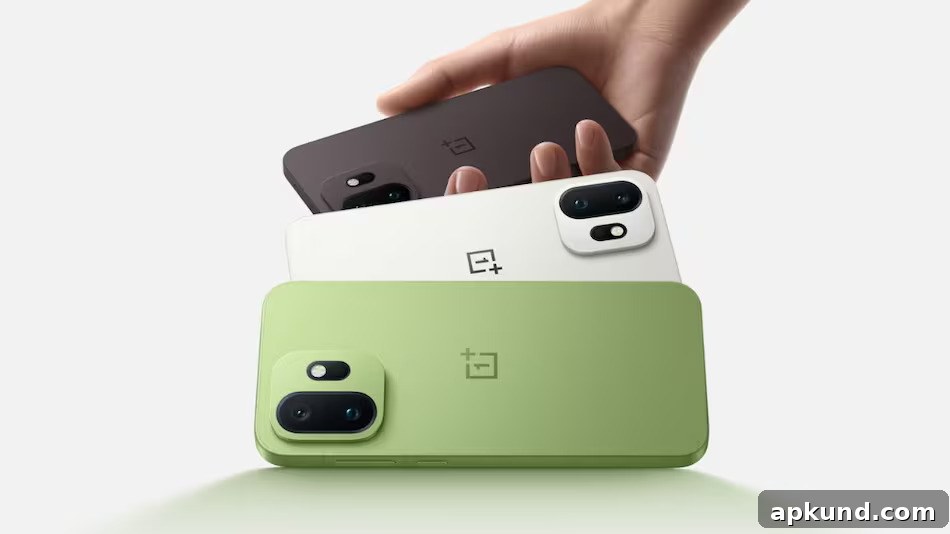
Most flagship phones top out at 120Hz, and even when manufacturers pushed beyond that, gains often felt incremental to average users. OnePlus surprised the market with the OnePlus 15’s 165Hz display, which many considered excessive at the time. Now a new leak suggests the OnePlus 16 could raise the bar again — not by a small step, but by a substantial margin.
According to a recent leak shared on social media by the leaker known as Digital Chat Station, the OnePlus 16’s display may start at a minimum of 185Hz and could scale up to as much as 240Hz. The same report describes the panel as a 6.78-inch LTPO BOE display with roughly 1.5K resolution, support for the BT.2020 wide color gamut, and a packaging technique that would reduce bezels to about 1mm on all sides. Under the hood, the device is said to pair Qualcomm’s upcoming Snapdragon 8 Elite Gen 6 Pro chipset with LPDDR6 RAM.
How 185Hz looks in the current smartphone landscape
Putting a 185Hz baseline in context helps explain why this matters. Today, refresh rates that high are mostly found on niche gaming phones, such as the Asus ROG Phone 9 Pro, and not on mainstream flagships at 1.5K resolution. If the OnePlus 16 truly ships with a minimum of 185Hz, it would represent a meaningful departure from the industry standard and push refresh rates into territory previously reserved for specialized devices.
For comparison, leading devices from Apple and Samsung — including the Galaxy S26 Ultra and the iPhone 17 Pro Max — currently cap at 120Hz. That makes even the rumored low-end refresh rate for the OnePlus 16 more than 50% faster than what most flagship phones offer out of the box. If the panel is capable of reaching 240Hz, the OnePlus 16 would stand out not only for its peak performance but for introducing a new class of high-refresh-rate mobile displays to a broader audience.
Practical benefits and real-world limits
Higher refresh rates can make animations, scrolling and gameplay feel smoother and more responsive. That said, the practical advantage depends heavily on software and content support. The OnePlus 15 already demonstrated that hardware can outpace the software ecosystem: many apps don’t take advantage of 165Hz, and the higher refresh settings are available only in specific scenarios. A 185Hz or 240Hz panel provides headroom, but that headroom is useful only if the operating system, apps and games are optimized to run at those rates without draining battery excessively.
Battery life, thermal management and perceptible improvements are the balancing acts manufacturers must address. LTPO panels can dynamically vary refresh rate to conserve power, which helps, but the challenge remains for developers and platform vendors to enable consistent support. Without broad software adoption, extremely high refresh rates risk becoming a marketing spec rather than a daily benefit.
Other display and hardware notes
The leak also highlights other noteworthy display attributes: support for the BT.2020 color gamut and extremely thin bezels. Both features point to an ambition to combine high performance with premium panel quality. The rumored use of a BOE LTPO panel aligns with current industry trends toward energy-efficient high-refresh-rate screens. Additionally, the reported pairing of the Snapdragon 8 Elite Gen 6 Pro chipset with LPDDR6 RAM would position the phone for strong overall performance, though final results will depend on thermal design and software tuning.
Execution will determine impact
Spec sheets can be impressive, but real-world experience depends on how well hardware and software are integrated. Earlier rumors about a potential 200MP camera upgrade for the OnePlus 16 illustrate the same point: high numbers on paper do not guarantee superior user experience unless image processing, sensor performance and software processing are all tuned to match. The OnePlus 16’s rumored specifications are ambitious, but execution — from display calibration and adaptive refresh algorithms to app support and power management — will determine whether those numbers translate into meaningful improvements.
The OnePlus 16 is reportedly scheduled for a Q4 2026 launch, leaving ample time for specifications to change and for OnePlus to refine software support. If the company can deliver a genuinely usable 185Hz baseline or a stable 240Hz peak without major trade-offs in battery life or app compatibility, the phone could reshape expectations around flagship display performance. Until official details are released, these claims remain rumors, but they signal an industry increasingly willing to experiment with higher refresh-rate screens beyond the current mainstream standard.