
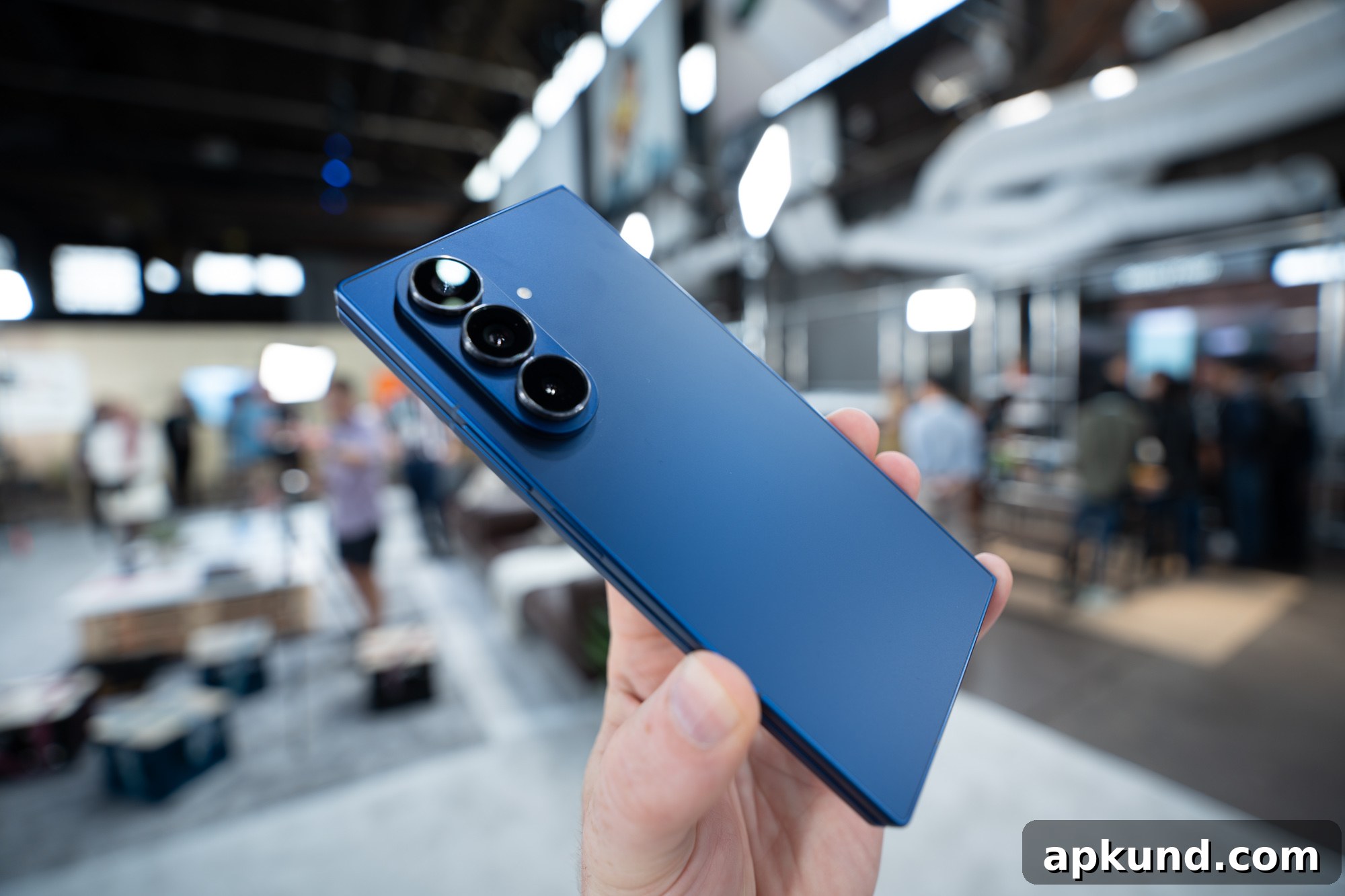
Every Galaxy Z Fold has relied on a Qualcomm Snapdragon processor since Samsung moved the Fold line away from Exynos chips. That tradition continues for the Galaxy Z Fold 8: Samsung and Qualcomm have confirmed the device will use Qualcomm’s Snapdragon 8 Elite Gen 5 variant.
Both companies announced the decision on Weibo in the run-up to Samsung’s July 22 Unpacked event. The Fold 8 and the Z Fold 8 Ultra are reported to use the “for Galaxy” variant of the Snapdragon 8 Elite Gen 5, a higher-clocked version of Qualcomm’s standard model. Qualcomm’s teasers indicate the Galaxy-tuned chip pushes its prime CPU cores up to 4.74GHz and brings the GPU frequency close to 1.3GHz. The company also highlighted the SoC’s strong on-device AI performance, noting capabilities around 100 TOPS, which is roughly double the AI performance of the previous generation. Neither Samsung nor Qualcomm published full benchmark results in those initial announcements.
The base Snapdragon 8 Elite Gen 5 is already known for delivering a sizable uplift in both AI processing and graphics performance compared with last year’s silicon. Samsung has already used this platform earlier in the year for other flagship devices, so the Fold 8’s chipset is not brand-new hardware in concept—rather, it’s the higher-clocked “for Galaxy” tuning that differentiates the Fold 8 models from standard variants.
Why the Flip’s chip situation is messier
Samsung’s foldable lineup has not been uniform about processors this year. The Galaxy Z Flip 8 is reportedly following a split strategy by region: devices sold in the US, China, and Japan will use Snapdragon chips, while many units in Europe, India, and Korea are expected to ship with Samsung’s Exynos 2600 instead. By contrast, the Galaxy Z Fold 8 avoids that fragmentation—Samsung says each region will receive the same Snapdragon-based chipset for the Fold 8 models.
That global consistency matters for several reasons. First, having a single chip variant simplifies performance expectations and software optimization across markets: developers and Samsung’s firmware teams can target one hardware profile instead of juggling multiple SoC behaviors and power curves. Second, it reduces variation in battery life, thermals, and benchmarking results between regions, so buyers can expect a more consistent experience no matter where they purchase the device.
There’s a financial angle as well. Flagship mobile chips like the Snapdragon 8 Elite Gen 5 have become more expensive to produce, and rising component costs are a significant factor in the steady increase in smartphone retail prices. Qualcomm’s higher-end silicon and the “for Galaxy” tuning that bumps clocks and GPU frequencies can raise production costs, which in turn can affect device pricing. At least with the Fold 8, those costs will apply evenly to all regions rather than creating a two-tier product based on geographic availability of different chips.
From a user perspective, the decision to standardize the Fold 8 on Snapdragon should be reassuring: buyers around the world will get the same flagship-level CPU, GPU, and AI capabilities, and developers will face fewer compatibility headaches. For enthusiasts who compare devices across regions, the consistency also makes it easier to judge the Fold 8’s real-world performance without needing to account for different silicon under the hood.
Samsung and Qualcomm have kept some specifics private for now, such as complete benchmark figures and detailed power efficiency numbers for the “for Galaxy” tuned variant. Those details will likely surface closer to the Fold 8’s official launch and as review units reach press and consumers. Until then, the confirmed use of the Snapdragon 8 Elite Gen 5 — with its higher clock speeds and amplified AI capabilities — sets clear expectations about the Fold 8’s positioning as a top-tier, performance-focused foldable in Samsung’s lineup.