
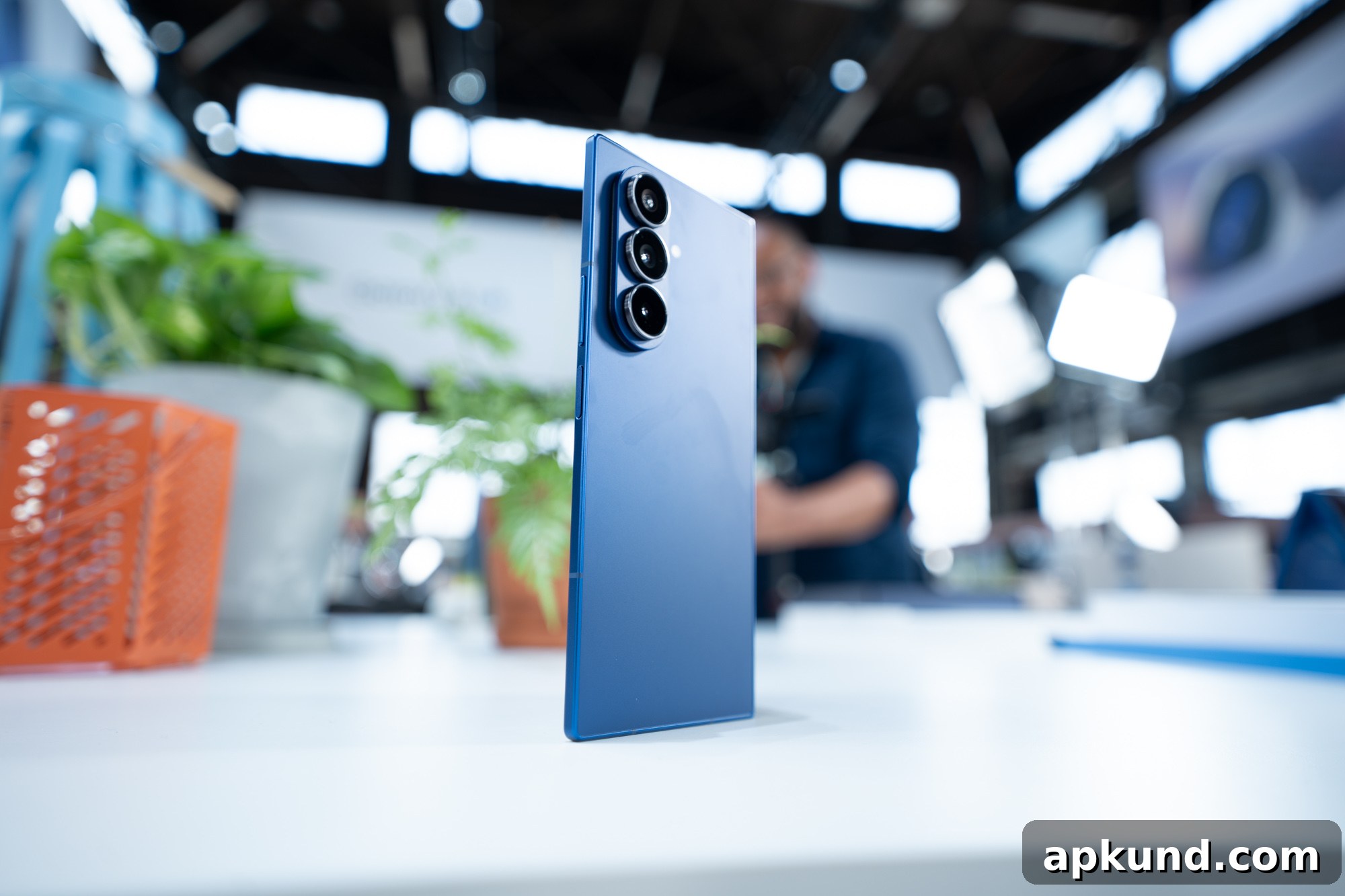
Samsung has long teased rollable phone concepts at industry events, yet a consumer-ready model has remained elusive. Previous hopes that a rollable Samsung device might arrive as soon as 2025 did not materialize. Now, new reporting from Korean outlet Money Today indicates that Samsung’s first commercial rollable phone could be aimed for a 2028 debut, potentially arriving in the first half of that year alongside the Galaxy S28 lineup.
The project is reportedly moving forward under the internal name Galaxy Z Slide, though Samsung has not confirmed either the name or the product itself. According to coverage and industry research, Samsung Display is in advanced discussions to supply the rollable OLED panels that would power the device. If those talks succeed and development proceeds on schedule, the company could introduce the rollable as a flagship alternative to its existing foldable phones.
Omdia, a market research firm cited in the reporting, estimates that the rollable’s main display would expand to about 10 inches when fully extended. The panel is described as having a 16:9 aspect ratio and a pixel density near 440 pixels per inch, which would deliver sharp visuals comparable to other high-end displays on the market. Those display figures point to a tablet-sized viewing experience when extended, while preserving a more compact form when retracted.
On the corporate side, a Samsung Electronics executive reportedly acknowledged internal development of a rollable handset and suggested that Samsung Display panels are a strong candidate for the device. While that signaling is notable, the executive also emphasized that no final decisions have been made and plans could change during the multi-year development cycle.
Samsung Has Talked About This For Years
Rumors and patent filings around rollable screens have circulated for several years. Samsung has demonstrated multiple concepts in public showcases: a Flex Hybrid concept appeared at CES 2023, followed by a Rollable Flex prototype shown at the Society for Information Display (SID) event the same year. Those prototypes demonstrated mechanisms and flexible materials intended to expand and retract a display, including examples that could extend from a narrow width to a much larger viewing surface. Despite these demonstrations and numerous patents hinting at rollable form factors, none of the early concept devices progressed into a retail product.
Part of the rationale for pursuing a rollable model now relates to shifting market dynamics for display suppliers. Research from Omdia indicates Samsung Display’s share of the foldable panel market declined notably between late 2025 and early 2026, dropping from roughly 41.8 percent to about 27 percent. That loss in share came even as Samsung continued to push its existing foldable lineup, which suggests a strategic incentive to expand into adjacent form factors. A rollable handset would offer Samsung a distinct option beyond traditional foldables, potentially helping the company differentiate its product portfolio as competition intensifies.
Rollable phones present both engineering and supply-chain challenges. Creating a durable, reliable mechanism that can repeatedly extend and retract a display while maintaining screen integrity requires advances in materials, hinge or spool designs, and display layers. Manufacturing yields and long-term reliability tests will likely influence any commercial launch timeline. Given those technical hurdles, a multi-year development horizon and cautious rollout align with the complexity of turning concept hardware into a mass-market product.
For consumers, a successful rollable device would aim to combine the convenience of a single, compact handset with the expanded screen real estate of a tablet when needed. If Samsung follows through and brings a Galaxy Z Slide—or similarly named product—to market, it could offer another practical approach to large-screen mobile computing without the fold crease associated with clamshell or book-style foldables. Until Samsung issues official details, however, timelines, names, and specifications should be treated as provisional and subject to change.