
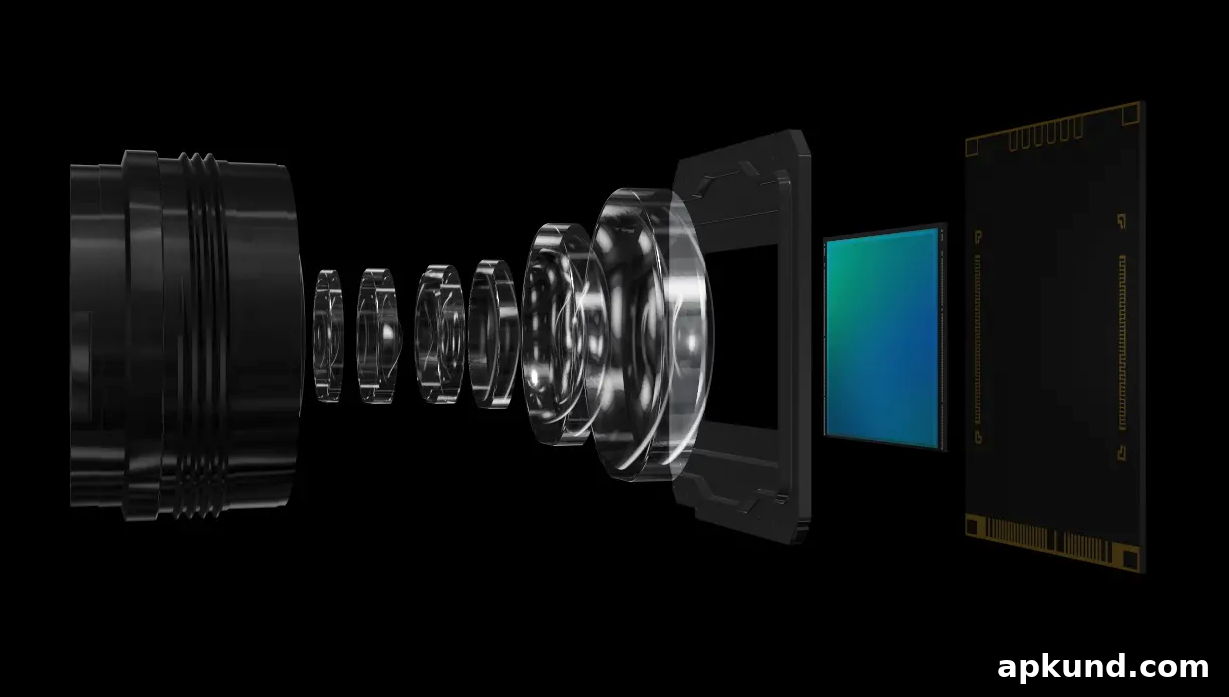
Sony is expanding its camera sensor lineup with the announcement of the LYTIA L910, a new 50-megapixel stacked CMOS image sensor designed for smartphones and mobile imaging devices. Although Sony’s Xperia phones are not currently dominating the Android market, the company remains a leader in imaging technology, leveraging decades of expertise in sensor design to deliver improved image quality, dynamic range, and low-light performance for mobile devices.
Scheduled for mass-production shipment in summer 2026, the LYTIA L910 adopts a 1/1.28-type optical format and introduces Sony’s first implementation of a Lateral Overflow Integration Capacitor (LOFIC) within the LYTIA series. The LOFIC structure expands the sensor’s ability to manage bright highlights without clipping, allowing cameras to retain more detail in scenes with strong contrast. This design choice helps prevent blown-out highlights in high-contrast environments such as backlit portraits, sunsets, or stage lighting.
Beyond LOFIC, the L910 pairs this architecture with a single-exposure Triple Conversion Gain HDR method. Instead of relying on multi-frame HDR stitching, which can introduce motion blur, ghosting, and flicker when subjects move or lighting changes, the triple-gain approach captures a very wide dynamic range in one exposure. Sony claims the sensor can achieve up to 100 dB of dynamic range, enabling it to preserve fine details from deep shadows up into the brightest highlights—useful for landscape, indoor/outdoor mixed lighting, and high-contrast portrait shots.
Low-light imaging is another area where the LYTIA L910 aims to deliver tangible gains. The sensor incorporates Sony’s Ultra High Conversion Gain (UHCG) circuit technology to reduce random noise in dark regions. Compared with previous-generation sensors such as the LYTIA 828, the company reports approximately a 30% reduction in noise, resulting in cleaner night photos and improved color fidelity at higher ISO settings. This improvement is particularly beneficial for handheld night shots and interior scenes where flash or additional lighting may not be desirable.
Videographers and live streamers will also find enhancements targeted at moving-image capture. The L910 features an optimized analog-to-digital conversion circuit that accelerates signal processing while keeping power consumption low. These efficiency gains help minimize drain on device batteries during extended recording sessions. The sensor supports full HDR 4K video recording at 60 frames per second, which enables high-resolution, high-dynamic-range video for mobile content creation without relying on external capture hardware.
In practical terms, the combination of LOFIC, single-exposure HDR, and UHCG makes the LYTIA L910 well-suited to a broad range of mobile photography and videography scenarios. Users can expect reduced artifacts in high-contrast scenes, clearer results in low-light conditions, and more stable HDR video capture during action or movement. For smartphone manufacturers and camera module partners, the sensor’s stacked CMOS design and power-efficient circuitry offer a balance of performance and battery-friendly operation that aligns with current market demands for premium mobile imaging.
Sony’s LYTIA L910 represents the company’s continued push to advance mobile imaging technologies. By addressing core challenges—dynamic range, noise, and power efficiency—the new sensor aims to raise the baseline for what users can expect from smartphone cameras in both stills and video, particularly as 4K HDR content creation becomes more common among casual and professional creators alike.