
Google recently announced that it has rebranded its AI-powered research assistant, NotebookLM, to “Gemini Notebook.” This change is effective immediately. The name update aligns the product more closely with Google’s broader Gemini branding. The tool first appeared publicly at Google I/O 2023 under the codename “Project Tailwind,” so this renaming continues Google’s trend of consolidating AI offerings under the Gemini umbrella.
Although the product remains a standalone research assistant, Google says the new name reflects deeper integration with its wider ecosystem. Positioning the notebook as part of Gemini helps unify Google’s messaging for its AI tools and makes it easier for users to identify which services are powered by the same underlying platform. For anyone researching or managing information, the rebrand signals that NotebookLM’s capabilities will increasingly interoperate with other Gemini services and features.
Google reports that Gemini Notebook now serves over 30 million users and 600,000 organizations. Alongside the rename, the company is rolling out a major infrastructure upgrade: every notebook will be provisioned with a secure cloud computer. That upgrade allows Gemini Notebook to natively write and execute code derived from the user’s source documents, enabling more powerful and interactive workflows directly inside a notebook. For researchers, analysts, and teams who rely on document-driven computation, that capability makes the notebook a more capable environment for experimentation, analysis, and prototyping.
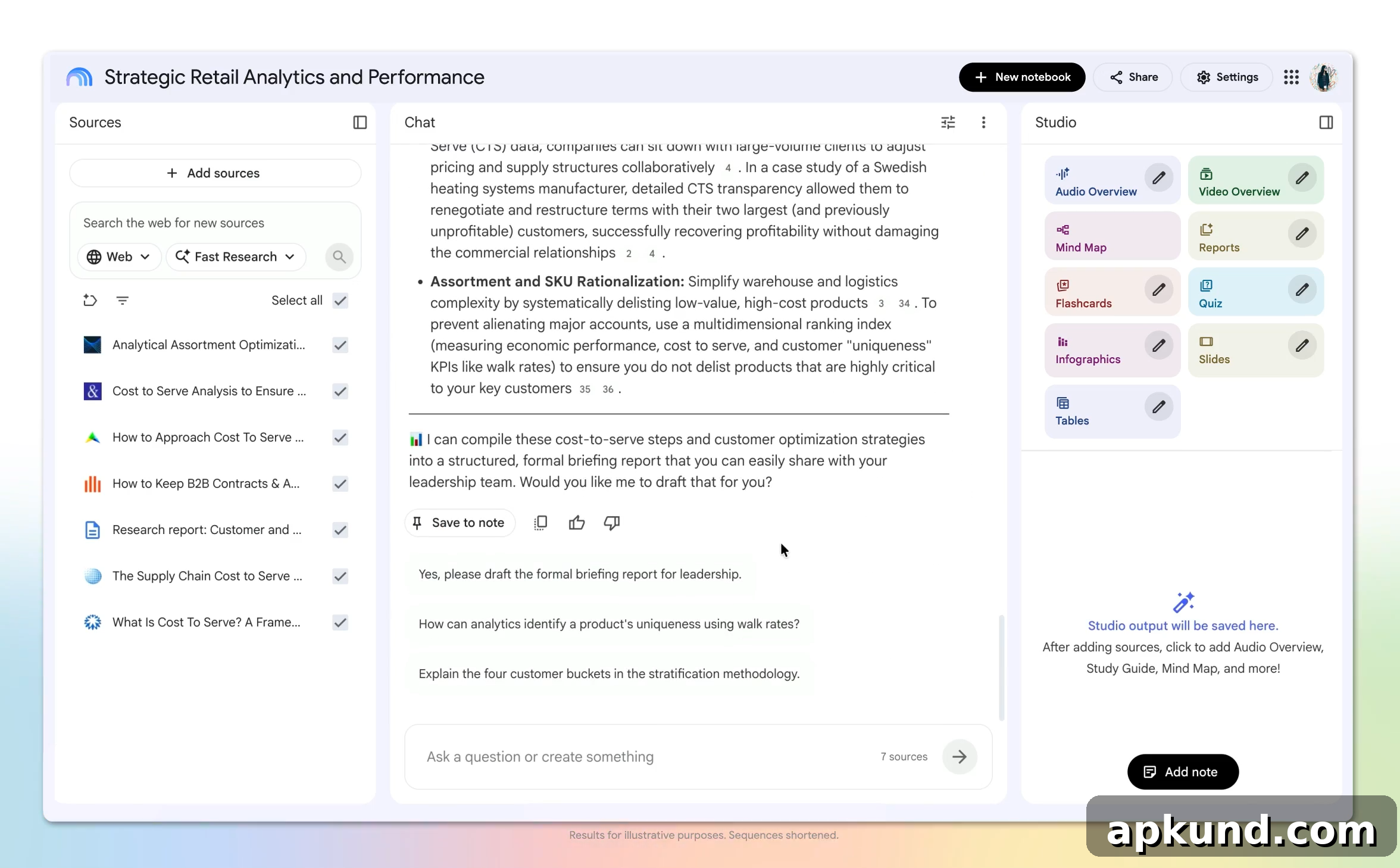
New advanced coding and analysis features are available immediately to Google AI Ultra subscribers and to Workspace business customers who have AI Ultra or AI Expanded Access. Google has stated that these enhanced capabilities will be rolled out to all Pro web users in the coming weeks. That staged rollout means organizations and power users with elevated AI subscriptions can access the most sophisticated tools first, while broader availability follows as the platform scales.
In practical terms, the combination of a secure cloud compute environment and the ability to run code from source documents makes Gemini Notebook useful for a range of tasks: extracting structured data from unstructured files, running reproducible analyses, prototyping data transformations, and generating interactive summaries that reference original materials. For teams, notebooks can centralize research, code, and results in a single, shareable workspace that preserves context from the source documents used to produce insights.
Google also confirmed plans to make research created in Gemini Notebook seamlessly accessible across its ecosystem. Users will be able to access, create, and sync notebooks between the standalone Gemini Notebook interface and the core Gemini app. This synchronization aims to reduce friction for users who switch between a dedicated notebook environment and other Gemini-powered experiences, ensuring notes, code, and results remain consistent regardless of where a user continues work.
Looking ahead, Google plans to integrate notebook functionality directly into the “AI Mode” feature within Google Search. Integrating these capabilities into Search’s AI Mode would allow users to surface notebook content and related research results alongside general search results, helping to bridge the gap between exploratory research inside a notebook and the broader web discovery experience. Google’s roadmap suggests tighter coupling between search, generative AI output, and document-backed analysis over time.
Security and privacy remain central to this kind of product evolution. By provisioning a secure cloud computer for each notebook, Google emphasizes isolation and controlled execution environments, which helps manage risks associated with running code and processing sensitive documents. Organizations adopting Gemini Notebook through Workspace enterprise plans should evaluate access controls, data residency options, and audit capabilities to ensure policies match their compliance and governance requirements.
In summary, renaming NotebookLM to Gemini Notebook is more than cosmetic: it signals a strategic alignment with Google’s Gemini platform, introduces significant infrastructure upgrades to enable document-driven code execution, and begins a phased rollout of advanced features to paid subscribers and enterprise customers. As Google expands availability and integrates notebook features into Search and the broader Gemini ecosystem, users can expect more streamlined research workflows, tighter cross-product synchronization, and increasingly capable AI-assisted analysis built around the notebook experience.