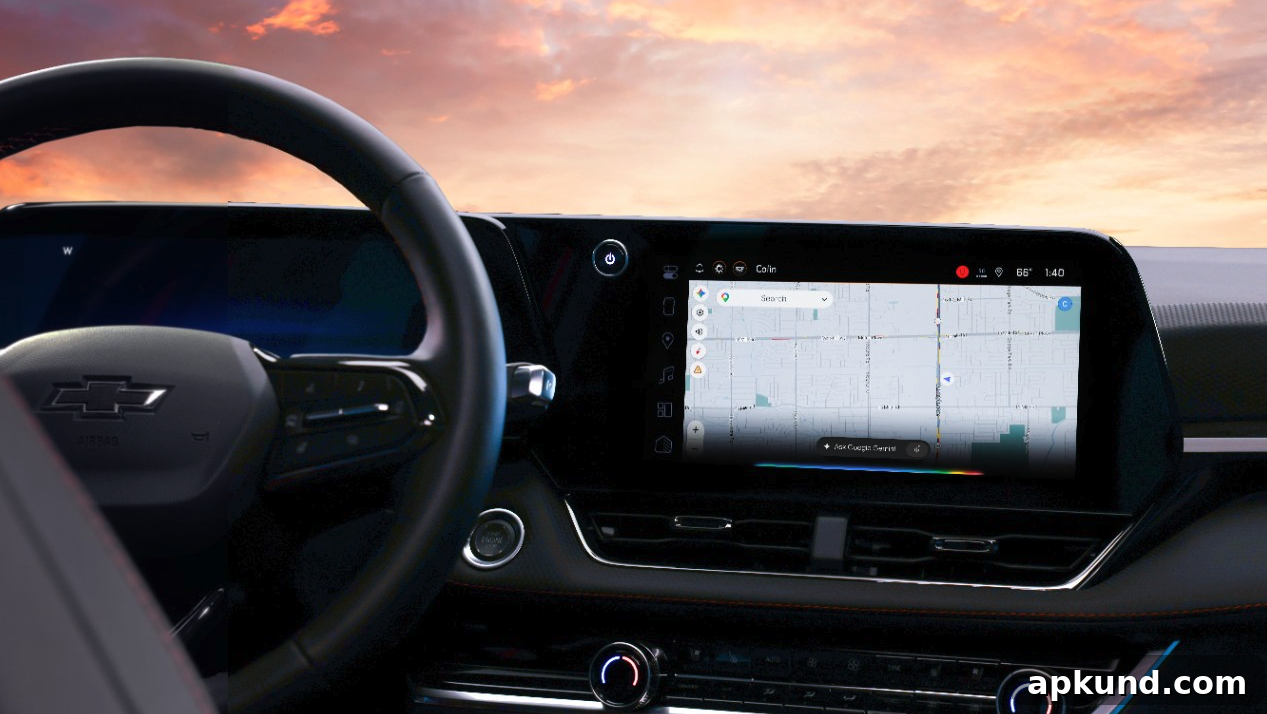
Google has spent the past several years collaborating with automakers to bring its Gemini AI assistant into modern vehicles. General Motors (GM) is the latest manufacturer to confirm integration of Google’s AI-powered assistant into a large portion of its fleet. GM recently announced a phased rollout of Gemini support that will reach roughly four million vehicles across the United States. This represents a significant expansion of in-car AI, aligning Google’s conversational technology with GM’s decades-long investment in connected vehicle services.
Gemini delivers AI assistance to millions of drivers across every segment and price point for a wide range of everyday needs. That kind of scale is only possible because of the connected vehicle foundation GM has built through OnStar over the past 30 years… Later this year, GM will deliver a more deeply integrated AI experience shaped by OnStar intelligence.
Gemini’s rollout targets 2022-model-year vehicles and newer that already use Google software built into the infotainment systems. Eligible vehicles include models from Cadillac, Chevrolet, Buick, and GMC that feature the Google-powered infotainment platform. Owners of qualifying cars will receive an on-screen notification prompting them to switch from the standard Google Assistant to the enhanced Gemini assistant when the update becomes available for their vehicle.
The integration leverages GM’s existing software architecture and OnStar connectivity to enable a richer, context-aware assistant experience inside the car. Drivers can expect the conversational, context-sensitive capabilities Gemini offers on other devices: summarizing incoming messages and drafting hands-free replies, handling multi-part and follow-up questions smoothly, and maintaining conversational context across exchanges. These capabilities make routine tasks—like managing communications, controlling media, and finding information—simpler and safer while driving.
In addition to conversational features, Gemini is designed to work with popular media and audio apps available in GM’s infotainment environment. Support for services such as Spotify, Audible, and YouTube means the assistant can curate and suggest audio content tailored to driver preferences, queue playlists or audiobooks, and respond to voice requests for specific tracks or topics. For drivers who depend on efficient routing, Gemini’s integration will also include enhanced route planning tools that account for practical needs—such as stops, delivery considerations, or other constraints—helping commercial and everyday drivers optimize travel time and efficiency.
To receive the Gemini update, owners must meet a few straightforward requirements. The user’s infotainment profile should be signed into the Google Play Store with U.S. English selected as the interface language, and the user must opt into the Gemini service when prompted. During the initial launch phase, Gemini availability will be limited to the United States. GM has stated that it plans to expand support to additional regions and languages over time, so more drivers outside the U.S. can expect access in future updates.
GM describes this step as part of a broader strategy to provide smarter, more contextually aware in-vehicle experiences by combining Google’s advanced AI with OnStar’s vehicle and safety intelligence. That combination aims to deliver a safer, more personalized driving experience without sacrificing the simplicity drivers expect from built-in vehicle systems. As the rollout proceeds, eligible owners will receive notifications through their infotainment systems with instructions on activating and using Gemini. Over-the-air software updates and dealership visits will likely remain part of maintaining and expanding these capabilities as GM continues to refine the integration.
For drivers, the arrival of Gemini in compatible GM vehicles represents another move toward conversational, AI-driven interfaces becoming a standard part of the automotive experience. The integration highlights how automakers and technology companies are increasingly collaborating to bring advanced AI assistance into the cabin—making everyday tasks easier, reducing driver distraction, and enhancing the overall convenience and connectivity of modern vehicles.